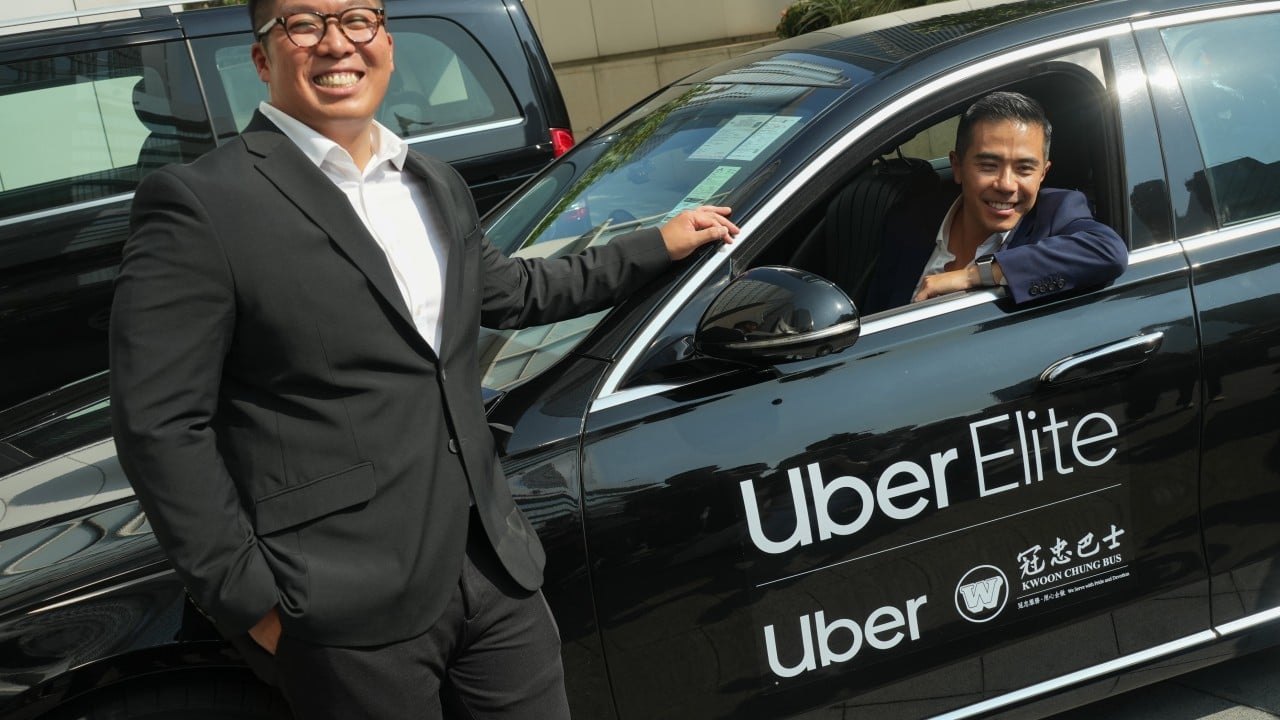
Uber is taking its first high-end service outside the United States by partnering with a major Hong Kong firm, shifting its strategy from pure volume aggregation to elite urban mobility. This move marks a fundamental departure from the traditional ride-hailing playbook. For years, the company expanded by undercutting local taxi rates and scaling driver density. Now, growth requires carving out a high-margin tier for passengers who measure status by vehicle exclusivity rather than price efficiency.
Transportation monopolies rarely die from a lack of drivers. They wither when efficiency hits a plateau and margins shrink under municipal regulations.
The Mechanics of Urban Elite Mobility
To understand why Uber chose Hong Kong for its premiere international luxury rollout, look at the topography of the market. High population density combined with strict taxi licensing creates a unique bottleneck. Traditional ride-hailing operates in a gray regulatory space across the territory, forcing platforms to walk a fine line between private car-hire laws and commercial transport codes. By aligning with a local heavyweight—specifically a partner deeply entrenched in the region's high-net-worth infrastructure—Uber bypasses traditional municipal friction.
The partnership introduces a specialized fleet. We are not talking about black SUVs driven by weekend hobbyists. This initiative deploys meticulously vetted chauffeurs, vehicles equipped with custom passenger amenities, and dynamic routing designed for executives who value time over dollars.
The economic model shifts entirely. Standard rides rely on high volume to offset low per-mile earnings. Premium tiers operate on an inverted curve. Every vehicle must generate higher revenue per hour, lower idle times, and ironclad retention rates among corporate clients.
+-------------------------------------------------------+
|                THE TWO-TIER STRATEGY                  |
+---------------------------+---------------------------+
| Standard Ride-Hailing     | Premium Fleet Partnership |
+---------------------------+---------------------------+
| • High volume, low margin | • Low volume, high margin |
| • Open marketplace access | • Vetted, exclusive fleet |
| • Regulatory friction     | • Local enterprise shield |
+---------------------------+---------------------------+
Regulatory Chess and Local Power Structures
Silicon Valley software companies often trip over foreign asphalt because they assume code can rewrite local politics. Uber learned this lesson the hard way in Europe, where municipal transport unions and city halls pushed back against unvetted private fleets.
Hong Kong offers a different test. The territory has long maintained a tightly controlled taxi medallion system. Prices for these licenses dictate the pace of traditional street-hailed transport. For years, black-car operators and premium transport syndicates held a monopoly over corporate airport transfers and VIP transit.
By collaborating with a native Hong Kong enterprise, Uber secures more than just cars. It buys political armor. The local partner understands the intricacies of the Transport Department, the nuances of hire-car permit quotas, and the unwritten rules of corporate governance in Victoria Harbour.
This is an act of corporate diplomacy. Uber provides the dispatch engine, the user interface, and the predictive routing algorithms. The Hong Kong partner provides the fleet management, regulatory navigation, and local institutional trust.
The Economics of Exclusion
Why move upscale now? The answer sits in the quarterly earnings pressure of a publicly traded mobility giant. Mass-market ride-hailing is a mature industry. Growth curves flatten once you capture the daily commuter and the weekend bar-hopper.
To satisfy public markets, a platform must extract more value from existing urban centers. You cannot add infinite cars to city streets without triggering gridlock and municipal bans. Therefore, the path forward requires maximizing the value of every single trip.
A standard ride generates modest commission income. A premium tier operated through a strategic alliance alters the unit economics. Corporate accounts pay subscription-level prices for guaranteed availability. Executives booking client transport do not look for the cheapest option; they look for absolute reliability.
This model mirrors the transformation seen in aviation over the past three decades. Airlines realized that economy-class seats pay for fuel, but business and first-class cabins generate actual profit. Uber is simply applying cabin-class stratification to asphalt.
"When you stop competing on price, you stop racing to the bottom. The battle shifts entirely to operational excellence and brand prestige."
Technological Integration and Fleet Control
Deploying a luxury service internationally demands rigid quality control. A rider paying top dollar will not tolerate a dirty interior, a driver canceling at the last minute, or a GPS routing error through heavy congestion.
To mitigate these risks, the Hong Kong rollout relies on dedicated fleet management software integrated directly into the core application. Unlike standard drivers who toggle between competing platforms, drivers in this premium tier operate within an exclusive ecosystem.
- Vehicle Standards: Every automobile must meet stringent age, interior space, and environmental benchmarks.
- Chauffeur Training: Drivers undergo rigorous hospitality training, shifting their role from transactional drivers to professional mobility hosts.
- Predictive Dispatch: Algorithms allocate premium vehicles based on historical corporate travel patterns rather than random street-level supply and demand.
This level of control requires capital expenditure and close operational alignment. It strips away the asset-light purity that made early ride-hailing so attractive to venture capitalists, but it builds a defensible moat against copycat competitors.
The Global Domino Effect
Hong Kong is the testing ground. If this partnership model proves viable, expect an aggressive expansion across global financial capitals. London, Singapore, Tokyo, and Zurich present identical market dynamics: high concentrations of wealth, congested urban cores, and traditional taxi lobbies that frustrate modern travelers.
Competitors are watching closely. Traditional luxury rental companies and regional black-car networks face an existential threat. They either digitize their operations to match the user experience of a major app, or they get squeezed out of the high-end corporate booking pipeline entirely.
The era of hyper-growth through unfettered expansion is over. The future belongs to platform consolidation and elite vertical integration. Uber is no longer trying to be the taxi service for everyone. It is securing the most lucrative slice of the map, one strategic alliance at a time.