The Silence on the Horizon
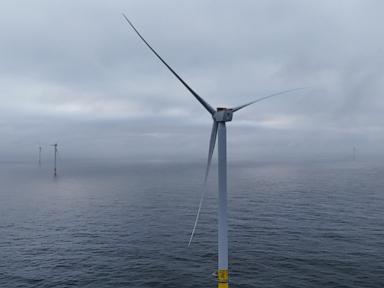
The Atlantic coast was supposed to look different by now. If you stood on the salt-crusted boardwalks of New Jersey or the wind-swept dunes of Virginia, you were told to expect the rhythmic silhouette of progress. Giant white blades, taller than the Statue of Liberty, were meant to be catching the relentless ocean gales, turning the invisible force of the North Atlantic into the steady hum of a modern power grid. It was a vision of a steel forest in the sea.
But the horizon remains empty. The steel never arrived.
Instead of the sound of turbines, there is only the quiet rustle of paper in Washington. Specifically, the sound of a check being signed. The amount is staggering. Nearly $2 billion of taxpayer money has been allocated not to build something, but to ensure something is never built at all. This is the story of how the American public paid a king's ransom to kill the very future it was promised. It is a tale of a massive federal reversal that has left investors reeling, environmentalists in mourning, and Congressional investigators demanding to know why the price of doing nothing is so incredibly high.
The Death of a Contract
Consider the position of a mid-level engineer at a firm like Orsted or Equinor. For years, your life has been defined by bathymetry maps and wind speed variables. You have calculated the precise depth of the seabed and the exact torque required to keep a turbine standing against a Category 3 hurricane. You are part of an industry that was told it was the cornerstone of the American energy transition.
Then, the political winds shifted.
The Trump administration, returning to power with a mandate to dismantle the green energy initiatives of its predecessor, didn't just stop the permits. They orchestrated a massive financial settlement to "terminate" the offshore wind projects that were already in the pipeline. These weren't just ideas on a whiteboard; these were multi-year infrastructure commitments with billions of dollars in sunk costs.
To walk away from these deals, the government didn't just say "no." They bought their way out.
The $1.95 billion figure is not a construction cost. It is a "breakup fee." In the world of high-stakes infrastructure, when the government cancels a contract without cause, the taxpayer is often left holding the bag for the developer’s lost investments and potential profits. It is the equivalent of paying for a fleet of luxury cars, then telling the dealership to crush them before they leave the lot, while still paying the full sticker price.
Why the Price Tag Stings
To understand the scale of this, you have to look past the spreadsheets.
Imagine a small town in New England that had been promised a rebirth. Local ports were being dredged. Old manufacturing plants were being refitted to build the massive yellow "transition pieces" that hold the turbines to the ocean floor. Hundreds of workers had gone through specialized training programs to learn the dangerous, high-skill work of offshore maintenance.
When $2 billion is spent to cancel these projects, that money doesn't trickle down to the welder in the port or the crane operator on the dock. It vanishes into the legal and corporate ether. It settles debts and satisfies shareholders, but it leaves the physical world exactly as it was: stagnant.
Democrats on Capitol Hill are now digging into the mechanics of this payout. They are asking a fundamental question: Was this a necessary legal settlement to avoid even costlier litigation, or was it a deliberate, expensive sabotage of the renewable energy sector? The optics are brutal. At a time when the national debt is a constant talking point, the idea of spending two thousand million dollars to not have energy seems like a logic puzzle designed by a madman.
The Invisible Stakes of Energy Security
The argument from the administration is rooted in a different kind of math. They point to the rising costs of offshore wind—driven by inflation and supply chain snarls—as proof that these projects were "zombies" walking toward financial collapse anyway. By paying to end them now, they claim, they are saving the public from a long-term subsidy nightmare.
But this ignores the invisible cost of the vacuum left behind.
Energy is not just about lights staying on. It is about who owns the future. While the United States spends $2 billion to scrub its coastline of wind projects, nations in Europe and Asia are doubling down. They are building the ships, the turbines, and the expertise that will define the next fifty years of global power.
When we pay to stop, we aren't just losing electricity. We are losing the race.
The tragedy of the "Ghost in the Atlantic" is the sheer waste of human effort. Think of the scientists who spent a decade studying whale migration patterns to ensure the turbines wouldn't interfere with the natural world. Think of the bankers who spent years structuring complex financing to make the numbers work. All that intellectual capital has been liquidated.
A Shadow Over the Coast
There is a psychological weight to this kind of reversal. It tells the global market that American energy policy is not a steady path, but a pendulum that swings violently with every election.
For a developer, the United States is no longer a place to build; it is a place to litigate. If you know that a change in the White House could result in your project being scrapped—even if you get a massive payout—you don't build. You don't innovate. You move your capital to a place where a contract actually means something.
The $2 billion is a monument to indecision. It represents a country that is currently at war with its own goals, willing to spend a fortune to ensure that the horizon stays exactly the same.
As the investigations continue, the details of the "OK" given by the administration will come to light. We will see the emails, the memos, and the secret negotiations that led to this massive transfer of public wealth to private energy firms for the express purpose of doing nothing. We will hear debates about "contractual obligations" and "market realities."
But for the person standing on the beach, looking out at the empty gray water where a new industry was supposed to rise, the reality is much simpler. The wind is still blowing. The ocean is still churning. The power is right there, invisible and untapped. And we just paid $2 billion to keep it that way.
The Atlantic remains a graveyard of intentions. The ships have turned back. The workers have gone home. The only thing left moving in the salt air is the ghost of what could have been, funded by the very people who were told they were buying a brighter tomorrow.