For more than two decades, if you stood in the central square of Brussels and looked upward, you were looking at an illusion.
The clouds moved. The rain fell. The standard European predictability of a Tuesday afternoon felt completely secure. But the security was a ghost. Since the early 2000s, when the Belgian military dismantled its last remaining surface-to-air missile batteries, the nation’s sky has been entirely empty of ground-based shields.
Imagine a hypothetical resident—let’s call her Sarah, a logistics coordinator working near the bustling shipping hubs of Antwerp. Like most people, Sarah never thinks about the atmosphere above her office. She trusts that the roof keeps out the rain and the state keeps out the chaos. But if an anomalous threat, a rogue drone, or a stray missile ever veered toward those vital shipping lanes, the response from the ground would have been nothing but a quiet hope that an F-16 fighter jet was already fueled, airborne, and close enough to intercept it.
Belgium had outsourced its gravity. It relied entirely on the broader, sweeping umbrella of the NATO Integrated Air Defense System and the grace of its neighbors.
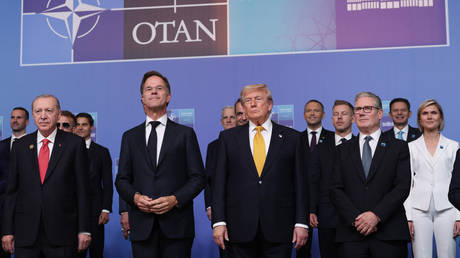
That era of quiet exposure just ended on a crowded convention floor in Ankara.
The Ankara Accord
At the recent NATO summit in Turkey, Belgian Defense Minister Theo Francken signed a cooperation agreement that fundamentally alters the country's security architecture. Belgium is committing €3.1 billion to buy 10 NASAMS medium-range air defense batteries alongside 20 Skyranger short-range systems.
It is a staggering sum for a country that has historically underspent on its military obligations.
To understand why this happened now, you have to look at the map. Belgium is not a frontline state bordering an aggressive eastern neighbor. It does not feel the immediate, kinetic anxiety of the Baltic states. But it holds something arguably more valuable to the Western alliance: the plumbing.
Belgium is home to the political heart of NATO, the bureaucratic engine of the European Union, and massive logistics hubs like Antwerp and Zeebrugge. If a major European conflict breaks out, the reinforcements, the fuel, the ammunition, and the medical supplies all flow through Belgian soil. The country is a giant highway for Western defense.
Leaving that highway entirely defenseless from the air became an unsustainable gamble.
The Machinery of the Invisible Shield
To fix a twenty-year vulnerability, the Belgian government didn't try to reinvent the wheel. Instead, they looked north.
By partnering with the Netherlands, Belgium is leveraging an existing Dutch framework agreement. This isn't just about cutting through red tape or saving money on a bulk order, though the efficiency helps. It is about speaking the same language when the worst happens. If a Belgian battery needs to talk to a Dutch radar system during a crisis, they need to connect instantly, without a translator.
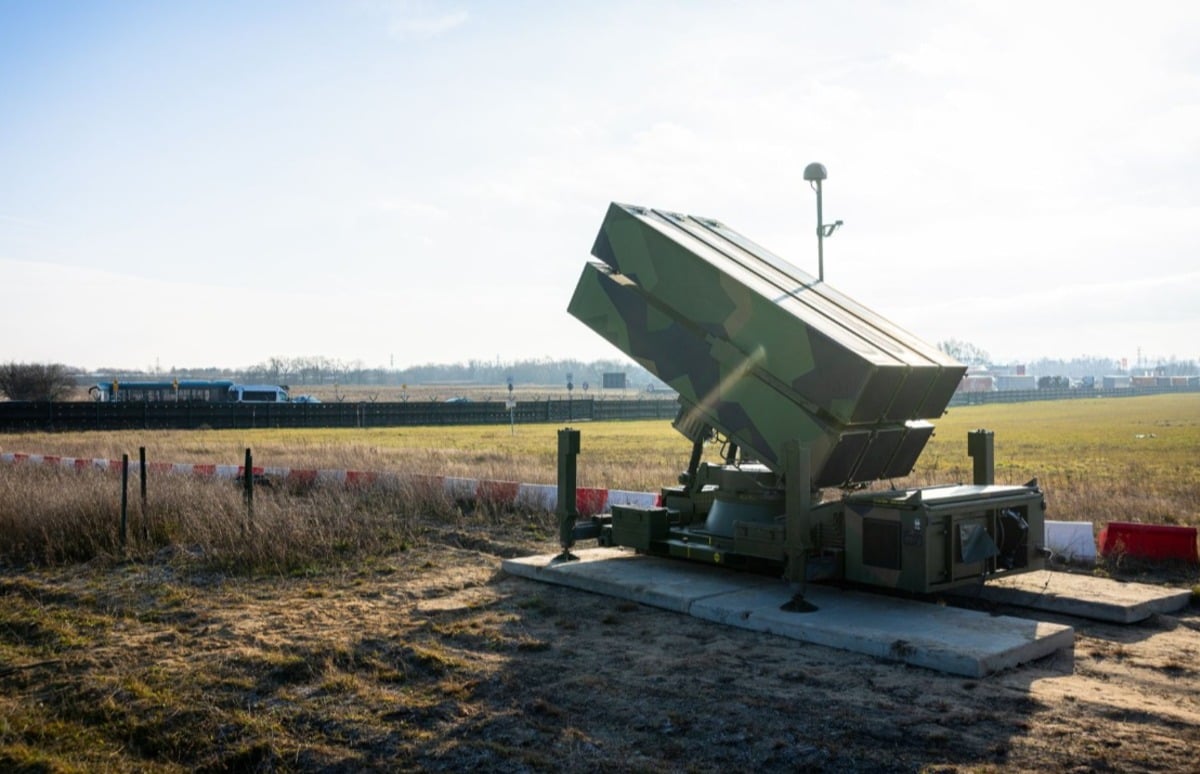
The centerpiece of this procurement is the National Advanced Surface-to-Air Missile System, or NASAMS. Developed by Norway’s Kongsberg and America’s Raytheon, it is a system designed to handle the messy, chaotic reality of modern aerial warfare.
Consider how it functions:
- The Eyes: High-fidelity radars scan the horizon, tracking dozens of targets simultaneously.
- The Brain: A fire distribution center calculates trajectories, speeds, and threat levels in real time.
- The Fist: Launchers loaded with advanced missiles capable of shredding everything from low-flying cruise missiles to sophisticated drones.
But the real power of NASAMS is its architecture. It is decentralized. You can park a launcher in a forest, put the radar on a hill miles away, and hide the command post in an unassuming warehouse. They communicate via encrypted data links. If an enemy destroys one piece of the puzzle, the rest of the system keeps fighting.
Combined with the 20 Skyranger systems—which act as a short-range, rapid-fire net against low-altitude drones and artillery—Belgium is building what military planners call a layered defense.
The Weight of €3.1 Billion
For years, defense spending in Western Europe was treated as a luxury or a political nuisance. It was easy to cut because the peace felt permanent. When Belgium dismantled its old Nike Hercules and Hawk missile units in the 1990s and early 2000s, it felt like a rational dividend of a world that had moved past total war.
Rebuilding that capability from absolute zero is brutal.
It requires training entirely new regiments of soldiers who understand the dark art of electronic warfare and missile guidance. It requires building new facilities and convincing a skeptical public that billions of Euros are better spent on silent metal canisters than on hospitals or schools.
The political debates in Brussels leading up to this choice were fraught. Politicians argued over budget allocations, the balance between American and European industrial participation, and the sheer sticker shock of the contract.
But reality has a way of forcing a consensus. The shifting geopolitical climate in Europe has made it clear that a nation without air defense is not a sovereign nation; it is a spectator.
The contract negotiations with Kongsberg are still being finalized, with a firm signature expected later this year. But the trajectory is set.
For people like Sarah working in the ports, life will continue precisely as it did before. The skies will look exactly the same. The change is completely invisible to the naked eye. But beneath that open sky, the air will carry a different weight—the quiet, lethal assurance that after twenty years of silence, someone is finally watching the horizon.