The final hours before a nation votes are supposed to belong to the quiet mechanics of democracy. Campaign posters peel in the late spring heat. Volunteers pack away plastic chairs. Voters, left alone with their thoughts, look at the ballot paper and calculate the future.
But in Yerevan, the silence of June 6 was broken by the sound of heavy car doors slamming and the hurried footsteps of state investigators.
Six men and women, all candidates for the country’s leading pro-Russian opposition bloc, the Strong Armenia alliance, did not spend their evening preparing for tomorrow's parliamentary election. Instead, they spent it in pre-trial detention cells. Armed with a sudden, near-midnight authorization from the Central Election Commission, the State Investigative Committee swept through the capital, pulling political contenders off the streets and out of their homes.
No official reasons were given to the public. No formal charges were instantly detailed. There was only the stark reality of the calendar: six prominent political figures vanished from the board less than twenty-four hours before 2.4 million eligible voters were set to decide the geopolitical destiny of the South Caucasus.
To look at Armenia today is to understand the terrifying weight of a geographic fracture line. For decades, this ancient, landlocked republic looked north toward Moscow as its ultimate security blanket, a traditional patron that guaranteed its survival in a hostile neighborhood. Now, that blanket has been violently pulled away. Prime Minister Nikol Pashinyan’s administration has spent months pivoting sharply toward the West, seeking new alliances in Europe and Washington while freezing relations with Russia.
The Kremlin did not take the snub quietly. In the weeks leading up to the election, Moscow quietly strangled the economic arteries that keep Armenia alive, placing sudden, crippling restrictions on Armenian agricultural and textile exports. Imagine a small-town farmer watching tons of fresh apricots rot in the back of a truck at a closed northern border crossing because his government shifted its rhetorical stance in a faraway parliament. That is not a metaphor; it is the reality of modern geopolitical leverage.
Consider what happens next when a society is forced to choose between the cold comfort of an old master and the uncertain promise of a new one. The political arena becomes a powder keg.
The Strong Armenia party, financed and led from afar by the billionaire Samvel Karapetyan—who is himself currently trapped under house arrest on charges of inciting a government overthrow—has positioned itself as the voice of the frightened and the pragmatic. The party’s platform is simple: stop stoking war with Moscow, preserve the economic ties that keep the lights on, and return to the familiar orbit. Up until this morning, polls suggested their message was resonating, placing them firmly in second place with up to 11 percent of the electorate, chasing Pashinyan's Civil Contract party.
Then came the systematic dismantling of the campaign.
The six weekend arrests were not an isolated lightning strike; they were the culmination of a gathering storm. Earlier in the week, the Interior Ministry announced it had processed 78 cases of pre-election crimes, detaining 44 people. By Thursday, the state apparatus had raided nearly fifty campaign offices belonging to Strong Armenia across the country, hauling away computers, campaign literature, and an additional 27 activists.
The state alleges a massive, multi-million-dollar vote-buying operation disguised as charitable employment through non-governmental organizations. The opposition calls it a desperate, authoritarian purge designed to clear the field for a ruling party terrified of its own unpopularity.
As an observer of these shifting tides, one realizes how quickly the lofty language of international diplomacy dissolves into the raw use of state power on the ground. When the state moves this swiftly, the truth becomes the first casualty. If these candidates are guilty of a massive conspiracy to subvert the vote, the timing of the state's intervention looks incredibly calculated. If they are innocent, it looks like a judicial coup. The tragedy is that tomorrow morning, millions of citizens will walk into voting booths without knowing which version of reality they are participating in.
The pressure inside Yerevan is palpable, thick with the memory of past political street battles and the ghost of recent military defeats. The Central Election Commission had already rejected a furious, last-minute legal bid by a rival faction to ban the Strong Armenia party from the ballot entirely. The party's spokeswoman, Marianna Ghahramanian, stood defiant before the cameras on the eve of the raids, stating simply that the movement was "ready for all scenarios."
She likely did not expect the scenario to include her colleagues sitting behind iron bars while the ballot boxes were being distributed to schools and community centers.
Democracy is a fragile agreement that the loser will accept the outcome because the process was fair. When a state arrests six opposition candidates on the literal eve of a national vote without immediate, transparent justification, that agreement shatters. It transforms an election from a civic ritual into a high-stakes gamble where the rules are written in disappearing ink.
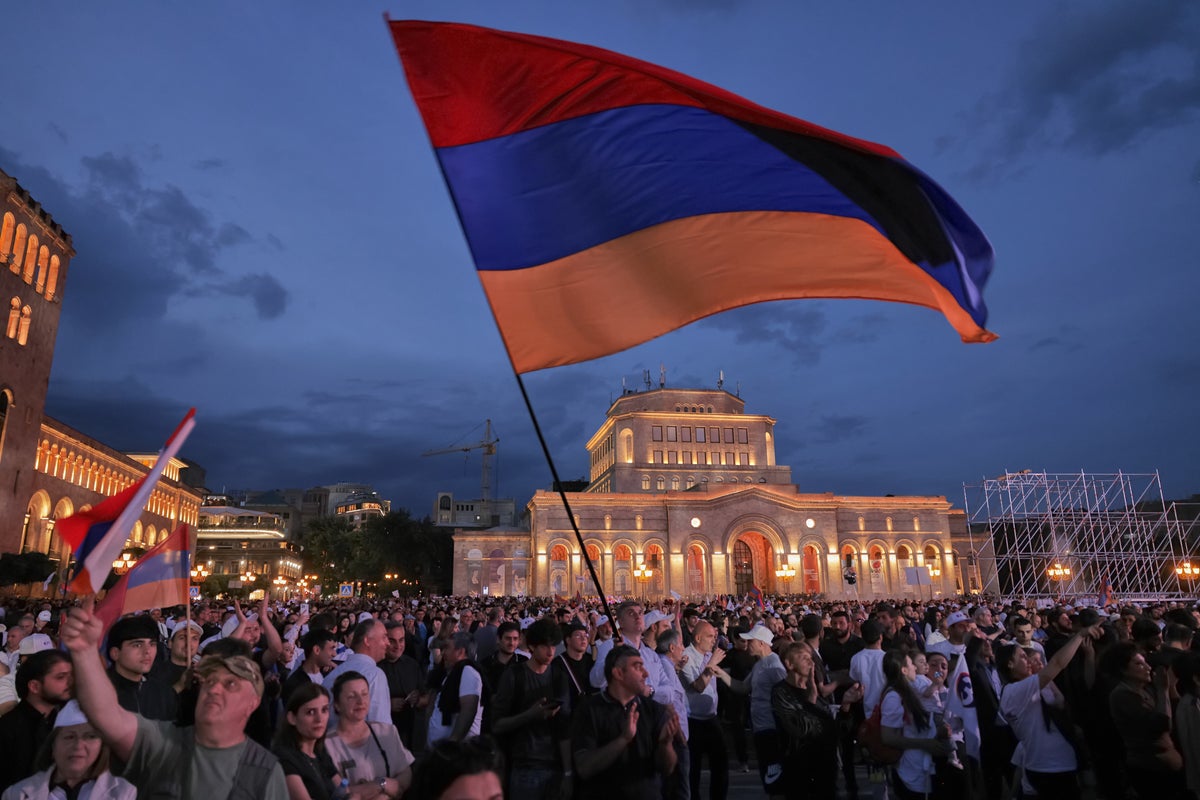
Tomorrow, the sun will rise over the stone facades of Republic Square, and the polling stations will open precisely on time. The lines will form. The ballots will be cast. But the six empty chairs in the opposition’s headquarters will tell a far more potent story than whatever numbers emerge from the plastic boxes by midnight.