The ink on the ledger is still wet, and the numbers are already incomprehensible. Twenty-five billion dollars. It is a figure that slides off the tongue like a smooth stone, easy to say but impossible to hold. In Washington, this is a line item, a point of debate under fluorescent lights in a room that smells of stale coffee and expensive wool. For the rest of the world, it is a ghost. It represents a vacuum where schools, hospitals, and infrastructure used to exist, replaced by the kinetic energy of a conflict that remains a flickering image on a nightly news broadcast.
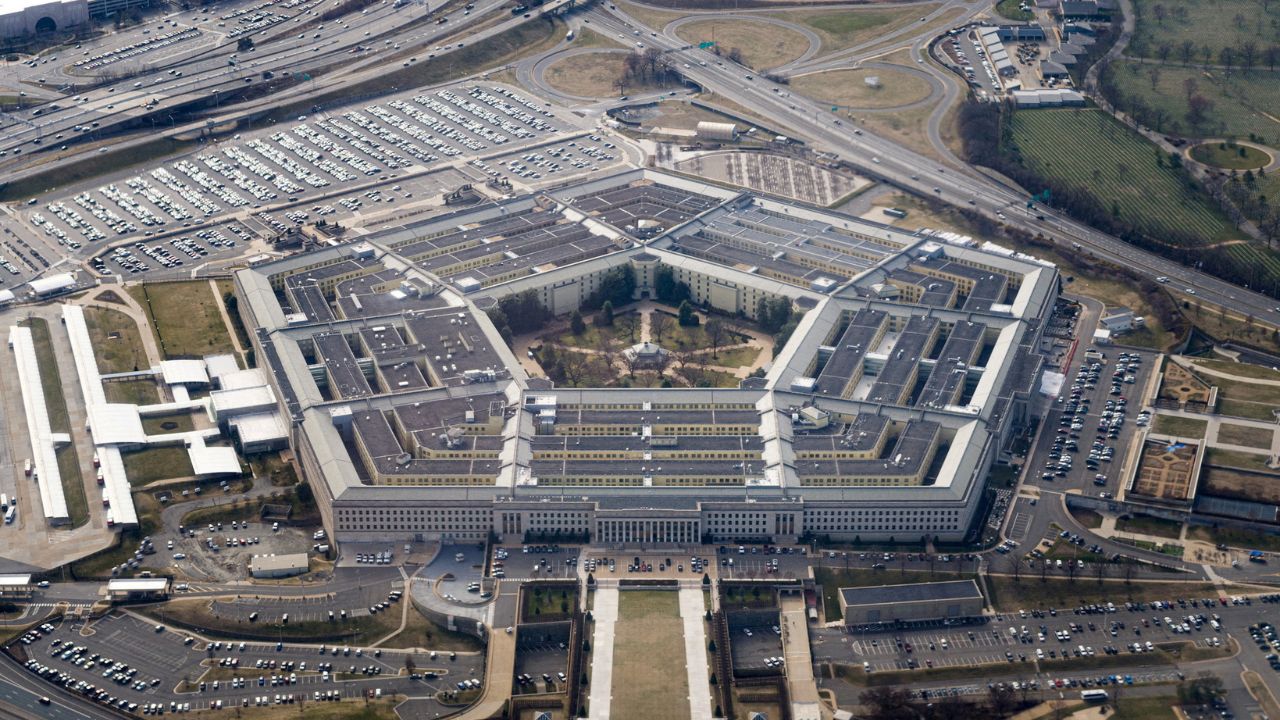
Pentagon officials recently confirmed this price tag for the ongoing operations. They spoke with the flat, rhythmic tone of accountants, stripping the blood and the heat from the data. But money is never just money. It is a measurement of priority. It is a physical manifestation of where a nation’s heart—and its future—is currently buried.
Suppose you are a young drone pilot in a trailer in Nevada, thousands of miles from the dry, scorched earth of the Middle East. Your eyes are bloodshot from the blue light of the monitors. Your hands, steady as a surgeon's, move a joystick that costs more than a family sedan. When you pull the trigger, the "cost" of that moment isn't just the $100,000 Hellfire missile that streaks across the screen. It is the years of research, the satellite arrays orbiting in the cold dark of space, and the massive logistical machine that keeps your air conditioning running while the desert outside your trailer swelters.
That single flash of light on your screen is a tiny fraction of the twenty-five billion.
The Weight of a Shadow
We often think of war as a series of explosions, but modern conflict is more like a high-stakes hardware store that never closes. The $25 billion spent so far isn't just for munitions. It’s for the mundane. It is the fuel for transport planes that gulp thousands of gallons an hour. It is the contract for the digital security that prevents a foreign actor from shutting down a power grid in Ohio in retaliation. It is the shipping containers of freeze-dried meals and the bottled water that must be moved across oceans.
Logistics is the silent thief of the national treasury. Every time a carrier strike group moves a few hundred miles, the tax dollars of a generation are burned in a trail of salt spray and diesel exhaust. We are paying for the privilege of presence. We are buying a seat at a table where the stakes are life and death, but the chips are made of our collective labor.
Consider the ripple effect of this spending. When the Pentagon announces a figure like this, they aren't just talking about the past; they are signaling the appetite for the future. $25 billion is enough to fund the National Cancer Institute for four years. It could wipe out the student debt of hundreds of thousands of people. It could modernize the crumbling electrical grids of three major American cities. Instead, it has been converted into the kinetic energy of interception missiles and the silent vigil of surveillance craft.
The math of conflict is inherently subtractive. We take from the potential of what we could be to maintain the status quo of what we fear.
The Invisible Infrastructure of Escalation
The technology driving this cost is unlike anything seen in previous decades. We aren't just sending soldiers with rifles; we are deploying a digital net. A single F-35 fighter jet, which might be loitering in the region as a deterrent, costs tens of thousands of dollars per hour just to stay in the air. This isn't a metaphor. It is a literal drain on the wealth of the nation, one flight hour at a time.
There is a psychological distance that comes with this kind of spending. Because we don't see the money leaving our wallets in real-time, it feels theoretical. It feels like "government money," a mystical resource that exists in a separate reality. But the debt is real. The interest on that debt is real. We are essentially taking out a high-interest loan against the year 2040 to pay for a stalemate in 2026.
The hardware itself is a marvel of human ingenuity, which makes the tragedy of its purpose even more biting. We have perfected the art of tracking a human heartbeat from space. We have engineered materials that can withstand the heat of reentry and the pressure of the deep sea. We have built systems that can communicate across the globe in milliseconds. And we are using that peak of human achievement to ensure that a specific patch of dirt remains under our influence.
Imagine the engineer who spent a decade perfecting the guidance system of a missile. They are brilliant, driven, and patriotic. They have solved problems that baffled the greatest minds of the last century. Their work is a masterpiece of mathematics and physics. Yet, the culmination of that brilliance is a single, expensive boom that leaves nothing behind but a bill and a crater.
The Human Ledger
Away from the screens and the statistics, there are the people who live in the margins of the $25 billion. There is the civilian whose shop was closed because the supply lines were cut. There is the soldier who returns home with a brain that feels like it’s been rattled in a tin can, looking for a VA system that is constantly fighting for the scraps of the budget left over after the weapons are paid for.
The most expensive part of any war isn't the weapons. It’s the aftermath. The $25 billion is just the down payment. It doesn't account for the decades of medical care, the mental health services, or the economic vacuum left in the wake of redirected resources. We are experts at calculating the cost of a strike, but we are amateurs at calculating the cost of a soul.
The numbers will keep climbing. They always do. Another billion for a new radar array. Another five hundred million for a "stabilization" initiative. The figure is a moving target, a snowball rolling down a hill of geopolitical instability.
We find ourselves in a strange paradox where the more we spend to feel safe, the more precarious our foundation becomes. A nation is only as strong as its people, and people need more than just a shield. They need a reason to believe that the future is being built, not just defended.
When you hear that number—$25 billion—don't think of it as a statistic. Think of it as a mountain of missed opportunities. Think of it as the sound of a silent classroom or the sight of a bridge that was never repaired. It is the cost of our inability to find another way.
The sun sets over the Potomac, casting long shadows across the buildings where these decisions are made. Somewhere, a clerk is updating a spreadsheet. The number clicks upward. 25,000,000,001. 25,000,000,002. The clock is ticking, and the bill is coming due, written in a language that no one wants to translate.