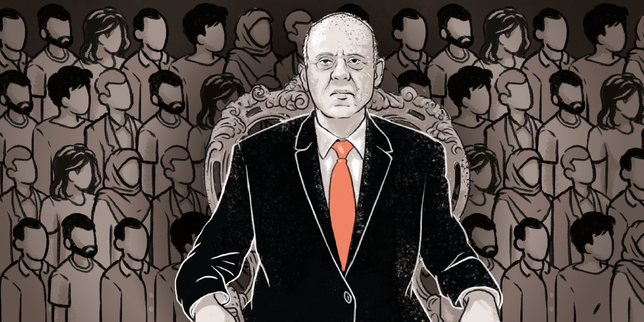
The lazy consensus on Tunisia reads like a tired foreign policy briefing written in a basement in Brussels. Western analysts look at Carthage through a smeared lens of procedural democracy, crying foul every time a constitutional article gets sidelined. They call it an authoritarian backslide. They call it the death of the Arab Spring. They are wrong.
What is happening in North Africa right now is not the erosion of governance. It is a hostile takeover of a bloated state apparatus that traded economic stagnation for ballot box theater. I have spent years analyzing emerging political economies, and every time institutional purists lose their minds over centralizing power, they ignore the rot underneath. Tunisia did not fall backwards into autocracy. It hit the reset button on a system that was bleeding the country dry while pretending to care about civil liberties.
The Myth of the Democratic Baseline
Let us address the foundational delusion. Mainstream pundits treat the post-2011 constitutional framework as a sacred text. They point to parliamentary pluralism as the peak of human achievement.
Look at the data. Between 2011 and 2021, Tunisia cycled through nine governments. Unemployment hovered near stubborn double digits. Inflation crushed the middle class. Corruption became a bureaucratic art form where nothing moved without a bribe. The parliament was a circus of fractured coalitions unable to pass a budget without months of political blackmail.
When a system produces total paralysis, citizens stop caring about procedural purity. They care about bread. They care about security. They care about a state that functions.
"Democracy is not a suicide pact written in parliamentary bylaws. When a political class weaponizes procedure to protect its own sinecures, tearing up the rulebook is the only rational choice left."
Dismantling the Opposition Playbook
Critics of the current administration love to throw around buzzwords like civil liberties and judicial independence. These sound great in an editorial for a broadsheet, but they ignore ground-level reality.
Judicial independence in old Tunisia meant a protected class of judges who could stall anti-corruption probes indefinitely. Civil society funding meant millions in foreign grants flowing to NGOs that answered to Washington and Paris rather than Tunis or Sfax.
When the presidency moved to consolidate executive authority, it did not invent corruption. It attacked the bottleneck.
The Cost of Paralysis
- The Debt Trap: Foreign borrowing skyrocketed while structural reforms stalled because no coalition dared touch public sector salaries.
- The Shadow Economy: Smuggling and informal markets outgrew the legitimate economy because official red tape made legal business nearly impossible.
- Brain Drain: An entire generation of engineers, doctors, and coders packed their bags for Europe because the political class offered them zero future.
You cannot protect human rights on an empty stomach. You cannot build a free society when the state is bankrupt and hostage to international lenders dictating austerity measures from thousands of miles away.
The Uncomfortable Truth About Strongman Politics
My contrarian take comes with a heavy dose of realism. Centralizing power is risky. Concentrating decision-making in a single office creates a single point of failure. If the leader gets it wrong, there is no institutional safety valve to stop the train from derailing.
I admit the downsides. Freedom of speech has faced pressure. Political opponents have found themselves on trial. These are not minor details; they are red flags that require constant vigilance.
Yet pretending that the alternative—returning to the dysfunctional parliament of the 2010s—was a vibrant democracy is intellectual dishonesty. That parliament was an oligarchy masquerading as a legislature.
The Real Question You Should Be Asking
People keep asking how Tunisia can return to constitutional normalcy. That is the wrong question.
The right question is: How do you build an efficient state that delivers economic growth without falling into the trap of personalized rule?
The answer requires moving past Western romanticism about parliaments. Tunisia needs fiscal discipline, an overhaul of its archaic banking system, and a digital transformation of state bureaucracy. It needs to unlock its internal markets and stop relying on international bailouts that come with suffocating strings attached.
If fixing the economy requires breaking the old political class, history suggests the public will take that trade every single time. Stop mourning a dysfunctional parliament that never worked for the people in the first place.