Economic sanctions were designed to punish dictators, freeze out terrorists, and squeeze regimes that abuse their citizens. For decades, Washington used the power of the US dollar as a stick to enforce a rules-based global order. Not anymore.
The White House is flipping that playbook upside down. Instead of penalizing the abusers, the administration is deploying its financial might against the very people who investigate human rights abuses. This isn't just a minor shift in policy. It's a complete rewiring of how the US uses economic coercion, turning a tool meant for global justice into a weapon against it. In other news, take a look at: The Trillion Rupee Bet on Bengaluru Underbelly.
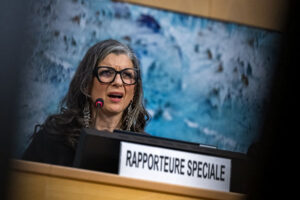
If you want to understand why this matters, look at what happened to Francesca Albanese, the United Nations Special Rapporteur on the Occupied Palestinian Territories. In July 2025, the administration slapped her with sanctions after she documented actions in Gaza. By May 2026, an appeals court locked those penalties back in place, overturning a temporary judicial reprieve.
The reality of these measures isn't abstract. It's brutal. Albanese can't use credit cards. Her Washington DC apartment was seized. Georgetown University severed her academic affiliation. This is the first time the US has targeted an independent UN human rights expert this way. It shows how far the current administration will go to shield its allies from scrutiny. NPR has analyzed this important issue in extensive detail.
The Financial Chokehold On International Law
This strategy isn't limited to a single UN rapporteur. The main target is the International Criminal Court (ICC) in The Hague.
In February 2025, President Trump signed Executive Order 14203. It declared that ICC investigations into US citizens or allies without Washington’s consent create a national security emergency. The order allows the government to freeze assets and block visas for anyone working with the court.
Since then, Secretary of State Marco Rubio has steadily expanded the hit list. The administration has targeted at least 11 ICC officials, including Chief Prosecutor Karim Khan and nine international judges.
Look at who they went after:
- Slovenian judge Beti Hohler
- Beninese judge Reine Alapini-Gansou
- Peruvian judge Luz del Carmen Ibáñez Carranza
- Ugandan judge Solome Bossa
- Canadian judge Kimberly Prost
The administration labeled these legal professionals as threats to American security. Their actual offense was simple. They did their jobs. They participated in rulings, issued warrants, or authorized investigations involving Israeli Prime Minister Benjamin Netanyahu or past US actions in Afghanistan.
By freezing their personal bank accounts and banning their families from entering the country, Washington is trying to starve out the court of last resort.
Dismantling the Global Magnitsky System
The shift has also corrupted tools that were once celebrated by human rights advocates. Take the Global Magnitsky Human Rights Accountability Act. Congress passed it to freeze the assets of foreign officials who torture dissidents or steal state wealth. During Trump's first term, it was used against figures like former Gambian President Yahya Jammeh, who ran assassination squads.
Today, the program is being used to protect political allies rather than punish abusers.
When the administration finally dusted off the Global Magnitsky toolkit recently, it didn't target a warlord or a corrupt oligarch. It targeted Alexandre de Moraes, a Supreme Court justice in Brazil. Why? Because de Moraes led investigations into the January 2023 riots in Brasilia, where supporters of former President Jair Bolsonaro—a close ally of Trump—stormed government buildings.
The administration claims de Moraes is guilty of arbitrary detention for prosecuting those rioters. Human rights organizations are furious. They point out that using a tool designed for fighting tyranny to protect political allies who tried to overturn an election completely breaks the system. It signals to the world that if you are friendly with the White House, the rules don't apply to you.
The Chilling Effect on Global Civil Society
The consequences of this strategy extend far beyond the individuals named on Treasury Department lists. It creates a massive, systemic freeze across the globe.
Because US banks dominate international finance, a US sanction is effectively an economic death sentence anywhere in the world. Foreign banks, corporations, and non-profits are terrified of getting hit with secondary penalties. If a human rights group shares data with the ICC or helps a UN investigator, they risk losing their bank accounts, their funding, and their ability to operate.
We are already seeing the damage. Last year, two prominent US-based human rights organizations pulled out of the ICC’s annual meeting entirely. They weren't radical activists; they were mainstream legal advocates who realized that simply showing up to a meeting could expose them to federal penalties under Executive Order 14203.
When independent watchdogs are too afraid to document war crimes, authoritarian regimes win. Dictators around the world are watching Washington use these tactics. They now have a perfect blueprint to justify their own crackdowns on activists, journalists, and investigators. If the world's superpower labels human rights lawyers as national security threats, why shouldn't they?
Navigating a Post Justice Foreign Policy
The global human rights framework is entering a dangerous era. Washington is no longer an inconsistent defender of international law; it is actively working to dismantle the institutions that enforce it.
If you run an NGO, manage international compliance, or work in global advocacy, you can't rely on traditional assumptions about US foreign policy anymore. You need to adjust your strategy to survive this shift.
First, decouple your operations from US jurisdictions wherever possible. If your organization handles sensitive human rights data or cooperates with international courts, insulate your financial tracks. Use European or non-US banking institutions that are less vulnerable to unilateral executive orders from Washington.
Second, shift your focus toward regional legal systems. With the ICC and UN experts under financial siege by the US, bodies like the Inter-American Court of Human Rights or European domestic courts using universal jurisdiction become critical. They have more insulation from Washington's economic leverage.
The rules of global accountability have changed. The biggest economy in the world is actively punishing the people who monitor atrocities. Survival means building a more resilient, decentralized network for justice that can withstand pressure from the very country that used to underwrite it.