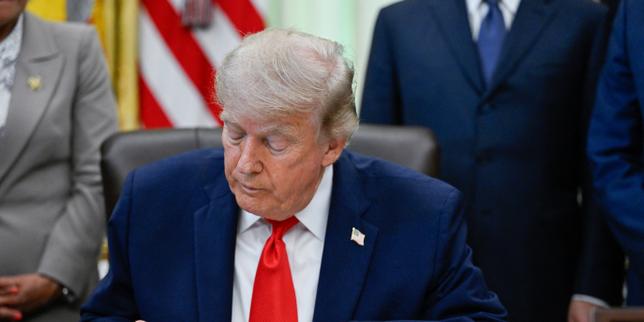
The mainstream media is treating the latest rhetorical tennis match between Donald Trump and Tehran like a breaking news bombshell. Trump claims a deal is practically signed; Tehran rushes to the microphones to insist no "definitive conclusion" has been reached. Journalists are scrambling to analyze the diplomatic friction, checking their geopolitical weather vanes to see if we are heading toward a historic breakthrough or a catastrophic breakdown.
They are all missing the point.
The entire narrative around a "new Iran deal" is a choreographed piece of political theater. Both sides are playing a carefully calculated game of chicken where the actual signing of a document is entirely irrelevant to their true strategic goals. The press treats these statements as genuine foreign policy positions, but anyone who has managed cross-border risk or navigated sanctions enforcement knows the truth: the noise is the strategy.
The Illusion of the "Definitive Conclusion"
Mainstream geopolitical analysis operates on a flawed premise. It assumes that diplomatic negotiations are designed to reach a fixed, permanent contract. In the real world of high-stakes sanctions and state survival, ambiguity is vastly more valuable than certainty.
When Donald Trump suggests an agreement is imminent, he is not announcing a policy; he is conducting market manipulation. He understands that the mere hint of a stabilization agreement in the Middle East puts downward pressure on oil volatility, reassures nervous Western markets, and projects an image of ultimate dealmaking authority to his domestic base.
Conversely, when Tehran denies a final agreement, they are protecting their internal leverage. The moment Iran’s leadership admits to a done deal, they lose their ability to extract further concessions from regional proxies and European trade partners who operate in the gray zones of the global economy.
The Reality Check: A signed treaty in modern geopolitics is an anomaly, not the goal. The status quo of perpetual negotiation serves both regimes perfectly. It allows Washington to maintain maximum pressure optics while permitting Tehran to run a highly lucrative parallel economy.
Follow the Shadow Liquidity, Not the Press Releases
If you want to know what is actually happening between Washington and Tehran, stop reading diplomatic cables. Look at the shipping manifests and the energy settlement systems in East Asia.
For years, mainstream analysts argued that US sanctions would completely choke off Iran’s economic lifeblood. They were wrong because they viewed global trade as a transparent system governed by Western banks. Having worked alongside compliance frameworks that attempt to monitor these flows, I can tell you that the international financial system is far more porous than Washington admits.
Iran has spent more than a decade perfecting its "ghost fleet"—a network of subtly re-flagged oil tankers that move millions of barrels of crude daily, largely destined for independent refineries in China. These transactions do not happen in US dollars, nor do they pass through the SWIFT network. They are cleared through regional bank networks and barter arrangements that Western regulators simply cannot touch without triggering a broader trade war with Beijing.
+----------------------------+-----------------------------------+
| Mainstream Myth            | Market Reality                    |
+----------------------------+-----------------------------------+
| Sanctions isolate Iran     | Sanctions built a robust parallel |
| completely.                | financial ecosystem.              |
+----------------------------+-----------------------------------+
| A deal stops the nuclear   | The nuclear program is a permanent|
| program permanently.       | leverage asset, never to be sold. |
+----------------------------+-----------------------------------+
| Statements reflect actual  | Statements are tools for domestic |
| progress on the ground.    | and market manipulation.          |
+----------------------------+-----------------------------------+
When Trump talks about a deal, he acknowledges this reality without saying it out loud. He knows that total economic strangulation is a mathematical impossibility in a multipolar world. The goal of a "new deal" isn't to disarm Iran; it is to formalize a baseline of managed instability that keeps oil flowing while keeping regional escalation below the threshold of an all-out land war.
Dismantling the Expert Consensus
Let’s address the inevitable pushback from the think-tank establishment. The prevailing consensus argues that a structured diplomatic framework—a resurrection of something akin to the 2015 Joint Comprehensive Plan of Action (JCPOA)—is the only path to regional stability.
This view is dangerously naive. It ignores how state actors calculate risk.
1. The Fiction of Compliance Verification
The belief that international inspectors can indefinitely freeze a state’s industrial-scale technological ambition is a fantasy. Nuclear knowledge cannot be unlearned. Even under the strictest inspection regimes, dual-use technology and decentralized research facilities ensure that the timeline to breakout capability remains elastic, adjusting entirely to Tehran's strategic needs, not Western timelines.
2. The Sunken Cost of the Parallel Economy
Tehran has invested billions in building a sanctions-evading infrastructure. Entire industries, logistics hubs, and financial clearing houses in the Middle East and Asia exist solely to facilitate this gray trade. A formal normalization of relations would actually disrupt this entrenched economic elite inside Iran. They do not want a clean, transparent market; they profit immensely from the premium that a restricted market commands.
The True Cost of Counter-Intuitive Diplomacy
Admitting that the negotiations are a charade comes with a bitter pill for Western businesses and policymakers. The downside of acknowledging this reality is that you must abandon the comfort of predictable, rules-based forecasting.
If you are managing an international supply chain, hedging energy futures, or advising corporate boards on geopolitical exposure, you cannot rely on the public statements of world leaders. You must build your strategies around the assumption that the tension is permanent.
Imagine a scenario where a Western multinational halts its expansion plans in the Mediterranean or the Gulf because they are waiting for a definitive peace accord to be signed between the US and Iran. They will wait forever, losing market share to agile, non-aligned competitors who understand that the friction is the permanent operating environment.
Stop asking when a deal will be finalized. Start asking how your operations can thrive in a world where a deal is always "just around the corner" yet never actually arrives.
The Mechanics of Managed Friction
The true blueprint of US-Iran relations is not a treaty; it is an unwritten, constantly renegotiated set of boundaries.
- Red Lines over Signed Lines: Both sides know exactly how far they can push before triggering a kinetic response. Cyber warfare, proxy skirmishes, and targeted asset seizures are all calibrated to stay just below the horizon of total war.
- The Rhetoric Premium: Every time a headline screams about a potential conflict or a sudden peace breakthrough, it creates a brief window of market inefficiency. Sophisticated state actors and sovereign wealth funds exploit these artificial price swings in commodities and currencies.
The media will continue to dissect every press release from Washington and every denial from Tehran as if they are pieces of a puzzle moving toward a grand resolution. They are not. They are the repetitive loops of a script designed to maintain a delicate balance of power.
The deal is a ghost. The theater is permanent. Act accordingly.


