Donald Trump doesn't do compromise. He also doesn't do losing gracefully. When a federal judge blocked his aggressive plan to close Washington's marquee cultural hub and strip John F. Kennedy's name from half the marquee, Trump didn't just vow an appeal. He took his ball and went home.
In a sudden shift, the president announced he's abandoning his grand, controversial multi-million-dollar renovation project entirely. He wants to dump the responsibility of managing the John F. Kennedy Center for the Performing Arts straight back into the lap of Congress. It's a classic tactical retreat wrapped in a signature social media blast. If he can't run the show completely, he won't be a part of it at all. If you enjoyed this article, you might want to check out: this related article.
This isn't just a minor squabble over historic preservation or theater seats. It's a massive window into how the administration approaches the institutional architecture of Washington D.C., and what happens when the legal system pushes back hard.
The Legal Smackdown That Started It All
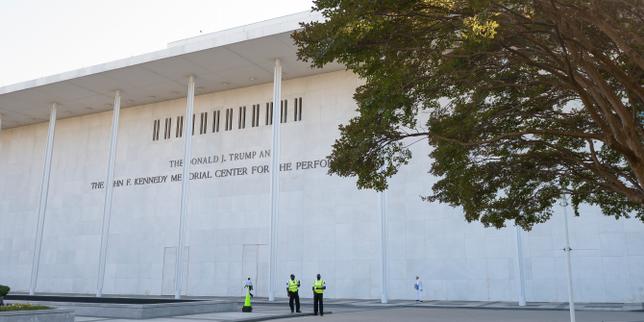
The drama peaked when U.S. District Judge Christopher Cooper dropped a definitive 94-page ruling. The decision threw out the Kennedy Center board's unilateral move to rename the institution "The Donald J. Trump and The John F. Kennedy Memorial Center for the Performing Arts." For another angle on this story, see the latest update from Al Jazeera.
The legal logic was dead simple. Congress created the Kennedy Center by statute. Congress named it. Therefore, only Congress can change it. The hand-picked board of trustees didn't have the authority to alter the building's identity on their own say-so.
Judge Cooper didn't stop at the branding. He also put a hard freeze on the administration's planned two-year total closure of the facility, which was scheduled to kick off this July. The court called the board's March vote to shutter the venue "ill-informed and seemingly preordained." The ruling basically accused the trustees of failing to do their actual homework regarding their legal and operational obligations to the public.
The backlash had been building for months. Democratic Representative Joyce Beatty of Ohio, an ex officio board member, led the charge by suing her fellow trustees. Preservation groups like the National Trust for Historic Preservation jumped in too, horrified that the building’s iconic 200 gold exterior columns had already been painted white and stamped with Trump's name before any official federal reviews occurred.
The Trump Ultimatum
Trump's reaction on Truth Social arrived with zero ambiguity. He claimed the judge "should be ashamed of himself" and laid out his terms clearly.
“Unless I am free to do what I do better than anyone else, bring this Institution back, physically, financially, and artistically, I have no interest in continuing what could only be a hopeless journey into 'NEVER NEVER LAND.'”
Instead of digging in for a protracted courtroom siege over the venue's daily operations, Trump told his administration to work with Congress and the Department of Commerce to orchestrate a full transfer of management. He labeled the center a "failing institution" that had suffered from years of neglect and deep financial holes before he arrived.
This is a complete shift from the triumphal tone of early 2025. Back then, Trump pulled off an unprecedented structural takeover. He fired his predecessor's appointees to the board of trustees, installed himself as the board's chairman, removed the center's long-term president Deborah Rutter, and installed loyalists like Richard Grenell into leadership slots.
The administration used the venue as a high-profile cultural stage. It hosted the World Cup draw, the movie premiere for the first lady's documentary, and political speeches. But the aggressive political branding triggered an equal and opposite reaction. High-profile shows like the touring production of "Hamilton" pulled out. The Washington National Opera packed up and ended its historic 55-year residency at the center. Ticket sales tanked, and the venue became a cultural battlefield rather than a national treasure.
The Half-Billion-Dollar Fundraising Hole
The sudden exit leaves the center in a state of operational limbo. The current executive director, Matt Floca, had argued fiercely in court that Trump's name was the literal engine driving the center's financial survival. Trump had already brought in tens of millions of dollars in commitments and was on the hook to raise another $150 million over the next two years to fund deep structural repairs.
According to management, the building is in dangerous disrepair. Heavy exterior panels are structurally unstable, water is actively leaking into high-voltage electrical vaults, and old plumbing lines are failing. The administration insisted that closing the whole place down for a fast two-year overhaul was the only logical path forward.
Opponents see it entirely differently. Lawmakers like Representative Chellie Pingree argue the proposed closure was less about fixing plumbing and more about a political cover-up to hide the drop-off in ticket revenue and programming caused by the partisan takeover. With the president washing his hands of the fundraising drive, the center faces a massive budget gap that Congress will somehow have to patch.
Moving Past the Standoff
The immediate next steps fall squarely on Capitol Hill and the theater's remaining management teams. If you’re tracking how this impacts the cultural landscape of the capital, keep your eyes on a few specific operational developments.
First, watch the scaffolding. The court gave workers a strict 14-day window to strip the Trump signage from the building's facade and eliminate the "Trump Kennedy Center" moniker from digital branding and marketing materials.
Second, watch the federal budget. Because Trump is walking away from his multi-million-dollar private donor pledge, Congress will have to address the structural maintenance issues through the direct appropriations process. Look for upcoming House and Senate committee hearings to reveal the actual, unvarnished dollar amount needed to fix the water leaks and structural decay without shutting the doors entirely.
Finally, watch the booking calendar. Now that the immediate threat of a two-year shutdown is gone, national touring companies and regional arts organizations will have to decide if it's safe to book dates back into the Washington venue. The real test of the center’s recovery won't happen in a courtroom; it will show up in the box office numbers and the return of long-term artistic partners who fled the political crossfire.