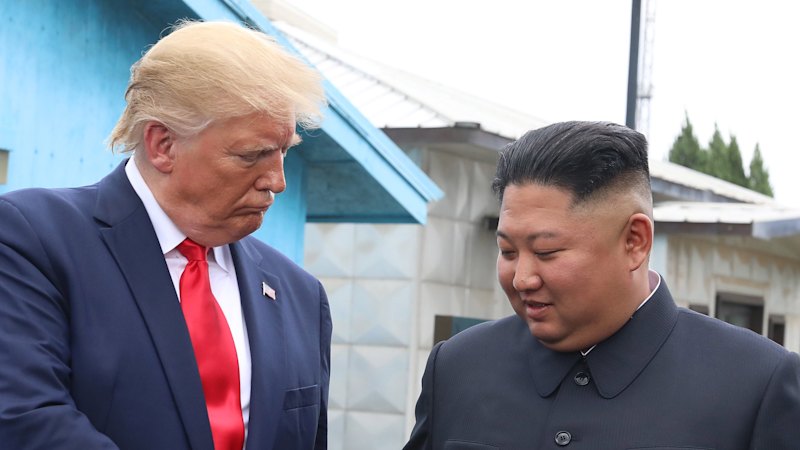
President Donald Trump just shook up international security policy by ordering the Pentagon to significantly cut back joint military exercises with South Korea. Citing his personal rapport with North Korean leader Kim Jong Un, Trump claimed that ongoing large-scale drills send an unnecessary, hostile signal to a regime that he views as currently unthreatening.
The announcement, delivered via social media, lands right as the allied forces prepared to launch major scheduled readiness exercises. Trump directed Secretary of War Pete Hegseth to scale down the operations, arguing that the financial burden on the United States is too high and that diplomatic openings matter more than traditional displays of force.
The Backstory on Trump and Kim Jong Un
You can't understand this sudden directive without looking at the strange history between Trump and Pyongyang. During his first term in office, Trump famously traded harsh insults with Kim, calling him "Rocket Man" while North Korea conducted high-profile nuclear and missile tests.
That hostility eventually pivoted into historic face-to-face diplomacy. Trump held three separate summits with Kim in places like Singapore and Hanoi, even briefly stepping across the demarcation line into North Korean territory during a 2019 visit. While those meetings didn't yield a formal, permanent denuclearization agreement, Trump has consistently maintained that his personal chemistry with the authoritarian leader creates an opening for peace that traditional foreign policy establishments miss.
More recently, Trump shared archival imagery and reiterated his desire to keep lines of communication open, arguing that mutual respect keeps regional tensions lower than aggressive posturing ever could.
Friction With Seoul and Broader Geopolitics
The decision to curb the military exercises isn't happening in a vacuum. Trump also voiced open frustration with South Korea's leadership. He noted that when he recently asked South Korean officials if they wanted to pitch in on American-led efforts regarding Iran's nuclear program, the response was a flat rejection.
This friction highlights a recurring theme in Trump's foreign policy approach: transactional alliances. If regional partners aren't willing to back American security priorities elsewhere, Trump sees little reason to maintain costly, provocative military drills that irritate adversaries.
Critics within defense circles argue that scaling back readiness drills compromises tactical preparedness, especially as intelligence reports suggest North Korea continues to refine its capabilities. Yet Trump remains convinced that keeping the peace relies on direct dialogue rather than endless war games.
Watch how Seoul responds to the directive over the coming weeks as the altered schedule takes effect. The balance of power in East Asia continues to shift on the whim of a single social media post.


