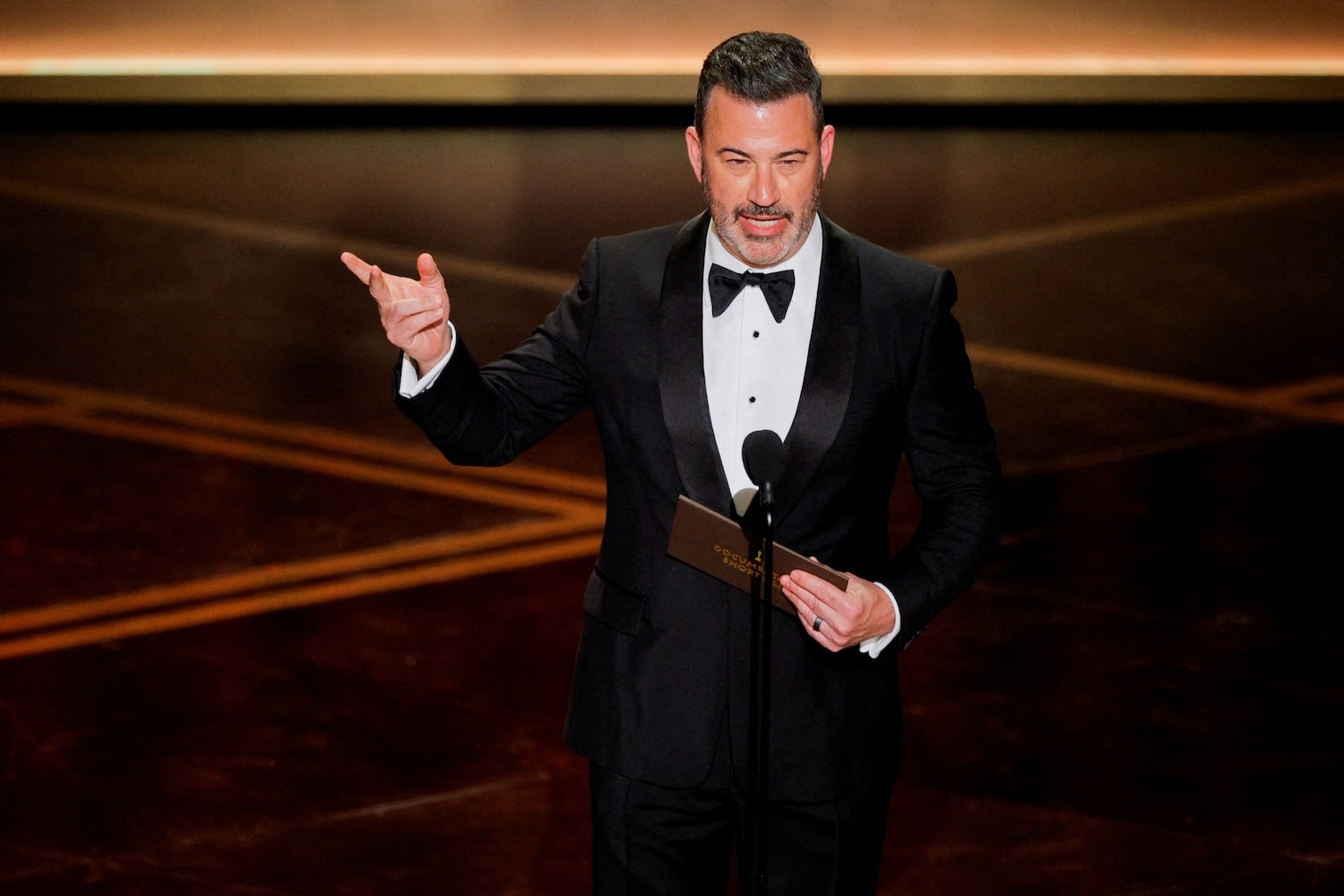
The outrage machine is broken. Every time Donald Trump demands that a late-night host be fired for a joke, and every time Jimmy Kimmel leans into the role of the martyr-clown, the public loses. Not because of "decency" or "political discourse," but because we are being subjected to a scripted, low-stakes wrestling match that masks a much harsher reality: late-night television is a ghost ship, and these public spats are the only way anyone remembers it’s still afloat.
The latest dust-up involving a "widow" comment about the former First Lady is not a crisis of comedy or a threat to democracy. It is a desperate bid for relevance from two entities that need each other to survive. Read more on a similar issue: this related article.
The Myth of the Great Cancellation
The "lazy consensus" in modern media reporting is that these demands for firing are genuine attempts at censorship. They aren't. They are marketing.
When Trump calls for Kimmel’s head, he isn't trying to silence a critic. He is providing Kimmel with the one thing a late-night host cannot buy with a $15 million salary: a reason to exist. In an era where linear television ratings are cratering—down nearly 50% for some networks over the last five years—a presidential-level feud is the only thing that moves the needle on social media clips. More analysis by Variety delves into similar views on the subject.
Without Trump to kick around, Kimmel is just a guy in a suit telling monologue jokes to an empty room of tourists. Without Kimmel to label as a "loser" or "talentless," Trump loses his most effective foil to signal to his base that the "elites" hate them. It is a symbiotic relationship. They aren’t enemies; they are co-writers of a tired sitcom.
The Widow Joke was a Distraction from the Real Failure
The controversy centers on a comment regarding Melania Trump’s public absence. Critics call it "vile." Supporters call it "truth-telling." Both are wrong.
The real issue is that the joke wasn't funny.
Comedy is supposed to punch up, down, or sideways, but above all, it is supposed to be surprising. There is nothing surprising about a late-night host taking a shot at the Trump family in 2026. It is the most predictable, safest move in the industry.
I’ve watched media conglomerates burn through billions in market cap while their flagship late-night shows became echoes of a single Twitter feed. When you alienate half the country, you aren't being "brave." You are shrinking your market. The math is brutal. In the 90s, Jay Leno and David Letterman fought for 15 million viewers combined. Today, the leaders struggle to crack 2 million.
The "widow" comment wasn't a lapse in judgment. It was a calculated risk to generate a headline because the monologue itself wasn't worth sharing.
Imagine a World Where the TV Stays Off
Imagine a scenario where a politician ignores a comedian. The comedian’s ratings continue their slow, agonizing slide into the single digits. The comedian eventually loses their slot to a 24-hour infomercial or a curated feed of TikTok dances because that content actually generates revenue.
By engaging, Trump grants Kimmel a stay of execution. He validates the idea that what happens on ABC at 11:35 PM actually matters.
It doesn't.
We are living through the "Parasocial Trap." Viewers tune in not for the humor, but for the validation of their own tribal grievances. This isn't entertainment; it's a church service for people who hate the same people you do.
The High Cost of the Outrage Loop
Why does this keep happening? Because the mechanics of the digital economy demand it.
- The Outrage Algorithm: A clip of Kimmel being "savage" gets 10x the engagement of a clip of him interviewing a movie star.
- The Presidential Signal: A Truth Social post about a "failing" show gives the base a specific target, reinforcing loyalty.
- The Ad Revenue Lie: Networks can still charge premium rates for "live" TV, even if the "live" audience is a fraction of what it used to be, as long as the show remains "culturally relevant."
The "relevance" is manufactured. It’s a hall of mirrors.
The False Premise of the "Firing" Demand
People also ask: "Can a President actually get a comedian fired?"
The question itself is flawed. In a free market, a host gets fired when they stop being profitable. Trump knows he doesn't have the legal authority to fire a private employee of Disney/ABC. He isn't stupid; he’s a producer. He is playing a role.
The danger isn't that a comedian might lose their job. The danger is that we have replaced genuine cultural critique with a repetitive loop of performative offense. We are debating the "cruelty" of a joke while the actual structure of our media consumption is rotting from the inside out.
Why You Should Stop Caring
Every minute spent arguing about whether Kimmel went "too far" is a minute spent ignoring the fact that late-night TV is a vestigial organ of a dead media age.
If you want to disrupt this cycle, stop clicking.
When you click on the "Trump Slams Kimmel" headline, you are voting for more of it. You are telling the networks that the only way to get your attention is to manufacture a feud. You are the one keeping these shows on the air.
The most contrarian thing you can do is realize that neither of these men believes a word of what they are saying in this context. They are both doing their jobs. Trump is the heel; Kimmel is the face. They are both getting paid, and you are the one providing the "work" by being offended on their behalf.
The era of the influential late-night host died with the rise of the decentralized internet. Kimmel is a legacy act. Trump is a legacy act. This feud is a legacy feud. It has the intellectual depth of a puddle and the caloric value of a diet soda.
If you’re still looking to late-night for your political North Star, or to Truth Social for your media criticism, you aren't an "informed citizen." You are an extra in someone else’s content strategy.
Turn off the screen. The joke is on you.