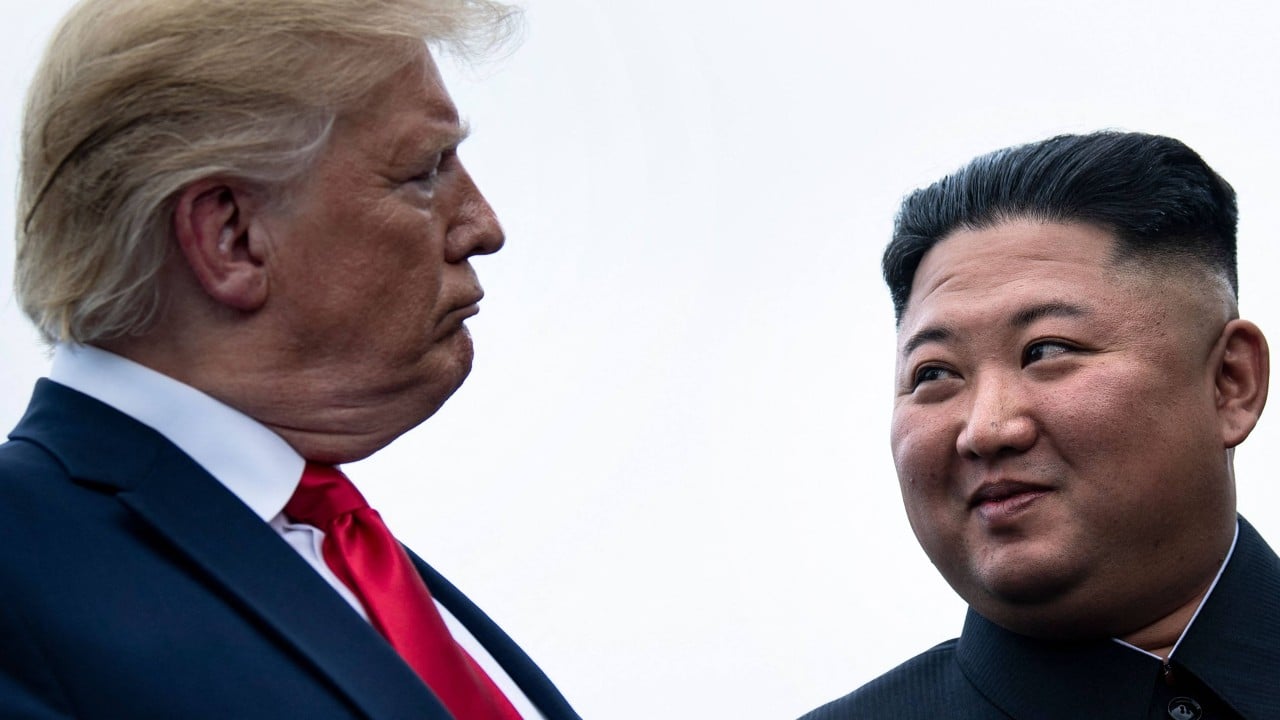
Don't let the fresh round of missile alerts from Tokyo fool you. While North Korea spent the first week of April 2026 launching cluster-bomb warheads and testing "electromagnetic weapons" near Pyongyang, the real story isn't the hardware. It's the handshake. Despite the fire and fury of the last few days, Donald Trump and Kim Jong Un are closer to a second act than most analysts want to admit.
You've seen this movie before, but the 2026 sequel has a much higher stakes script. Trump is back in the White House, and he's just as obsessed with "the big deal" as he was in 2018. Kim, meanwhile, has a bloated nuclear arsenal that he's successfully "fixed" into his country's constitution. They aren't testing missiles because they want war; they're testing them to set the price for a meeting that both men desperately need for their own survival.
The nuclear reality everyone is ignoring
The biggest mistake people make is thinking denuclearization is still on the table. It isn't. Kim Jong Un made that clear during the Ninth Party Congress in February. He’s essentially told the world that the nukes stay, and if the U.S. wants to talk, it has to recognize North Korea as a nuclear-armed state.
It's a bold play, but it’s working. Trump’s "America First" foreign policy in 2026 has shifted away from the old-school obsession with policing the world's democratic values. He’s looking for business deals and stability. If Kim offers a freeze on producing new nuclear material in exchange for lifting sanctions, Trump might just take it. It wouldn't be a total victory, but it’d be a massive "win" he could sell to voters back home before the midterms.
Why Kim needs a friend in Washington right now
Kim is in a weird spot. He’s spent the last two years getting cozy with Russia and China, but he’s smart enough to know that being a junior partner to Vladimir Putin isn't a long-term strategy. It makes him look like a vassal.
- Sanctions are still a nightmare: Despite the black-market help from Russia, the North Korean economy is struggling.
- The China Trap: Relying too much on Beijing gives China too much leverage over North Korean sovereignty.
- Legacy: Kim wants to be seen as a global statesman, not just a hermit with a button on his desk.
A meeting with Trump gives Kim instant legitimacy. It tells the world—and his own generals—that he’s the only leader who can bring the "American Imperialists" to the table on his own terms.
Trump's hunt for the Nobel Prize
Trump's second term has been defined by a desire to "settle the score" on issues that eluded him the first time. He still feels burned by the 2019 Hanoi summit collapse. He thinks he can do better this time because he isn't listening to the "hawks" like John Bolton who tanked the previous talks.
There's a window of opportunity right now. Trump is scheduled to visit Beijing in late April 2026. Experts at places like SIPRI and the Arms Control Association are already whispering about a "stopover diplomacy" session. Imagine Trump landing in Pyongyang or meeting Kim on the sidelines of a regional summit. It fits his style perfectly—high drama, huge ratings, and a complete bypass of the traditional State Department red tape.
The cluster bomb distraction
You might ask why Kim is firing missiles right as he’s angling for a meeting. Honestly, it's classic leverage. On April 8, 2026, North Korea tested Hwasong-11 missiles capable of "reducing targets to ashes." That’s not a threat of imminent invasion; it’s a reminder of what the U.S. has to lose if it keeps ignoring Pyongyang.
By increasing the tension now, Kim ensures that when he finally agrees to a meeting, it looks like he’s doing the world a favor. It’s a protection racket at the highest level of geopolitics.
What a 2026 deal actually looks like
If they do shake hands, don't expect a treaty that makes the world safe overnight. It'll be messy and probably involve a lot of gray areas.
- Recognition of status: The U.S. might not officially "approve" of North Korean nukes, but they’ll stop making their removal a prerequisite for talking.
- The "Freeze for Ease": Kim stops testing and producing; Trump eases up on the banking and oil sanctions that are strangling the North.
- A formal end to the war: This is the big one. We're still technically in an armistice from 1953. A peace declaration would be a historic legacy builder for both men.
Is this actually good for us?
That's the part that keeps South Korean President Lee Jae-myung up at night. While Trump wants a deal, Seoul is worried about being left out in the cold. If Trump makes a "grand bargain" that protects the American mainland but leaves South Korea vulnerable to the North’s short-range missiles, the alliance could crack.
How to track the next move
Watch the rhetoric coming out of the White House over the next two weeks. If the "fire and fury" talk stays quiet despite the recent tests, it’s a sign that backchannel negotiations are already happening.
Don't wait for a formal announcement. Follow the flight paths of high-level diplomatic jets and watch for "unannounced" trips to the region by Trump’s inner circle. The next few months will decide if we’re heading for a historic peace or a dangerous escalation that makes 2017 look like a warm-up. If you're invested in global markets or just care about not getting nuked, keep your eyes on the Beijing trip in late April. That's where the real action starts.