Political journalists love a simple narrative.
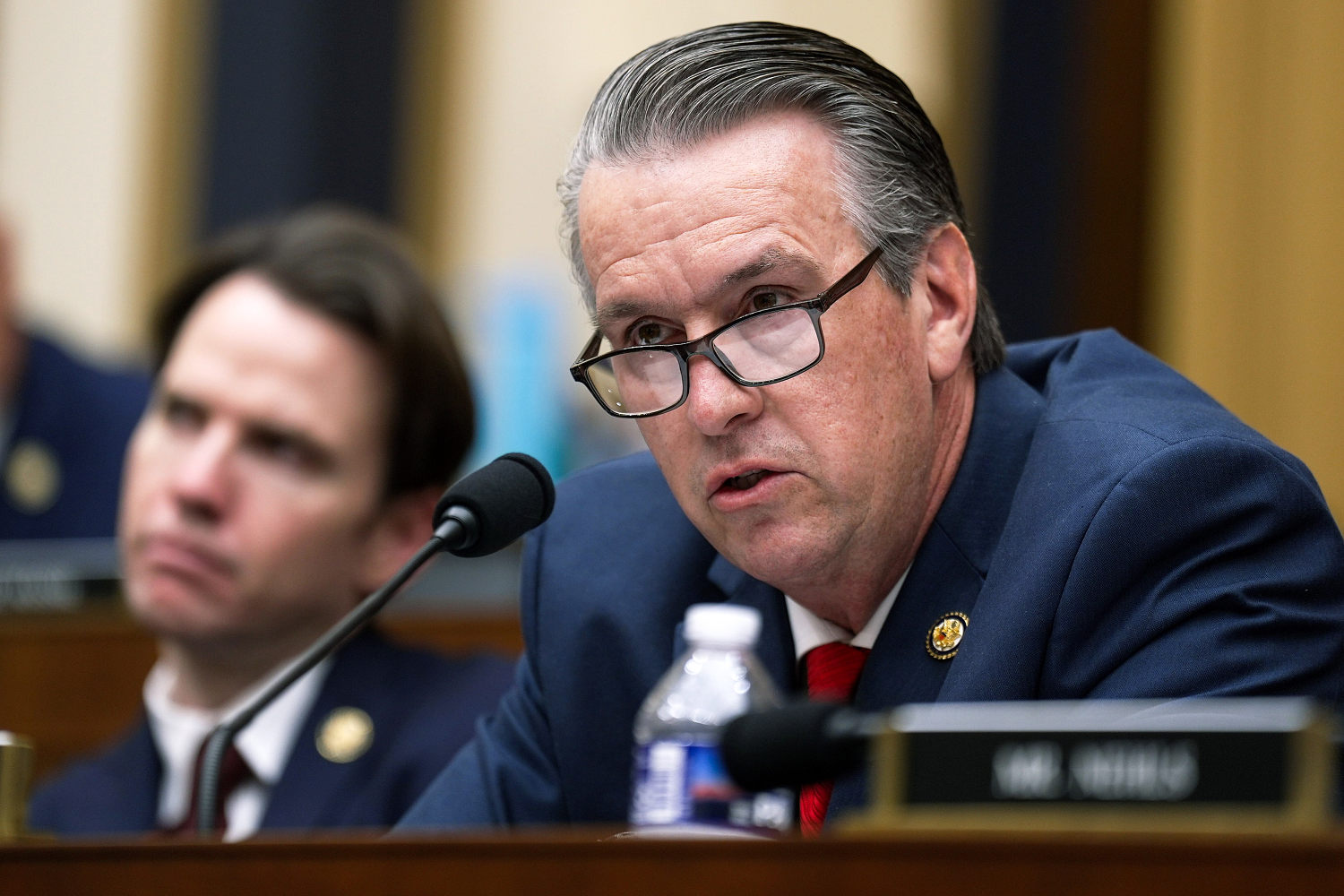
When U.S. Rep. Barry Moore advanced to a runoff for Alabama’s open U.S. Senate seat, mainstream outlets immediately recycled their favorite script: Donald Trump’s hand-picked MAGA warrior triumphs again, demonstrating an iron grip on the Republican base.
It is a lazy, predictable formula. It is also completely wrong.
The beltway media reads an election result like a box score, ignoring the actual machinery of state politics. To them, Moore hitting over 42 percent of the vote in a crowded primary is proof of the "Trump effect." They look at Trump’s telephone rally, his branding of Moore as a "totally reliable MAGA Warrior," and they call the race decided before the June 16 runoff even begins.
I have watched campaigns blow millions of dollars operating on this exact delusion. The reality of Southern primary politics is far uglier, more nuanced, and deeply transactional. Barry Moore did not surge because a golden endorsement dropped from the heavens. He surged because of redistricting chaos, brutal structural advantages, and a masterclass in exploiting voter fatigue.
Relying entirely on a national endorsement is a dangerous strategy. If you think Trump’s backing makes Moore a lock to replace Tommy Tuberville, you do not understand Alabama.
The Myth of the Automatic Endorsement Bounce
Let’s tear down the foundational myth of modern Republican reporting: the idea that a Trump endorsement is a magic wand.
In deep-red states, an endorsement is not a guarantee of victory; it is baseline entry tuition. When every single serious candidate on the ballot is running as a "Trump conservative," the signaling value of an official endorsement depreciates rapidly. Alabama Attorney General Steve Marshall, who is battling for that second runoff spot, did not roll over when Trump backed Moore. Instead, Marshall just pointed to his own record of suing the Biden administration and defending Trump in court.
To the average primary voter in Mobile or Dothan, both guys look like MAGA standard-bearers.
When everyone is wearing the same jersey, voters stop looking at the logo and start looking at local variables. Moore’s advantage is not national favor; it is his hyper-localized history of political survival. This is a guy who survived an incumbent-on-incumbent meat grinder in 2024 when court-ordered redistricting forced him to run against Jerry Carl in the 1st Congressional District. Moore won that race because he knows how to wage low-yield, high-intensity trench warfare in southeastern Alabama.
The media credits Mar-a-Lago for momentum that was actually built through years of grueling, hand-to-hand county fair politics.
The Runoff Danger Matrix
Here is the counter-intuitive truth that standard campaign consultants will not tell you: leading a primary with 42 percent is an incredibly vulnerable position to be in during an Alabama runoff.
Mainstream coverage treats a front-runner as an inevitable victor. In reality, a runoff changes the mathematical physics of an election.
- The Anti-Frontrunner Coalition: In a seven-way primary, 58 percent of the electorate voted for someone other than Barry Moore. When the field clears, those fractured factions tend to consolidate around whoever plays the underdog role.
- Voter Turnout Collapse: Runoff elections in June see a massive drop-off in participation compared to regular primaries. The race ceases to be about broad public sentiment and becomes a clinical exercise in turning out highly specific, motivated factions.
- The Fatigue Factor: Voters are exhausted. Alabama is simultaneously dealing with chaotic, court-contested congressional maps that have left voters confused about which district they even live in. Exhausted voters do not show up for runoffs unless they are furious.
Imagine a scenario where the third-, fourth-, and fifth-place dropouts throw their weight behind Steve Marshall. Suddenly, that 42 percent ceiling becomes a cage. If Marshall can consolidate the establishment business wing of the state GOP—the people who prefer predictable governance over Freedom Caucus bomb-throwing—Moore’s populist momentum stalls instantly.
The Freedom Caucus Double-Edged Sword
Moore’s identity is inextricably linked to the House Freedom Caucus. He leans into it. His supporters love it.
But Washington-style obstructionism has a very different shelf life when translated to a statewide Senate seat. While the national media profiles the Freedom Caucus as the vanguard of the party, local economic interests view it with deep skepticism.
Alabama relies heavily on federal spending, military bases, and aerospace infrastructure in Huntsville. Tommy Tuberville’s famous holds on military promotions alienated a quiet but powerful contingent of traditional, defense-minded Alabama Republicans. There is a simmering institutional anxiety within the state that electing another ideological purist like Moore will continue to erode Alabama's clout on crucial Senate committees.
Marshall understands this tension perfectly. He can position himself as a fighter who actually knows how to use the levers of state power, rather than a congressman known for holding up budget bills. It is a distinction between a populist rebel and a functional institutionalist.
The Missing Pieces of the Puzzle
The conventional analysis completely ignores the dark matter of this race: the sheer weight of institutional money that sits outside the Trump orbit. Group like the Club for Growth will spend heavily for Moore, but local business groups and traditional PACs are terrified of a Senate delegation that lacks senior transactional power. Katie Britt is already holding down one seat; the establishment wants a partner for her, not an antagonist.
Admittedly, challenging the "Trump dictates everything" narrative has its risks. If Trump decides to fly into the state for a massive, stadium-sized rally specifically for Moore in early June, the sheer media gravity can override local dynamics. Nationalization is a powerful drug.
But looking at the raw mechanics on the ground today, this race is a coin flip. The assumption that Moore has this in the bag because of a late-night phone rally is analytical laziness at its finest.
The June 16 runoff will not be decided by a truth social post. It will be decided by which camp can drag a dwindling number of confused, tired voters back to the ballot box in the dead of summer. Stop watching the national endorsements and start watching the regional turnout metrics. That is where the real war is being fought.