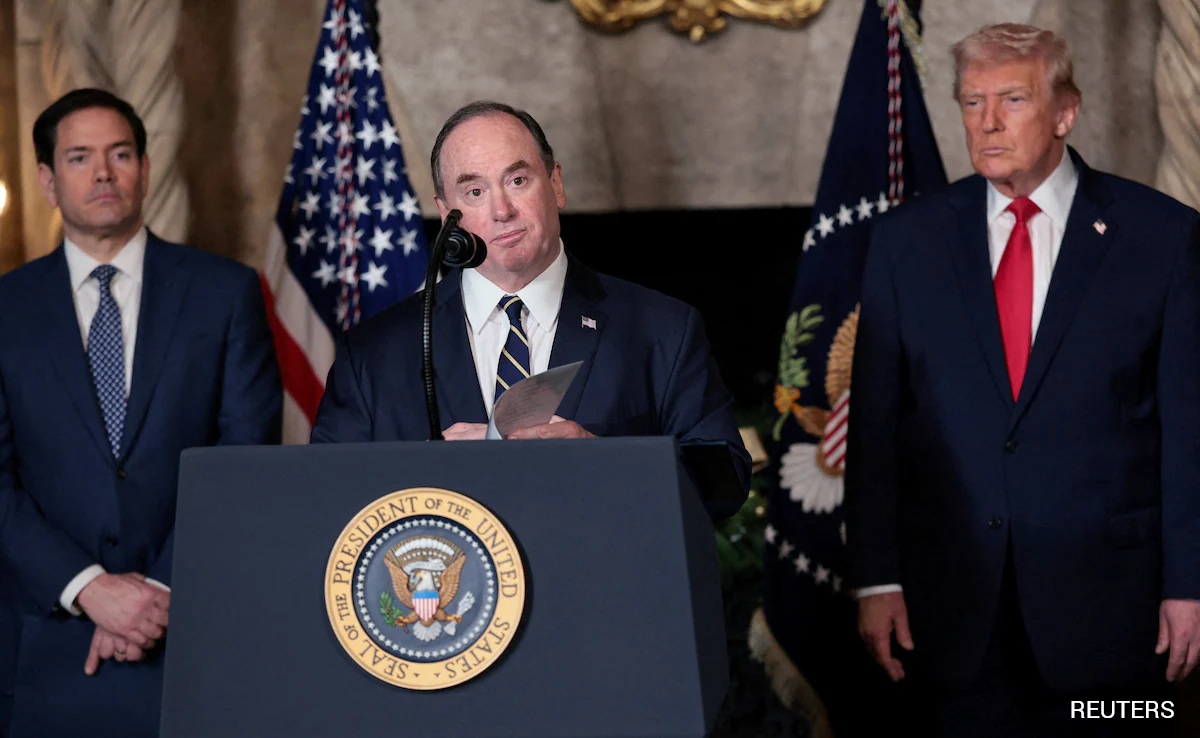
John Phelan's Wednesday started like any other for a high-ranking official. He spent the afternoon on Capitol Hill, shaking hands with Republican senators and hashing out the Navy’s budget. By Wednesday night, he was out of a job. No fanfare, no "farewell tour," just a blunt "effective immediately" exit that has the Pentagon’s E-ring looking like a scene from an old-school mob movie.
If you're wondering why the Secretary of the Navy got the boot while the U.S. is currently enforcing a high-stakes naval blockade of Iranian ports, you aren't alone. This isn't just about "bad relations." It’s about a fundamental clash over how fast the military should change and who actually holds the leash at the Pentagon.
The Hegseth Factor
The official line is vague, but the unofficial reality is pretty clear. Phelan fell out with Defense Secretary Pete Hegseth and his circle, including deputy Steve Feinberg. When Hegseth took the job, he didn't come to manage the status quo. He came to dismantle it. Phelan, despite being a billionaire Trump donor and an "outsider," apparently didn't move fast enough for the new regime's liking.
Reliable reports suggest Hegseth was specifically frustrated with Phelan's handling of shipbuilding reforms. In Hegseth's world, the Navy's current pace is a relic of a slow, bureaucratic past that the U.S. can no longer afford. Phelan was supposedly the man to fix it, but when the gears didn't turn instantly, he became the problem.
There's also the matter of Senator Mark Kelly. Word is Hegseth was livid that Phelan didn't go after the Senator more aggressively after Kelly appeared in a video advising troops they could ignore "illegal orders." In this administration, loyalty isn't just a trait—it’s the only currency that matters. If you won't swing the hammer when told, someone else will.
The Rise of Hung Cao
While Phelan heads back to the private sector, Hung Cao is stepping into the spotlight as acting Navy Secretary. This move tells you everything you need to know about where the Pentagon is headed. Cao is a 25-year Navy veteran, a former special operations officer, and a hardcore Trump loyalist who ran for the Senate in Virginia.
Unlike Phelan, who came from the world of private equity and art collecting, Cao is a creature of the "New Pentagon." He’s already been vocal about bringing back service members who were ousted over vaccine mandates. He’s a fighter, a disruptor, and most importantly, he has a great relationship with Hegseth.
Why the Timing is Brutal
The U.S. Navy is currently the tip of the spear in a massive geopolitical chess match. We have multiple aircraft carrier groups in the Middle East, a fragile ceasefire with Iran that feels like it could snap at any second, and a blockade that Tehran calls a "hostage-taking of the world’s economy."
Usually, you don't swap out the civilian head of a military branch during an active blockade. It sends a message of instability to allies and a message of opportunity to enemies. Senator Jack Reed, the top Democrat on the Armed Services Committee, called the move "troubling," and for once, the hand-wringing might be justified.
The Shipbuilding Bottleneck
Beyond the personality clashes, the Navy has a math problem.
- The Goal: A 355-ship fleet to counter China and Iran.
- The Reality: Aging shipyards and massive delays on the Constellation-class frigates.
- The Conflict: Phelan wanted a more measured, industry-standard approach. Hegseth wants a "war footing" speed that ignores traditional procurement rules.
Phelan's exit is a warning shot to every other service secretary. If you prioritize "process" over "production," your desk will be cleared by sunset.
What This Means for the Fleet
If you're a sailor or a Marine, you're likely feeling the whiplash. Since early 2025, Hegseth has cleared out the Army’s top general, the Chief of Naval Operations, and the Chairman of the Joint Chiefs. The civilian leadership is being replaced by "disruptors" who are less interested in traditional naval tradition and more focused on rapid modernization and ideological alignment.
Expect the Navy to double down on several fronts:
- Aggressive Shipbuilding: Look for contracts to be torn up and re-awarded to companies that promise speed over long-term stability.
- Personnel Overhauls: Cao is likely to push for a cultural shift, focusing on "lethality" and purging anything perceived as "woke" within the ranks.
- Increased Friction with Congress: Democrats will use this firing as a hammer to claim the Pentagon is in chaos, which might make the budget Phelan was just discussing even harder to pass.
The blockade of Iran continues regardless of who sits in the Secretary's office at the Pentagon, but the internal war at the Department of Defense is just getting started. If you thought Phelan was the last "traditionalist" to go, you haven't been paying attention to how Hegseth operates.
Don't wait for a formal press conference to understand the new direction. Watch the next round of appointments. If they look like Hung Cao—battle-tested, politically aligned, and ready to break things—you'll know the "shaking up" phase is over and the "tearing down" phase has begun. Keep an eye on the House Armed Services Committee hearings next week; that's where the real fireworks will happen.