Donald Trump isn't waiting for a second round of talks to see if Tehran blinks. After the marathon negotiations in Islamabad collapsed this past weekend, the U.S. Navy officially began a full-scale blockade of Iranian ports at 10 a.m. Eastern today. It’s a move that basically tells the world the era of "strategic patience" or "maximum pressure" through paperwork is over. We’re now in the territory of direct maritime interdiction.
The goal is simple, at least on paper. Trump wants to choke off Iran's ability to fund its nuclear ambitions and its regional proxies by stopping every ship that pays a "toll" to Tehran for using the Strait of Hormuz. If you’re a tanker trying to get in or out of an Iranian harbor, you're now a target for seizure.
Why the Islamabad Talks Failed
You'd think 21 hours of face-to-face negotiations between Vice President JD Vance and Iranian Parliament Speaker Mohammad Bagher Qalibaf would yield something. But it didn't. The sticking point wasn't just about money or territory; it was about the 900 pounds of highly enriched uranium Iran is still sitting on.
Trump made it clear on Truth Social that the nuclear issue is "the only point that really mattered." The U.S. demanded that Iran dismantle its enrichment facilities and hand over its stockpile of weapons-grade material. Iran, meanwhile, is framing this as "extortion" and "U.S. overreach." Honestly, they aren't even speaking the same language anymore. While Vance left the table with a "take it or leave it" proposal, Trump decided the Navy would provide the actual persuasion.
The Brutal Reality of a Modern Blockade
This isn't your grandfather’s naval blockade. The U.S. isn't just sitting in the middle of the Strait of Hormuz waiting to get swarmed by Iranian fast-attack boats. Instead, they’re using a system of interdiction in international waters.
- Targeting the Tolls: Iran has been charging commercial vessels a "toll" to pass through the Strait. Trump called this "extortion." The U.S. Navy is now authorized to stop any ship that has paid this fee.
- Eliminating Threats: Trump’s rhetoric hasn't been subtle. He warned that any Iranian "fast attack ships" coming near U.S. vessels would be "eliminated" quickly. He even compared the tactic to how the Coast Guard handles drug runners at sea.
- Shadow Fleet Scrutiny: A huge chunk of Iran’s oil moves through "dark transits"—ships that turn off their transponders to dodge sanctions. This blockade is specifically designed to hunt those vessels down and board them.
Oil Prices and the Global Fallout
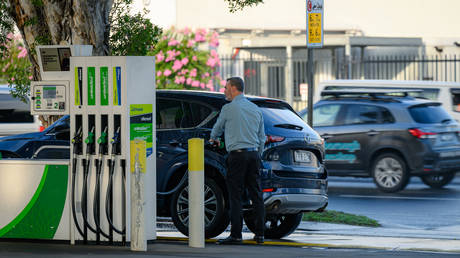
If you've filled up your tank today, you've probably felt the shock. Brent crude jumped to over $100 a barrel almost immediately after the announcement. Before this war kicked off in February, we were looking at $70.
The risk here is massive. About 20% of the world's oil flows through that tiny 21-mile-wide chokepoint. While the U.S. claims the blockade won't impede "freedom of navigation" for ships going to non-Iranian ports (like those in Kuwait or the UAE), the reality on the water is chaotic. Insurance rates for shipping in the Persian Gulf have hit the roof. Lloyd’s List intelligence reports that traffic has already slowed to a crawl.
A Growing Rift with Allies
Not everyone is onboard with this "quick and brutal" approach. British Prime Minister Keir Starmer and French President Emmanuel Macron have both refused to join the blockade. They’re worried about the energy crisis and the potential for a full-scale regional explosion. Starmer’s been vocal about wanting a diplomatic "way through," but Trump seems content to go it alone, or at least with a much smaller coalition than the U.K. usually provides.
What This Means for Iran's Nuclear Program
The blockade is a blunt instrument. It's meant to strip away the last bits of revenue Iran uses to keep its centrifuges spinning. But there's a flip side. Experts at the Nuclear Threat Initiative (NTI) have warned that as the economic pressure hits a breaking point, the risk of Iran "breaking out" toward a functional weapon increases. If they feel like the regime is about to collapse, they might decide that having a nuclear deterrent is their only survival strategy.
Trump's bet is that the pain of the blockade will force them back to the table in Pakistan before the current two-week ceasefire expires on April 22. It's a high-stakes game of chicken where the "prize" is a global energy collapse or a nuclear-free Middle East.
If you’re watching the markets, keep a close eye on the Strait. The next 72 hours will tell us if Iran plans to retaliate with their own mine-laying operations or if they’ll realize that "fighting back" against a U.S. blockade is a losing battle. For now, the U.S. Navy is in control, and the world is holding its breath.
Keep your eye on the April 22 deadline. If no deal is reached by then, expect the "ceasefire" to be a memory and the blockade to be just the beginning of a much louder conflict.