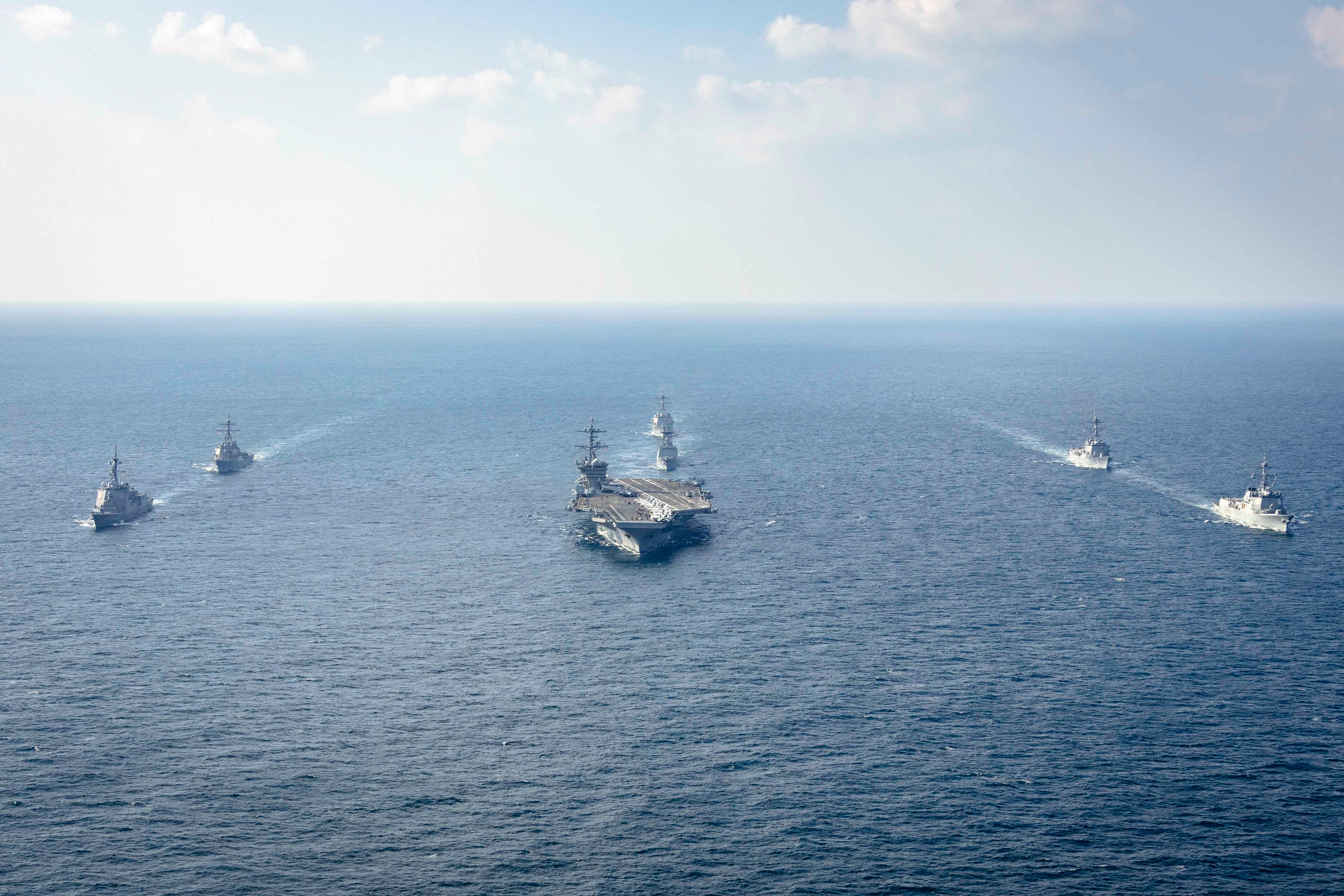
Pyongyang is angry again. That is not exactly breaking news. Yet the scale, speed, and sheer frequency of the military exercises happening right now between the United States, South Korea, and Japan represent a massive shift in regional defense. If you have been tracking security updates in East Asia, you know the stakes are rising fast. Kim Jong Un is ramping up pressure on Washington through missile tests and aggressive rhetoric, but the allied response is no longer just defensive posturing. It is a calculated display of integrated force.
Seoul, Washington, and Tokyo are locking shields in a way that would have felt completely impossible just a few years ago due to historical friction between South Korea and Japan. Today, that diplomatic ice is gone. They are holding complex trilateral drills designed to counter underwater threats, ballistic missiles, and cyber warfare.
The Real Strategy Behind the Trilateral Exercises
Why hold these massive drills right now? The answer is simple deterrence. North Korea has spent months testing solid-fuel intercontinental ballistic missiles, expanding its nuclear arsenal, and forging closer military ties with Moscow. Pyongyang calculates that Washington is distracted by conflicts in Europe and the Middle East.
The trilateral alliance wants to shatter that assumption entirely.
When American, South Korean, and Japanese warships maneuver together in international waters, they are sending an unmistakable signal. They are proving that an attack on one ally triggers a coordinated, multi-domain response from all three.
- Integrated Air Defense: Tracking incoming threats in real-time by sharing radar data across borders.
- Subsurface Warfare: Hunting submarines to secure vital shipping lanes and coastal waters.
- Strategic Bomber Flights: Deploying American long-range bombers alongside regional fighter jets to demonstrate rapid power projection.
These aren't just symbolic exercises. They require an immense amount of technical interoperability. Decades ago, South Korean and Japanese forces could barely communicate securely during joint operations due to political sensitivities and incompatible communication systems. Today, real-time data-sharing agreements signed in recent summits mean warning times for incoming missiles have dropped drastically. That technical reality infuriates Pyongyang because it neutralizes the element of surprise.
How Pyongyang is Reacting to the Pressure
North Korea doesn't just issue routine statements condemning these exercises; they react with military escalation. Whenever a carrier strike group pulls into a port in Busan or Yokosuka, state media in Pyongyang labels it an act of nuclear blackmail. Soon after, the regime typically fires off short-range ballistic missiles into the East Sea or tests new underwater drone systems.
This tit-for-tat cycle creates a dangerous atmosphere. Analysts often worry about miscalculation. When hundreds of warplanes and warships operate in close proximity across tight maritime boundaries, a small accident or navigational error could spark a much larger conflict.
Yet, abandoning the drills is off the table for the allies. Leaders in Washington, Seoul, and Tokyo have concluded that appeasement only invites further aggression.
The Diplomatic Angle Everyone Misses
Military drills are only the visible half of the equation. Behind closed doors, diplomats are working overtime to institutionalize this trilateral cooperation so it survives future political changes.
In South Korea, progressive and conservative administrations often have vastly different approaches to dealing with the North. In the United States, upcoming elections introduce domestic volatility. To insulate the alliance from these political shifts, current leaders are locking down binding agreements on joint training schedules, intelligence sharing, and economic security measures.
North Korea's ongoing pressure campaign is actually backfiring on a strategic level. Instead of driving wedges between Washington and its Asian partners, Pyongyang's hostility has cemented the strongest trilateral security architecture East Asia has seen since the Cold War.
Keep an eye on how these exercises evolve over the coming months. As North Korea deepens its cooperation with other global adversaries, the defense perimeter drawn by the U.S., South Korea, and Japan will only expand.