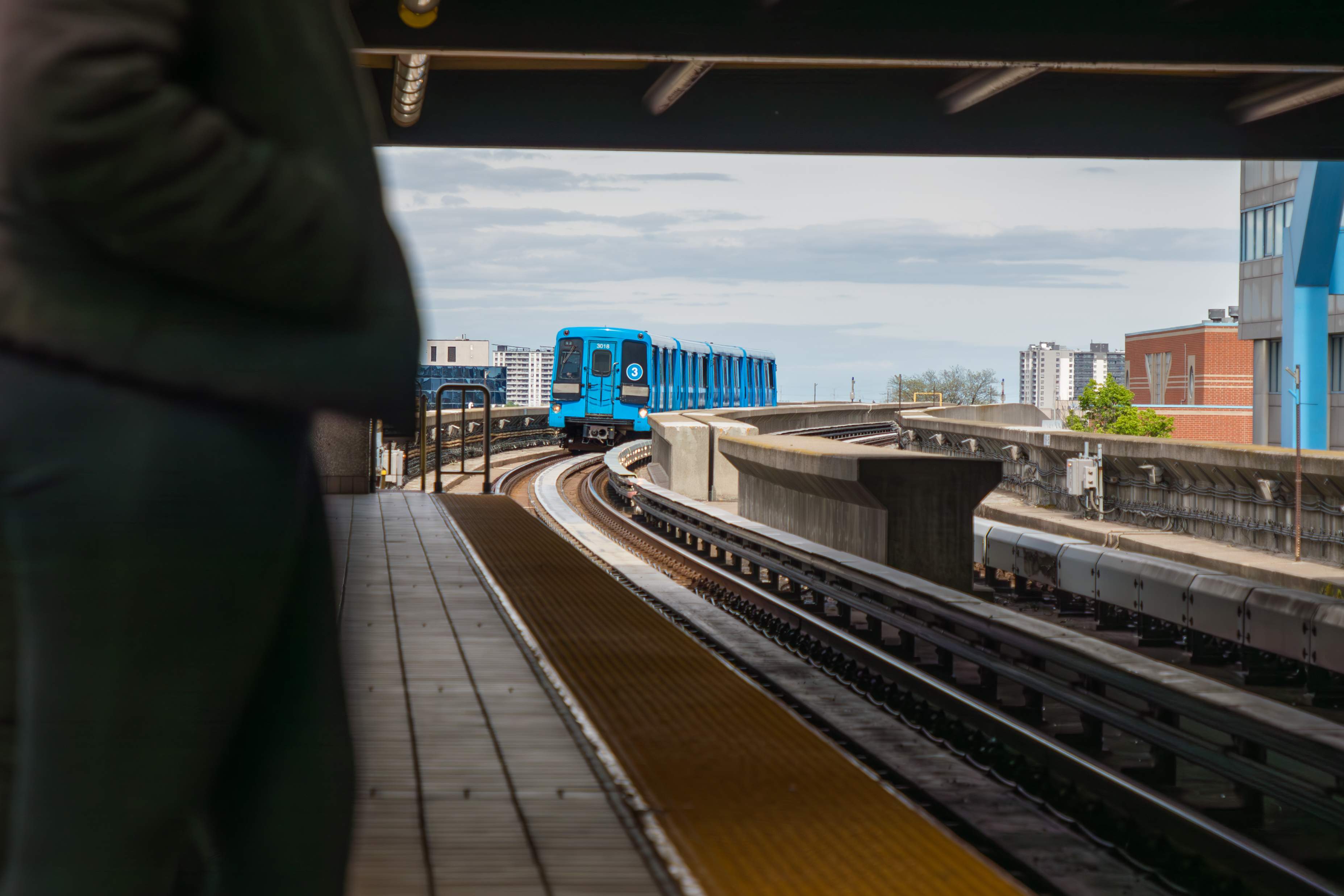
The decommissioning of urban rail corridors under acute infrastructure failure creates an immediate economic and logistical deficit for municipal transit authorities. When the Toronto Transit Commission permanently closed the Line 3 Scarborough Rapid Transit system following a 2023 derailment, the network faced an immediate capacity shock. The system's replacement strategy relied on interim surface-level shuttle buses operating within mixed traffic, subjecting commuters to severe schedule unreliability due to localized congestion bottlenecks.
To mitigate this operational degradation, the municipality engineered a rapid-deployment transit asset along a four-kilometre section of the former rail right-of-way. Scheduled to enter service on September 30, 2026, the dedicated corridor connects Kennedy Station to Ellesmere Station before transitioning to surface priority lanes toward Scarborough Town Centre. Deconstructing this asset requires analyzing its structural throughput, temporal optimization, and its role as a temporary placeholder for the delayed Scarborough Subway Extension.
The operational architecture of the four-kilometre corridor relies on exclusive right-of-way access, completely separating rubber-tired transit vehicles from general vehicular traffic. By eliminating intersection conflicts and traffic light friction along the core segment, the transit authority stabilizes route headways.
Service frequency dictates passenger throughput when transitioning from a fixed-guideway rail technology to a busway network. While individual transit buses possess lower maximum passenger capacities than multi-car trainsets, the frequency variable compensates for this deficit. Multiple express routes operate concurrently through the corridor, absorbing a weekly volume exceeding 118,000 riders.
The temporal efficiency of the corridor is measured by its travel time differential against previous replacement models. Commuters traversing the route between Kennedy Station and Scarborough Centre experience a nominal transit duration of approximately 15 minutes. This configuration achieves an aggregate time savings exceeding one hour per week for regular commuters, reversing the latency penalties introduced during the initial post-derailment surface bus phase.
Accelerating public infrastructure delivery demands structural shifts in project management and environmental assessment phases. Originally slated for a longer timeline, construction teams compressed delivery schedules, positioning the launch more than six months ahead of initial municipal projections. This acceleration stems from utilizing an existing cleared corridor, which bypasses the extensive property expropriation and subterranean utility relocation phases that typically paralyze urban transit builds.
The corridor functions as a capital-efficient bridge asset. Permanent heavy rail solutions, such as the three-stop extension of Line 2 Bloor-Danforth to McCowan Road and Sheppard Avenue East, face extended delivery horizons stretching toward 2030. Without an intermediate grade-separated busway, the multi-year gap between rail closure and subway opening would have induced permanent modal shifts toward private automotive transport, degrading regional economic productivity.
Deploying a surface transit corridor within a former rail alignment introduces specific systemic vulnerabilities. Bus pavements experience differential settling and rutting under heavy axle loads far more rapidly than steel rails. Maintenance cycles for dedicated busways require frequent resurfacing to prevent structural degradation of the asphalt layers, introducing lifecycle costs that differ fundamentally from rail maintenance models.
Passenger transfer friction remains another structural constraint. While the corridor provides a high-speed middle segment, trips originating deep in eastern Scarborough require feeder buses to reach trunk stations, followed by subsequent transfers at Kennedy Station. Each transfer point imposes a psychological and temporal penalty on the commuter, reducing the net utility of the overall transit network regardless of the speed achieved within the dedicated right-of-way.
Implement rigorous pavement structural monitoring along the four-kilometre concrete and asphalt interface to preempt rutting-induced velocity restrictions before the winter freeze-thaw cycle initiates.