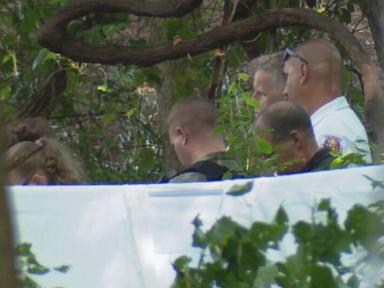
A quiet Saturday night in a suburban Washington, D.C. neighborhood turned into a scene of devastating loss this weekend. A single-engine Piper Cherokee crashed into a wooded area near Bowie, Maryland, killing all three adult men on board. The wreckage was discovered early Sunday morning, ending an intense hours-long search that began when automated technology flagged the disaster before air traffic control even realized something was wrong.
Investigators believe the aircraft belonged to a local flight school based out of Montgomery County. It looks like the flight was part of a late-night training exercise. Flying at night adds a layer of difficulty that even seasoned pilots respect, and when you combine that with a training environment, the margin for error shrinks fast. While federal investigators sift through the debris, this tragedy highlights a side of aviation safety that rarely gets public attention.
A Late Flight From the Jersey Shore
The flight began routinely enough. The Piper Cherokee took off from Ocean City, New Jersey, around 11:30 p.m. on Saturday. Its destination was the Montgomery County Airpark in Maryland, a trip that should have been a straightforward cross-country flight.
About 15 minutes into the journey, things went south. The plane went down in a heavily wooded patch of land near where Route 50 and Route 301 connect in Bowie. The location sits right next to a residential neighborhood, and a playground was ringed with yellow police tape by morning light. Thankfully, nobody on the ground was hurt, but the impact killed everyone inside the cabin instantly.
How an iPhone Beat Rescuers to the Scene
One of the most striking details of this response involves the initial distress signal. It didn't come from a radio call or an airport radar tower. Instead, an automated iPhone crash alert pinged Prince George's County Public Safety Communications roughly 15 minutes after the plane's departure.
This consumer technology became the primary catalyst for the rescue effort. Local dispatchers received a precise location signature from the device, allowing Maryland State Police and local crews to focus their ground and aerial searches immediately on the specific pocket of woods in Bowie. Without that digital footprint, finding a small aircraft in dense woods during the pitch-black hours of midnight would have taken much longer.
The Hidden Challenges of Nighttime Flight Training
While the National Transportation Safety Board and the Federal Aviation Administration are handling the formal investigation, the timing and nature of the flight point to the unique pressures of night training.
To earn a private pilot certificate, students must log specific hours of night flying, including cross-country navigation. Flying in the dark strips away the horizon, making spatial disorientation a major risk. Pilots have to rely entirely on their instruments rather than their eyes. If a mechanical issue happens over a dark, unlit forest, finding a safe spot to make an emergency landing becomes almost impossible.
The Maryland State Police confirmed that the names of the victims are being withheld until their families are notified. As the aviation community waits for the preliminary report from federal investigators, the focus remains on understanding what sequence of events led to the sudden loss of altitude.
If you fly private aircraft or are currently undergoing flight training, check your emergency location transmitters and ensure your personal electronic safety devices are updated and active before every takeoff.