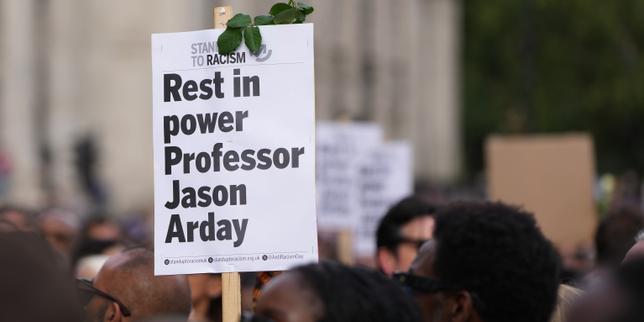
The sudden death of Jason Arday has left the academic world reeling. Just weeks after resigning from his historic post as Cambridge University's youngest Black professor, amid fierce allegations of plagiarism and intense public scrutiny, an official coroner's inquest has begun in London.
This story isn't just about citations or university bureaucracy. It is a stark look at how modern internet outrage collides with traditional academic institutions, pushing individuals to their absolute limits. If you've only caught the headlines, you've likely missed the deeper context of how a celebrated career unraveled so quickly.
The Rise and Fall at Cambridge
Jason Arday's appointment at Cambridge in 2023 was hailed as a monumental milestone. His personal journey—overcoming severe developmental delays and autism that left him non-verbal until age eleven—became an inspiring narrative. He went on to author numerous papers and secure a prestigious sociology professorship.
Yet, public scrutiny intensified rapidly when independent bloggers and media outlets began dissecting his 2015 doctoral thesis from Liverpool John Moores University (LJMU). Critics pointed to textual overlaps with earlier research, questioning the validity of his academic credentials.
While LJMU ultimately cleared his thesis of deliberate misconduct—citing honest citation errors rather than intentional cheating—the pressure did not let up. Cambridge announced its own institutional review, and Arday chose to resign on August 5, stating it was the only way to escape an unrelenting cycle of scrutiny. Days later, on August 14, he was found dead at his south London home.
Sorting Fact From Fiction in Academic Scandals
The public discourse surrounding Arday quickly fractured into opposing camps. On one side, commentators and certain academics argued that the exposure of citation errors was a necessary defense of academic integrity. On the other side, family members, supporters, and anti-racism organizations condemned the intense media storm as a targeted harassment campaign.
What do the actual facts show?
- The Thesis Review: LJMU reviewed the 2015 doctoral dissertation and determined that the textual overlaps fell within acceptable bounds of compliance given the context of the work, though other independent analyses disagreed on the severity of the uncited passages.
- The Resignation: Arday stepped down voluntarily, noting explicitly that his departure should not be taken as an admission of guilt regarding the fraud narratives.
- The Investigation: Police confirmed there were no suspicious circumstances or signs of foul play surrounding his unexpected death, and the coroner's court opened its formal inquiry in late August.
Why This Case Changes Higher Education Forever
Academia has a transparency problem. When high-profile appointments become symbols of institutional progress, they often carry an impossible weight. If an error surfaces, the reaction is rarely measured. Instead, it transforms into an immediate trial by social media and tabloid journalism.
Universities now face hard questions about how they vet candidates and how they protect them once hired. When institutions buckle under public pressure, they risk abandoning their own due process. The human cost of this breakdown is something the academic community cannot easily sweep under the rug.
Take a moment to look past the political point-scoring on both sides. At its core, this tragedy highlights the urgent need for mental health support structures within elite educational spaces, where perfection is demanded and human error is treated as an unforgivable sin.
Former professor's death sparks serious allegations of racism
This video provides additional context regarding the controversies and public reactions following the sudden passing of the former Cambridge academic.


.png)