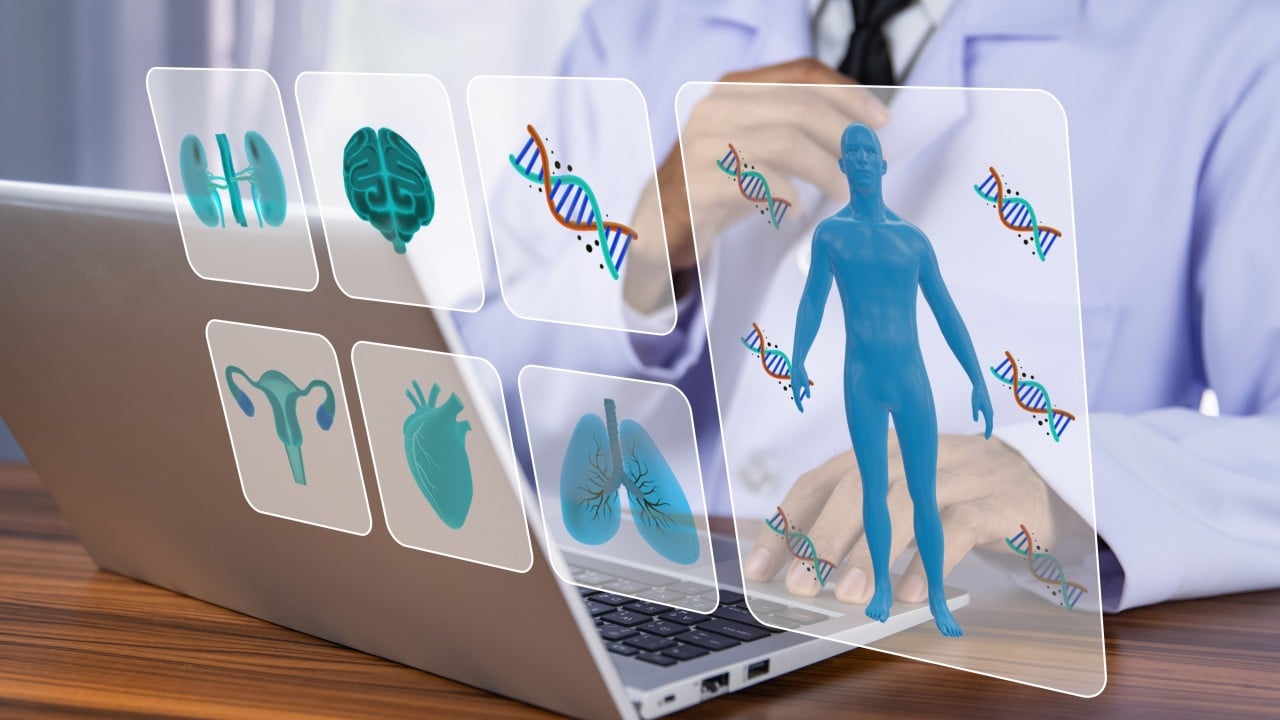
ByteDance is no longer content with just capturing human attention; it wants to re-engineer human biology. While the world tracks every move of the TikTok algorithm, the company’s secretive healthcare division, ByteDance Health, has quietly begun presenting sophisticated AI-designed drug therapies at major international scientific conferences. This move represents a massive shift from software engineering to wet-lab science, signaling that the Beijing-based giant intends to compete directly with Big Pharma and Alphabet’s DeepMind in the race to automate drug discovery.
The premise is simple but the execution is brutal. Traditional drug discovery is a failing business model. It takes over a decade and billions of dollars to bring a single molecule to market, with a failure rate that would bankrupt any other industry. ByteDance is betting that the same machine learning architectures that predict which short-form video will keep you scrolling can also predict how a protein will fold or how a small molecule will bind to a disease-causing target. Don't forget to check out our previous article on this related article.
Beyond the Viral Video Algorithm
The transition from social media to clinical trials isn’t as disjointed as it looks on the surface. At its core, ByteDance is a data processing factory. The company’s specialized AI unit, Flow, has been repurposed to handle biological data instead of user engagement metrics. By applying deep learning to the massive repositories of genomic and proteomic data, they are attempting to solve the "needle in a haystack" problem that has plagued medicinal chemistry for a century.
Recently, at events like the International Conference on Learning Representations (ICLR), ByteDance researchers showcased models designed to predict molecular properties and protein-ligand interactions. These are the fundamental building blocks of medicine. If you can simulate these interactions in a virtual environment with high accuracy, you eliminate years of "guess and check" work in a physical laboratory. If you want more about the context here, TechCrunch offers an informative breakdown.
This isn’t just a side project. The company has been aggressively hiring computational biologists, chemists, and specialists in Cryo-Electron Microscopy. They are building a vertical stack that combines raw computing power with high-end biological hardware. They aren't just writing code; they are building a pipeline to generate proprietary intellectual property in the form of novel chemical entities.
The Cold Reality of AI Drug Discovery
The hype surrounding AI in medicine often ignores the "Valley of Death" between a digital prediction and a physical pill. You can design a perfect molecule on a screen, but if it doesn't dissolve in the human gut or if the liver destroys it instantly, the AI has failed.
ByteDance's approach focuses heavily on Generative AI for Molecular Design. Instead of searching through a library of existing chemicals, their models "hallucinate" entirely new structures that have never existed in nature. This is high-risk, high-reward territory. While this can lead to breakthroughs in previously "undruggable" targets, it also creates a massive regulatory headache. The FDA and other global regulators are still figuring out how to vet a drug when the logic behind its design is buried inside a "black box" neural network.
Why ByteDance is Different from Google
While Alphabet has DeepMind and the high-profile AlphaFold project, ByteDance operates with a different level of speed. The Chinese tech culture of "996" (working 9 a.m. to 9 p.m., six days a week) is being applied to the glacial pace of biotechnology. They are moving with a sense of urgency that traditional pharmaceutical companies like Pfizer or Novartis simply cannot match.
However, speed in software is a virtue; speed in drug development can be a liability. The history of biotech is littered with companies that claimed their platform would revolutionize the industry, only to collapse when their lead candidates failed in Phase II human trials. ByteDance must prove that their digital shortcuts don't lead to biological dead ends.
The Geopolitical Friction of Biological Data
We cannot ignore the elephant in the room. ByteDance is under intense scrutiny in Washington and Brussels over data privacy and its ties to the Chinese state. When a company moves from collecting "likes" to collecting genomic data, the stakes change.
If ByteDance successfully develops a breakthrough cancer drug or a treatment for Alzheimer’s, it gains immense soft power. It also raises questions about who owns the data used to train these models. Most AI drug discovery relies on public databases, but the competitive edge comes from private data sets. As the US and China continue to decouple their tech sectors, "biotech sovereignty" is becoming a primary concern. A world where life-saving treatments are locked behind the proprietary algorithms of a foreign tech giant is a scenario that keeps policymakers awake at night.
The Technical Backbone of the ByteDance Pipeline
The technical white papers released by their team highlight a specific interest in Geometric Deep Learning. This involves teaching AI to understand the three-dimensional shape of molecules, rather than just their chemical formulas.
- Target Identification: Using AI to scan scientific literature and patient data to find new biological "hooks" for diseases.
- Lead Optimization: Refining a molecule so it hits the target harder and stays in the body longer.
- ADMET Prediction: Using models to predict Absorption, Distribution, Metabolism, Excretion, and Toxicity before a single drop of the drug is synthesized.
By focusing on these three pillars, ByteDance aims to cut the pre-clinical phase of development by 50% or more. In the pharmaceutical world, time is literally money—every day saved on the patent clock is worth millions in future revenue.
The Counter-Argument: Is it All Just PR?
Skeptics in the scientific community argue that "presenting at conferences" is a long way from "curing patients." It is relatively easy for a tech company with a multi-billion dollar R&D budget to produce impressive-looking papers. The true test is the Clinical Trial.
Until ByteDance puts a molecule into a human arm and proves it is both safe and effective, this remains an expensive computational exercise. Big Tech has a habit of underestimating the complexity of human biology. Biology is messy, redundant, and frequently behaves in ways that don't fit into neat data structures. The "move fast and break things" ethos works for social media apps; it doesn't work when you are dealing with human lives.
The Business Logic of the Pivot
Why would a social media company enter the most difficult, regulated industry on earth? Diversification. The ad-revenue model for social media is under threat from privacy changes and saturated markets. Healthcare, conversely, is an evergreen sector with trillions of dollars in play.
ByteDance is positioning itself to be a Service Provider or a Partner to Big Pharma, rather than a standalone drug maker. By licensing their AI platform to companies like Merck or Eli Lilly, they can generate massive "SaaS-style" revenue without the full risk of running their own clinical trials. This is the "shovels in a gold rush" strategy.
The Specialized Units
The company has divided its efforts into several key areas:
- Target Discovery: Finding the "why" of a disease.
- Molecular Generation: Creating the "what" of the cure.
- Digital Therapeutics: Software-based treatments that complement physical drugs.
This multi-pronged attack shows a level of institutional commitment that goes beyond a mere corporate experiment. They are building an ecosystem designed to capture value at every stage of the healthcare lifecycle.
Infrastructure and the Compute Advantage
The real advantage ByteDance holds isn't just better mathematicians; it is better hardware. The company operates some of the most powerful server farms on the planet. Training a model like AlphaFold requires immense GPU resources. ByteDance has those resources in abundance, and more importantly, they have the specialized cooling and energy infrastructure to run them 24/7.
Traditional biotech startups spend half their venture capital just on cloud computing costs. ByteDance has these costs baked into its existing overhead. This allows their researchers to run thousands of simulations that a smaller competitor simply couldn't afford.
The Talent War
There is a massive migration of talent happening. PhDs from Harvard, Stanford, and MIT who once would have headed to Genentech are now being recruited by ByteDance with promises of "unlimited compute" and salaries that dwarf academic or traditional lab roles. This brain drain is a significant factor in ByteDance's rapid ascent in the scientific community.
When you combine the world's best data scientists with the world's best biologists and give them a blank check, results are inevitable. The question is whether those results will be shared with the global medical community or guarded as a strategic state secret.
The intersection of AI and biology is the next great frontier of human endeavor. ByteDance’s entry into this space proves that the boundaries between "tech company" and "life sciences company" have permanently dissolved. We are entering an era where the most important code being written isn't for an app, but for the very proteins that keep us alive.
Watch the clinical trial registries, not the App Store.