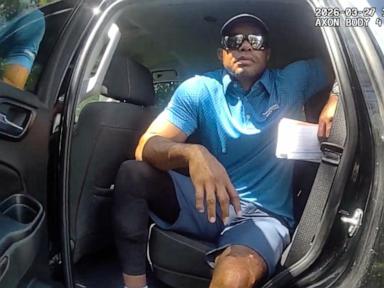
The media is currently fixated on a procedural skirmish in a Florida courtroom. They are framing the battle over Tiger Woods’ prescription records as a classic "privacy vs. prosecution" drama. They are wrong. This isn't a debate about the sanctity of the doctor-patient relationship. It’s a masterclass in how the legal elite exploits HIPAA (Health Insurance Portability and Accountability Act) to obfuscate the reality of impaired driving.
If you’re following the standard narrative, you think the state is overreaching. You think the State Attorney’s Office is "fishing" through Tiger’s medical history. That perspective is lazy. It ignores the mechanics of modern toxicology and the specific legal loopholes that high-net-worth individuals use to scrub a DUI off their permanent record.
The Privacy Shield is a Weapon
Privacy is the most expensive product in the American legal system. When a person of Woods' stature is found asleep at the wheel of a running vehicle with fresh damage to the rims, the clock starts ticking. The standard play is to claim a "medical reaction." By doing so, the defense team immediately pivots from a criminal incident to a private medical event.
This is a tactical redirection. By citing a reaction to Vicodin and Xanax—as Woods did—the defense isn't just offering an explanation; they are erecting a wall. They know that in Florida, as in most states, the prosecution must prove "impairment" to the extent that normal faculties are lost. When medications are legal and prescribed, the burden of proof shifts into a grey zone of "therapeutic levels."
The argument over those records isn't about protecting Tiger’s dignity. It’s about preventing the prosecution from seeing the timeline of his dosages. If the records show he was warned specifically about driving, or if the prescriptions were filled at intervals that suggest misuse, the "accidental reaction" defense crumbles.
The Fallacy of the "Legal High"
There is a pervasive, dangerous idea that "legal" drugs carry less culpability than illegal ones. If a driver is slumped over their steering wheel because of illicit opioids, the public demands a jail cell. If that same driver is slumped over because of a cocktail of FDA-approved sedatives, the narrative shifts to "struggling with pain management."
This is a distinction without a difference.
From a kinetic energy standpoint, a 4,400-pound Mercedes-Benz S65 AMG doesn't care if the driver is unconscious from heroin or a combination of sleep aids. The destruction is identical. Yet, the legal defense for the latter is built on the premise that the driver is a patient first and a defendant second.
I’ve seen dozens of high-profile cases where the "patient" status is used to suppress toxicology reports. The strategy is simple: drag out the discovery phase until the public loses interest, then plea down to reckless driving while the medical records remain under seal. This isn't justice; it's a subscription service for the wealthy.
Why Prosecutors Are Right to Push Back
The prosecution in the Woods case isn't being "aggressive." They are attempting to do their job in a system rigged to favor those who can afford a private pharmacy.
To understand the necessity of those records, you have to look at the "People Also Ask" garbage currently circulating. People ask: "Why does the state need his records if he passed the breathalyzer?"
That question is fundamentally flawed. A breathalyzer only detects ethanol. It is useless against the "pill mill" culture or the sophisticated poly-pharmacy issues that actually cause these types of crashes. By refusing to turn over the records, the defense creates a vacuum of information. In that vacuum, they can invent any narrative they want.
- Scenario: A defendant takes a pill at 10:00 PM and drives at 10:30 PM.
- The Defense: "It was an unexpected reaction to a new dosage."
- The Reality: The prescription bottle explicitly says "Do Not Operate Heavy Machinery."
Without those records, the jury (if it ever gets that far) never sees the warning label. They only see a tired, injured athlete.
The Collateral Damage of Celebrity Leniency
When we allow the "privacy" argument to win in cases of public safety, we set a precedent that benefits no one but the elite.
The "lazy consensus" says we should respect the recovery of a sports icon. The reality is that Tiger Woods’ situation is a symptom of a broader epidemic where prescription impairment is treated as a medical mishap rather than a criminal choice.
By fighting for these records, Florida prosecutors are challenging the notion that a doctor’s note is a "get out of jail free" card. If they lose this motion, it reinforces a two-tier justice system:
- Tier One: You go to jail for what’s in your blood.
- Tier Two: You pay a legal team to ensure nobody ever finds out what was in your blood.
The HIPAA Loophole is a Myth
Let’s dismantle the Expertise claim often cited by defense pundits. They claim HIPAA is an absolute barrier. It isn't. HIPAA specifically allows for the disclosure of protected health information for law enforcement purposes under several conditions, including court orders and subpoenas.
The "privacy" being argued here is not a constitutional right; it is a procedural hurdle designed to exhaust the state's resources. The defense knows that every month spent litigating the "sanctity" of the medical file is a month where the memory of the actual crime fades.
Stop Asking if He's "Okay"
The public’s empathy is being weaponized against the rule of law. We are conditioned to ask if Tiger is "getting the help he needs." That is the wrong question for a courtroom. The only question that matters is: "Did he knowingly operate a vehicle while chemically incapacitated?"
The records provide the answer. The opposition to releasing them is a confession that the answer is "Yes."
If you want to fix the DUI epidemic, you have to stop treating prescription impairment as a "complicated" issue. It is binary. You are either fit to drive, or you are a threat to every family on the road. No amount of major championship trophies changes the physics of a car crash.
The court shouldn't be debating whether to open the files. It should be wondering why the defense is so terrified of what’s inside them.
The law is supposed to be blind. It’s time we stopped letting it be blinded by celebrity medical folders.
Don't look for a compromise. In the interest of public safety, there isn't one. Either the records are released, or the "medical reaction" defense should be struck from the record entirely. You can't use your health as a shield and a sword at the same time. Pick one.


