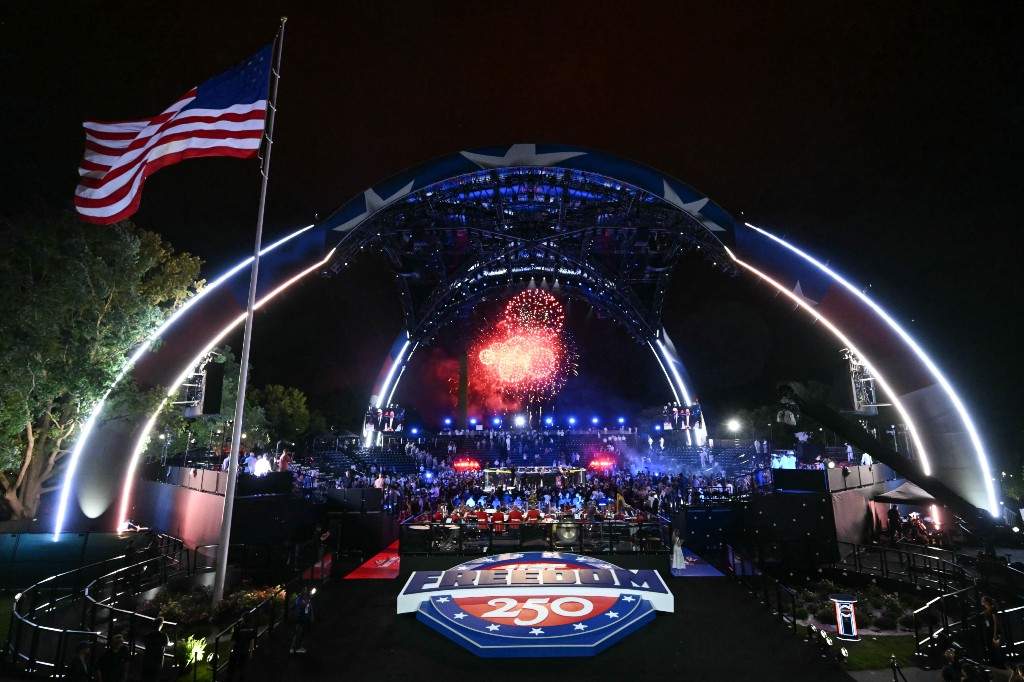
An online extremist ring thought they could turn the South Lawn of the White House into a war zone during a massive sports broadcast. They almost did.
The FBI just picked up two more suspects, bringing the total number of charged individuals to seven. Federal authorities arrested William Lee Spartacus Falkner in Washington state and Jordan W. Rincker in Missouri. Both face conspiracy to commit murder charges, which carry a maximum penalty of life in prison. For a more detailed analysis into this area, we suggest: this related article.
This isn't a case of lone-wolf actors blowing off steam in a private chat room. The details emerging from federal court complaints outline a terrifyingly coordinated blueprint designed to bypass intense White House security and maximize human casualties during the June 14 UFC Freedom 250 event.
Inside the Blueprint for a Mass Casualty Event
The group didn't just want to cause a disruption. They wanted a revolution. According to the FBI, the plotters harbored fringe conspiracy theories and openly stated their ultimate goal was to destabilize and overthrow the United States government. For additional details on the matter, comprehensive coverage can also be found at Al Jazeera.
The attack strategy relied on a brutal, two-phase playbook.
Phase one involved launching small, custom-built drones rigged with explosives over the northern side of the temporary UFC arena set up on the White House grounds. The goal was simple. Drop payloads to create instant terror and force a massive crowd bottleneck.
Phase two was where the true horror lay. As panicked attendees, including President Donald Trump and top government officials, fled the arena toward Pennsylvania Avenue, hidden snipers were ordered to open fire on the escaping crowd.
Falkner was allegedly recruited specifically for his technical background. Federal investigators say he has extensive experience building and piloting drones. Encrypted chat logs reveal Falkner discussing exactly how to configure the aircraft and load them with explosives for maximum destructive impact.
When news broke that law enforcement had compromised the group, Falkner sent a cold text to a co-conspirator.
"Work trip is canceled."
The Digital Pipeline and the TikTok Connection
The infrastructure behind the plot traces back to a specific TikTok community calling itself "Vanguard of the Old." Under the digital radar, the cell structured itself into a rigid paramilitary group.
Abraham Hermosillo Alvarez, a 31-year-old from Nebraska who went by the handle "Shepherd," allegedly acted as the primary operational coordinator. He mapped out sniper positions, plotted drone launch sectors, and engineered escape routes.
But an operation like this needs cash and hardware, which is where Rincker came in.
Rincker, a 28-year-old from St. Joseph, Missouri, acted as a vital logistics and financial hub. He allegedly received a $1,200 cash payment from Alvarez. In exchange, Rincker handed over a 12-gauge pump-action shotgun equipped with an ammunition-filled bandolier during an in-person meeting in Omaha.
During that same exchange, Alvarez loaded Rincker up with high-tech gear, including a ballistic plate, night vision goggles, a face shield, binoculars, and a 3D printer meant to manufacture custom drone parts.
Rincker also used digital transfers to fund the movement of personnel, sending money to help another co-conspirator, Bryan Omar Roa, drive across the country from California to Washington, D.C.
When federal agents raided Rincker’s property, they found a small arsenal: multiple rifles, pistols, tactical gear, and 3D-printed military equipment. Rincker later claimed to investigators that he didn't actually plan to build attack drones and just wanted the 3D printer to make and sell crafts. Prosecutors aren't buying it.
How a Mother Stopped a Mass Shooting
With roughly 20 participants sharing detailed aerial photography of the White House and discussing safe houses, the plot seemed completely insulated from traditional law enforcement surveillance. It didn't unravel because of a wiretap or a federal informant.
It unraveled because a mother in Ohio paid attention.
The investigation sparked to life when the mother of 19-year-old Tycen C. Proper grew deeply alarmed by her son's sudden, heavy firearms purchases and aggressive online behavior. She called the local police.
That single phone call gave the FBI the thread they needed to pull. When agents interviewed Proper, he cracked, detailing the entire plan to launch the drone and sniper assault. The agency moved instantly, executing high-risk weekend raids across four states to disrupt the group just days before the June 14 fight night.
The five initial suspects, all American citizens, were locked down before they could acquire the final explosive payloads needed for the drones.
The Rapidly Shifting Threat Profile
This case highlights a major headache for domestic counterterrorism units. The mix of commercially available drone technology, 3D printing, and decentralized recruitment via public social platforms like TikTok makes tracking these cells incredibly difficult.
Security expert and former Secret Service detail lead Robert McKnight notes that temporary outdoor setups on historic grounds present unique vulnerabilities.
"When you build a temporary arena like the UFC structure on the South Lawn, you create a soft perimeter within a hard zone," McKnight explains. "The threat isn't just someone trying to jump a fence anymore. It is an asymmetrical aerial threat combined with traditional ground-level ambushes. It forces a complete rewrite of how we secure high-profile events."
The Department of Justice and the FBI Counterterrorism Division are actively combing through the remaining encrypted data trails. Investigators have already identified up to 23 people linked to this broader network. With seven individuals currently behind bars facing major federal charges, law enforcement officials confirm that the multi-state sweep remains highly active and more arrests are likely as grand jury subpeonas roll out.


