The steel hull of a crude carrier vibrates with a low, bone-deep hum that you don't so much hear as feel in your teeth. If you stand on the bridge of a supertanker navigating the Strait of Hormuz, the world shrinks to a remarkably narrow strip of gray-blue water. To your left, the jagged, sun-bleached cliffs of Oman. To your right, the hazy coastline of Iran. Between them lies a choke point just twenty-one miles wide at its narrowest bend.
Through this single, fragile artery flows one-fifth of the world’s petroleum. It is the global economy's jugular vein.
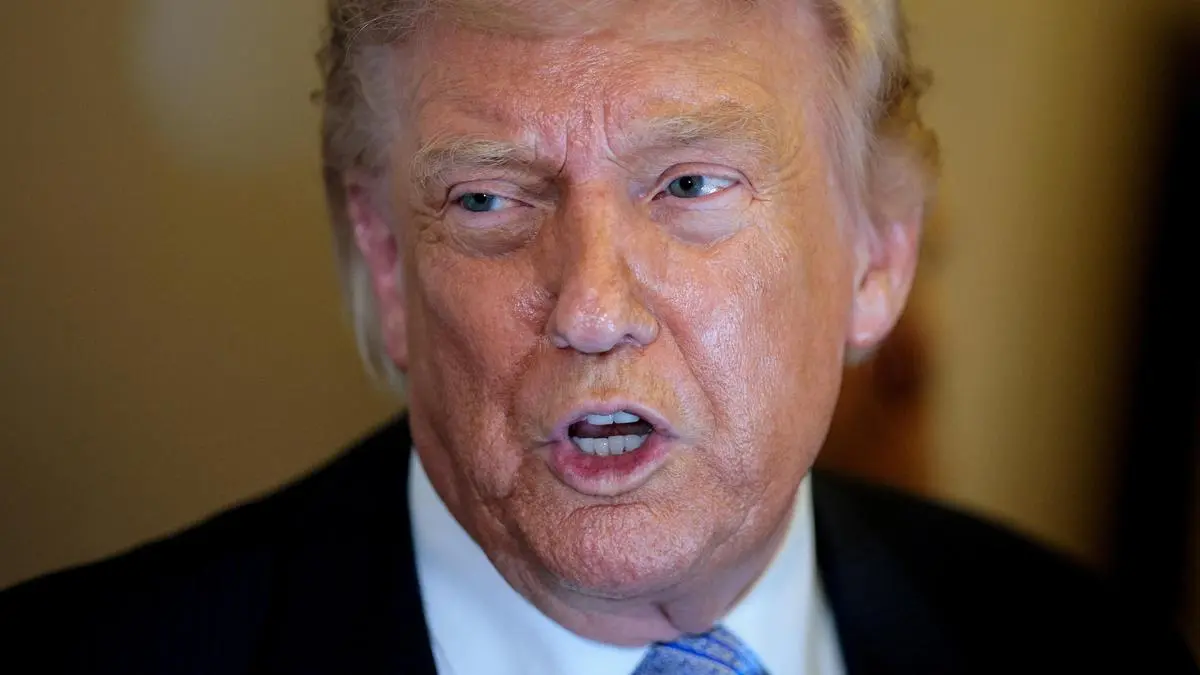
For the crew aboard these vessels, the tension is a physical weight. They know that a single miscalculation, a sudden drone strike, or a seized vessel here ripples outward instantly, changing the price of a gallon of gas in Ohio, altering boardroom decisions in Tokyo, and shifting the geopolitical balance in Washington. Right now, that tension is reaching a boiling point. The United States and Iran remain profoundly far from a deal to secure these waters, and the countdown has begun. Donald Trump has made it clear to everyone listening: the clock is ticking.
But to understand why the world is staring at this particular stretch of water with bated breath, you have to look past the political theater and the cable news chyrons. You have to understand the invisible stakes.
The Friction of Two Irreconcilable Clocks
Washington and Tehran are operating on entirely different dimensions of time.
In the American capital, time is measured in political cycles, news flashes, and immediate economic indicators. The Trump administration approaches the crisis with the urgency of a corporate turnaround. The strategy is maximum pressure, deployed with aggressive immediacy. The goal is to force Iran into a comprehensive negotiation that covers not just its nuclear ambitions, but its ballistic missile program and regional influence. The ticking clock is an intentional psychological tool, designed to create a sense of impending consequence.
Now consider the clock in Tehran.
Iran’s leadership views history through a lens of decades and centuries, not election cycles. They have endured decades of sanctions, economic isolation, and shifting Western administrations. To them, survival is an art form refined over generations. When Washington ratchets up the pressure, Tehran does not panic; it recalibrates. They counter American economic leverage with asymmetric tactical leverage. If they cannot export their oil freely, they will ensure that the transit of everyone else's oil becomes a hazardous gamble.
This collision of perspectives creates a dangerous stalemate. One side demands total capitulation before talks can truly begin, while the other refuses to negotiate under the barrel of a gun. The result is a diplomatic vacuum, and nature abhors a vacuum. Especially in a choke point filled with millions of barrels of highly combustible cargo.
The Anatomy of a Choke Point
Why does this specific strip of water hold such absolute power over our daily lives? It comes down to basic math and geography.
Imagine a giant funnel. The wide top of the funnel collects the vast oil output of Saudi Arabia, Iraq, Kuwait, the United Arab Emirates, and Iran itself. All of that immense energy, vital for powering factories, heating homes, and fueling transportation networks across the globe, must pass through the narrow neck of the funnel.
If you block that neck, even temporarily, the backup is immediate and catastrophic. Shipping insurance rates skyrocket overnight. Captains are forced to consider long, wildly expensive detours around the entire continent of Africa. Supply chains, already finely tuned to a just-in-time delivery model, begin to fracture.
Consider the ripple effect of a single disruption in the Strait. It does not just affect energy companies.
- The Commuter: A manufacturing worker in Germany sees their utility bills spike, eating into the family grocery budget.
- The Retailer: A shipping container filled with electronics gets delayed, missing a crucial seasonal sales window.
- The Central Banker: Inflationary pressures spike unexpectedly, forcing interest rate hikes that slow down housing markets half a world away.
This is the leverage Iran holds, and it is the exact leverage the United States is determined to neutralize. But neutralizing it requires more than tough rhetoric; it requires a level of diplomatic precision that currently seems entirely absent from the equation.
The Human Faces in the Crosshairs
It is easy to get lost in the macroeconomics of oil barrels and naval deployments. But the true cost of this standoff is borne by individuals who have no say in the decisions made in Washington or Tehran.
Think of a young third mate on a container ship. He is twenty-four years old, standing watch in the middle of the night as the vessel enters the Strait. His radar screen is crowded with targets. Fast-attack crafts from the Islamic Revolutionary Guard Corps skim across the water, darting between giant commercial hulls like mosquitoes. They are unflagged, unpredictable, and armed. The mate's heart rate spikes with every sudden change in their trajectory. He is not a combatant. He is a merchant mariner trying to earn a living to send money back to his family in Manila.
On the other side, consider a shopkeeper in a bustling bazaar in Isfahan. She does not care about regional hegemony or uranium enrichment percentages. She cares that the value of the rial has plummeted again. The price of imported medicine for her aging mother has doubled in a month. She watches the news with a sense of creeping dread, knowing that if the ticking clock expires and a conflict erupts, her city, her family, and her future will be the canvas upon which that war is painted.
These are the human stakes hidden beneath the cold vocabulary of geopolitics. The "options on the table" discussed by policymakers translate directly into terror on the water and deprivation on the streets.
The Illusion of a Simple Solution
There is a persistent myth that this conflict can be resolved with a single, decisive action. A surgical strike, a grand bargain, a sudden regime collapse. This is dangerous wishful thinking.
The reality is a complex, interconnected web of historical grievances, religious identity, and raw survival instincts. The United States believes that economic strangulation will eventually force Iran to the table. But history suggests an alternative outcome: pressure can just as easily harden resolve, empowering the most radical factions within the Iranian political structure who argue that the West can never be trusted.
Meanwhile, Iran’s tactics of harassment and covert sabotage risk triggering an accidental escalation. A stray missile, a misunderstood maneuver by a naval commander, a fatal miscalculation by a drone operator. Any of these could ignite a conflagration that neither side genuinely wants, but neither side can figure out how to avoid without losing face.
Diplomacy is often derided as slow, frustrating, and compromise-heavy. It is. But it is also the only mechanism capable of defusing a bomb of this magnitude. Right now, the fuses are burning, and the negotiators are not even in the same room.
The Shadow on the Horizon
The sun sets over the Persian Gulf, casting long, crimson shadows across the water. The supertankers keep moving, giant silhouettes gliding through the dusk, their crews watching the horizons for trouble. They have no choice but to keep going. The world demands the energy they carry, and the global economy cannot afford for them to stop.
But the margin for error is shrinking with every passing day. The rhetoric remains unyielding, the positions remain entrenched, and the fundamental issues that divide these two nations are no closer to a resolution than they were months ago. The United States holds the economic vice; Iran holds the geographic knife.
The clock Donald Trump spoke of isn't a digital display on a wall. It is the steady, rhythmic pulse of an unstable region, counting down the moments until an unresolved grievance demands a price that the entire world will have to pay.