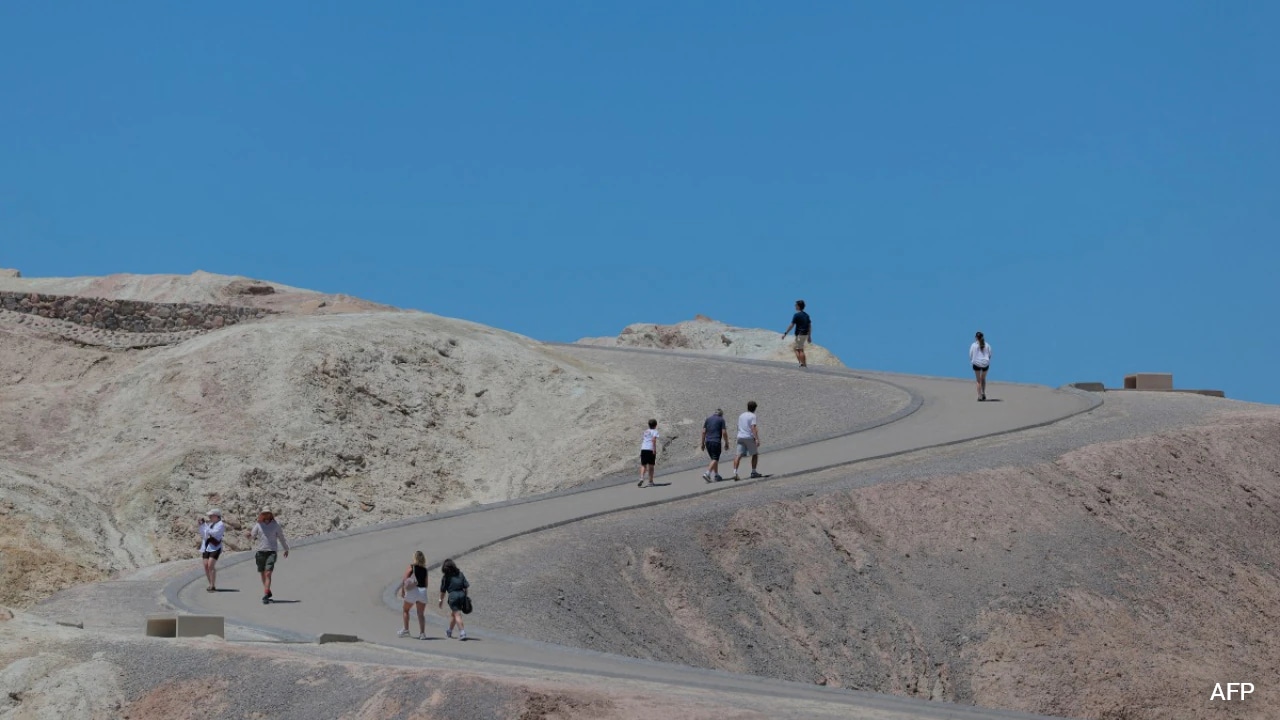
Human survivability in extreme thermal environments operates on narrow physiological margins. When ambient temperatures exceed skin temperature, the body loses its primary cooling mechanism through radiation and convection, shifting the entire thermoregulatory burden onto eccrine sweat evaporation. In environments where ambient heat combines with hyper-arid conditions, such as Death Valley during peak summer, environmental thermodynamics collide with human physiological limits in a predictable, quantifiable manner. The fatal incident involving a French tourist exposed to 47 degrees Celsius ambient temperatures highlights a failure mode in environmental risk assessment, hazard recognition, and thermoregulatory failure mechanics.
Evaluating this event requires stripping away narrative tragedy to examine the core variables governing human heat tolerance: latent heat of vaporization, ambient vapor pressure deficit, cutaneous vasodilation limits, and cardiac output constraints.
The Thermodynamic Failure Model
Environmental heat stress is not merely a function of air temperature. It is governed by a complex heat balance equation:
$$S = M \pm R \pm C \pm K - E$$
In this equation, $S$ represents heat storage, $M$ metabolic heat production, $R$ radiant heat exchange, $C$ convective heat exchange, $K$ conductive heat exchange, and $E$ evaporative heat loss.
When ambient air temperature exceeds core body temperature (approximately 37 degrees Celsius), both radiation ($R$) and convection ($C$) become negative inputs. The environment transfers heat to the human body rather than drawing it away. Under these conditions, metabolic heat production ($M$) combined with external heat gain must be entirely offset by evaporative cooling ($E$).
In Death Valley, extreme ambient temperatures often exceed 50 degrees Celsius, accompanied by relative humidity levels frequently dropping below ten percent. This environment creates an extreme vapor pressure deficit. While low humidity accelerates the rate of sweat evaporation, it simultaneously causes extreme fluid loss rates that can reach up to two liters per hour under strenuous exertion.
The physiological bottleneck is cardiovascular capacity, not simply sweat gland output. To maintain evaporative cooling, the cardiovascular system must redirect a massive volume of blood to the cutaneous vascular bed to dissipate heat. This cutaneous vasodilation reduces central blood volume. Simultaneously, stroke volume drops due to dehydration-induced hypovolemia. To maintain adequate arterial pressure and tissue perfusion, the heart rate must accelerate. When cardiac output reaches its maximum ceiling and can no longer simultaneously supply working muscles, vital organs, and the skin, core temperature begins an unchecked upward trajectory.
Behavioral Miscalculation and Environmental Hazard Perception
The transition from thermal discomfort to fatal heat stroke is often non-linear. Human perception of thermal risk relies heavily on subjective sensory feedback, which fails catastrophically in hyper-arid, high-heat environments.
In humid environments, high sweat accumulation signals immediate distress because sweat fails to evaporate, leaving the skin wet and preventing cooling. In hyper-arid environments like Death Valley, sweat evaporates almost instantaneously upon reaching the skin surface. This creates a deceptive sensory illusion: the individual feels relatively dry and may underestimate their total fluid loss until severe hypovolemia has already set in.
Furthermore, radiant heat load from solar radiation and ground reflection (albedo from salt flats and desert sand) can elevate the effective black-globe temperature significantly above ambient air temperature. Standard weather reports measure air temperature in shaded, ventilated enclosures. A person standing in direct sunlight on exposed terrain experiences an operative temperature that can be 10 to 15 degrees Celsius higher than the reported air temperature due to direct shortwave radiation and longwave radiation emitted from the ground.
This discrepancy distorts risk assessment. Travelers accustomed to temperate climates apply intuitive heuristics that assume hydration and shade are sufficient mitigations. In a desert basin operating as a natural solar oven, these heuristics break down. Once ambient temperature surpasses 40 degrees Celsius, standard behavioral adaptations—such as seeking shade or increasing water intake—become insufficient if the absolute thermal load exceeds the human body's maximum evaporative cooling capacity of approximately 1.5 to 2.0 liters of sweat evaporation per hour.
Pathophysiological Cascade of Exertional and Classic Heat Stroke
When thermoregulatory failure occurs, the pathophysiological sequence follows a rapid, destructive timeline. Understanding this sequence explains why delayed rescue or continued exertion in extreme heat proves fatal.
Phase one involves progressive dehydration and electrolyte depletion. As extracellular fluid volume decreases, renal blood flow drops, and cellular osmolarity shifts. The body prioritizes core perfusion by constricting splanchnic and peripheral vessels, but the skin must remain vasodilated to dump heat, creating an internal physiological conflict.
Phase two marks the onset of cellular thermal injury. When core temperature surpasses 40 degrees Celsius, cellular enzymes begin to denature, and cell membrane stability degrades. Endothelial cells lining the vasculature become damaged, increasing vascular permeability and predisposing the microcirculation to localized microthrombosis.
Phase three is systemic inflammatory response syndrome and multi-organ dysfunction. Gut permeability increases due to splanchnic hypoperfusion, allowing lipopolysaccharides and gut bacteria to translocate into the systemic circulation. This triggers a massive cytokine cascade resembling septic shock. The liver, kidneys, and brain are particularly vulnerable to direct thermal cytotoxicity and ischemia. Hepatic necrosis and acute tubular necrosis frequently manifest within hours of collapse. Concurrently, cerebral edema leads to encephalopathy, seizures, and loss of consciousness, eliminating the victim's ability to self-rescue or seek hydration.
Methodological Deficits in Remote Environmental Risk Management
Analyzing incidents in extreme geographical anomalies like Death Valley reveals systemic vulnerabilities in how infrastructure, advisory systems, and emergency protocols interact with human behavior.
Public safety warnings often rely on qualitative guidance rather than quantitative thresholds. Advisories to "drink plenty of water" fail to account for the mathematical reality of sweat rates versus absorption rates. The human gastrointestinal tract can absorb water at a maximum rate of roughly one liter per hour under optimal conditions. If environmental conditions demand a sweat rate of 1.5 liters per hour to maintain thermal equilibrium, a net fluid deficit is guaranteed, regardless of drinking behavior.
Additionally, cellular dead zones and remote terrain create severe latency in emergency response times. In extreme thermal environments, cellular damage occurs on a minute-by-minute basis. A rescue window measured in hours is frequently too wide to prevent irreversible multi-organ failure once core temperature exceeds 42 degrees Celsius.
Infrastructure design must shift from passive signage to active access control. Standard warning signs function poorly against cognitive biases such as optimism bias and the normalization of deviance, where tourists assume safety guidelines apply to others but not to their specific capabilities. Physical environmental interventions, such as automated gate closures on high-risk trails when ambient temperature models cross critical physiological thresholds, provide the only deterministic barrier against thermal casualties.
Implement mandatory thermal risk cutoff protocols across all National Park Service jurisdictions experiencing extreme hyper-arid summer conditions, utilizing real-time black-globe temperature measurements rather than shaded air temperature to trigger temporary trail closures.