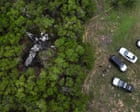
A peaceful afternoon in the Texas Hill Country turned into a scene of devastation when a small aircraft went down near Fredericksburg, killing all five people on board. This wasn't just a minor mechanical hiccup or a rough landing. It was a high-impact event that has left investigators scrambling for answers in the rugged terrain of Gillespie County. When a tragedy like this hits a tight-knit region known more for peach orchards and wineries than aviation disasters, the shockwaves travel fast.
The aircraft, identified by the Federal Aviation Administration (FAA) as a single-engine Piper PA-46, crashed under circumstances that still defy an easy explanation. First responders arrived to find a debris field that told a grim story. There were no survivors. Local authorities confirmed the fatalities shortly after reaching the site, which sits in a relatively remote area that made the initial emergency response difficult.
What Happened in the Skies Over Gillespie County
The flight didn't trigger any immediate red flags when it took off. Most small plane trips in Texas are routine, Boring, even. But something went sideways fast. Witnesses near the crash site reported hearing engine sputtering before the plane dipped below the tree line. In aviation, those seconds between a "strange noise" and impact are everything.
The National Transportation Safety Board (NTSB) has taken the lead on the investigation. They aren't just looking at the wreckage. They're dissecting the pilot’s history, the plane's maintenance logs, and the specific weather patterns at the time of the crash. While the Hill Country is beautiful, its rolling hills and sudden thermal shifts can be tricky for light aircraft. If you've ever flown a small Cessna or Piper through a Texas summer, you know the air isn't always your friend.
Investigating a crash of this magnitude takes months, sometimes years. The NTSB usually releases a preliminary report within fifteen days, but that’s just the "what." The "why" stays buried until they can examine the engine components and the flight path data in a lab.
Why Small Plane Crashes are Surging in Texas
Texas has more private pilots than almost any other state. It makes sense. Everything is far apart, and if you have the means, flying beats sitting in I-35 traffic every single time. But that high volume of air traffic comes with a cost. We're seeing a pattern of "General Aviation" accidents that far outpaces commercial flight risks.
Commercial airliners have redundant systems and two pilots who do nothing but train for emergencies. A Piper PA-46 is a sophisticated machine, but it’s often a single-pilot operation. If that pilot has a medical emergency or becomes spatially disoriented in a sudden cloud bank, there's nobody to grab the controls. In the Texas Hill Country, visibility can change in a heartbeat. One minute you're admiring the view of Enchanted Rock; the next, you're trapped in a "gray-out" with no horizon.
The Reality of the Piper PA-46
The Piper PA-46, specifically the Malibu or Meridian variants, is a beast of a plane. It’s pressurized, fast, and designed to fly high above the weather. Pilots love them because they feel like a mini-airliner. However, that complexity is a double-edged sword. It requires a high level of proficiency to manage, especially during the takeoff and landing phases where most accidents happen.
I’ve talked to flight instructors who swear by the PA-46, but they all say the same thing. You can't be a "weekend warrior" and fly this plane safely. It demands your full attention. If the investigation reveals a mechanical failure, it'll be a massive blow to the local flying community. If it was pilot error, it serves as another tragic reminder that the sky doesn't care about your experience level if you lose focus for one second.
Identifying the Victims and the Aftermath
The names of the five deceased haven't been widely circulated yet as officials work to notify extended families. It’s a messy, heartbreaking process. In Gillespie County, the sheriff’s office is coordinating with the NTSB to preserve the site. This isn't just about clearing the wreckage. Every scrap of metal and every snapped branch provides a clue about the angle of impact and the speed at which the plane hit the ground.
The local community in Fredericksburg is small. News like this doesn't stay "national news" for long—it becomes personal. People start wondering if it was a neighbor, a local business owner, or a family visiting for the weekend. The loss of five lives in a single event is one of the deadliest aviation incidents the Hill Country has seen in recent years.
Understanding the Investigation Process
When the NTSB "goes to school" on a crash site, they follow a very specific protocol. They'll look at three main areas:
- The Man: Was the pilot fatigued? Did they have a known medical condition? What was their recent flight time?
- The Machine: Did the engine fail? Was there fuel contamination? Did a control surface lock up?
- The Environment: Was there a sudden microburst? Did the sun's glare cause an optical illusion against the hills?
They’ll haul the wreckage to a secure facility, likely in Dallas or Houston, to reconstruct what they can. They look for "signature" marks on the propeller blades. If the blades are curled like a banana, the engine was likely producing power at impact. If they're straight, the engine was probably dead before it hit the dirt. It's gruesome work, but it's the only way to prevent the next crash.
What Pilots Can Learn From This Tragedy
If you’re a pilot or someone who frequently flies in private charters, this news is a wake-up call. Safety isn't a checkbox; it's a lifestyle. Most accidents are a "chain of events." It’s rarely one big thing that goes wrong. It’s usually three small things that happen at the same time. A late departure, a distracting radio call, and a slight shift in wind.
Always check your fuel. Then check it again. Don't push your "personal minimums" just because you're in a hurry to get home. The Hill Country is notorious for deceptive terrain. What looks like a flat field from 2,000 feet can be a rocky ravine when you get closer.
For the families of the five lost in this Piper crash, the wait for answers will be agonizing. The NTSB doesn't move fast. They move carefully. For the rest of us, it’s a moment to pause and respect the inherent risks of flight.
Keep an eye on the preliminary NTSB report expected in the next two weeks. It'll give the first real look at the flight path and any distress calls made to air traffic control. Until then, the hills of Gillespie County hold the secrets of those final moments. If you're planning on flying in the area, stay sharp, watch the weather like a hawk, and never take a routine flight for granted. The margin for error at 150 miles per hour is zero.