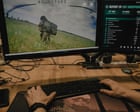
The monitor flickers in a half-lit basement somewhere near the eastern tree line. Outside, the low, concussive thrum of artillery rattles the doorframes, a metronome of destruction that has measured the hours for years. Inside, the air smells of stale cigarette smoke, cold coffee, and the sharp, hot copper scent of overheating electronics.
A young man with dark circles carved deep beneath his eyes taps a trackpad. His fingers are calloused, stained with grease from a generator he spent the morning repairing. On the screen, a high-definition thermal feed glows in eerie shades of stark white and bruised purple. A lone figure in winter gear moves hurriedly through the skeletal remains of a blown-out kitchen, looking over his shoulder at an empty sky.
The drone pilot watches. He breathes out slowly, a long, tired hiss of air. Then, he drops the payload.
What happens next is broadcasted to hundreds of thousands of people on encrypted channels, compressed into thirty-second clips, set to thumping techno beats or ironic pop music, and stamped with laughing emojis.
We call it content. They call it survival.
To understand the digital battlefield, you have to abandon every traditional notion of distance. Modern warfare is no longer defined solely by trenches, mud, and steel, though those elements remain brutally, physically present. It is defined by the glass screen. It is fought in the overlapping frequencies of radio waves and human attention spans.
Consider what happens when a drone operator watches an enemy soldier’s final moments through a high-resolution lens. The distance between them is physically miles, yet visually, it is zero inches. The operator sees the twitch of a hand, the frantic glance at an unblinking mechanical eye, the sudden realization that flight is impossible.
In past conflicts, death on the battlefield was obscured by distance, fog, and the merciful anonymity of official casualty reports. A name on a list. A number in a ledger. Today, war is hyper-visible. It is rendered in high-frame-rate color.
When Ukrainian drone units begin posting these unvarnished, often brutal recordings online, critics recoil. They call it macabre. They call it a descent into barbarism. They ask how a society defending its homeland can stoop to mocking the dying, setting their final seconds to dark comedy and viral audio tracks.
The question assumes a luxury that the defenders do not possess. The luxury of detachment.
To grasp the psychology of this digital theater, walk through an ordinary day in a frontline command post. The pressure is absolute. Sleep is a rumor. The enemy outnumbers you, outguns you, and presses forward with an indifferent, grinding momentum that treats human lives as expendable ammunition.
When you are fighting an existential threat, standard rules of emotional decorum shatter. Despair is a luxury. Grief is a liability that gets you killed before sunset.
So, what do you do with the terror? You weaponize it. You laugh.
Laughter on the front line is not cruelty for its own sake. It is an armor plating of the soul. If you allow yourself to fully absorb the horror of what you are seeing—the destruction of bodies, the casual waste of human potential, the unending violation of your home—you would break. The mind would simply shut down.
Humor acts as a pressure valve. By turning the terrifying invader into the butt of a joke, by matching the absurdity of invasion with the dark absurdity of digital meme culture, the defenders reclaim their agency. The enemy soldier on the screen is no longer an unstoppable monster crushing your world. He is a clumsy pixelated figure stumbling through a ruined kitchen, soundtracked by a silly pop tune.
Power is transferred. The fear changes hands.
There is another, colder calculus at play here, one that extends far beyond the psychology of the trenches. It is the economics of global attention.
Wars are won with artillery shells, tanks, and infantry. But in the twenty-first century, they are sustained by the erratic, fickle river of international willpower.
We live in a world saturated by crisis. Fatigue sets in quickly. A conflict that dominates front pages one month becomes background noise the next, squeezed out by elections, economic anxiety, and domestic squabbles. For a nation fighting for its survival, a drop in international attention translates directly into a drop in supply shipments, diplomatic pressure, and financial aid.
Silence is fatal.
The drone videos are not posted merely to gloat. They are distributed to maintain relevance. They slice through the algorithmic noise of social media feeds with the raw, undeniable shock of reality. A user scrolling through vacation photos and cooking tutorials stops dead when a thermal feed drops a grenade into a trench.
It is jarring. It is meant to be.
By weaponizing virality, these units ensure that the war cannot be ignored, compartmentalized, or neatly filed away into a history textbook. They force the world to look directly at the meat grinder. They make the invisible visible. Every view, every share, every outraged comment or dark laugh keeps the spotlight burning on the front lines.
Critics argue that this degrades everyone involved, turning human tragedy into cheap entertainment. They worry about the erosion of empathy, the slippery slope where empathy for the victimized bleeds into a callous numbness toward all life.
They are not entirely wrong.
The danger of digital warfare is that it trains us to consume death as media. We watch a man's final seconds while eating breakfast, double-tap the screen, and scroll down to the next post about a celebrity gossip scandal. The horror is flattened. It becomes just another piece of content competing for our fleeting dopamine receptors.
Yet, to condemn the defenders for using these tactics is to misunderstand the nature of the trap they are in. They did not invent the attention economy. They did not design the algorithms that reward shock value. They are simply using the tools available to them in a desperate bid to stay alive.
When your house is on fire, you do not lecture the firefighters on the aesthetics of their methods. You hand them water.
Back in the dim basement, the drone operator leans back and rubs his eyes. The screen goes dark as the battery dies on the scouting unit miles away. The silence that rushes back into the room is heavy, weighted by the ghosts of the past hour.
He does not look triumphant. He looks exhausted.
He stands up, walks over to the small camp stove, and pours another cup of bitter, black coffee. Tomorrow, the sun will rise over the same shattered treeline. The drones will take flight again. The monitors will glow. And the world will keep watching through a glass screen, safe in the dark, wondering how much more of this humanity can bear before it completely forgets what it looks like in the light.