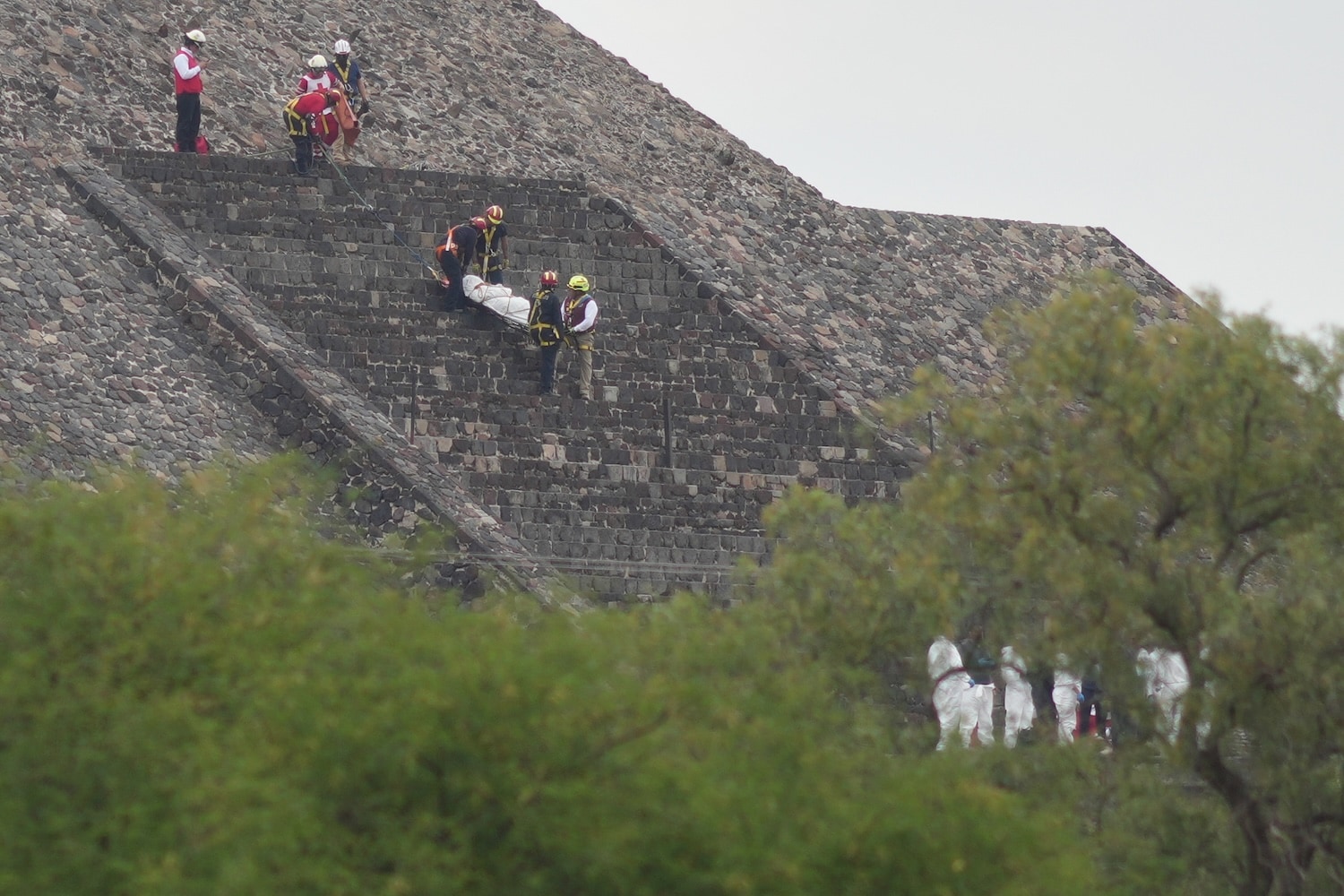
The sun was high over the Avenue of the Dead when the peace of one of the world's most iconic archaeological sites shattered. A gunman opened fire at the Teotihuacán pyramids, a tragedy that left a Canadian tourist dead and a community of travelers looking for answers. It's the kind of headline that makes you want to cancel your flight. But before you pull the plug on your trip, we need to look at what actually happened and the reality of navigating central Mexico right now.
Security at major historical sites is supposed to be a given. You expect to worry about hydration or steep stairs, not ballistics. This incident isn't just a random statistic. It's a wake-up call for how we perceive "safe" zones in a country that’s been struggling with a complex security crisis for years. For another view, consider: this related article.
The Reality of the Teotihuacán Incident
Witnesses describe a scene of pure chaos. One minute, families were admiring the massive Temple of the Sun. The next, they were diving for cover behind ancient stone walls. The victim, a Canadian national whose identity was initially withheld pending family notification, was caught in the crossfire of what appears to be a targeted or localized dispute rather than a random act of terrorism.
That distinction matters. It doesn't make the loss of life any less tragic, but it changes how we evaluate the risk for the average visitor. Most violence in the State of Mexico, where the pyramids are located, stems from organized crime or localized extortion rackets. When that spillover happens in a high-traffic tourist area, the fallout is global. Related analysis on this trend has been shared by Al Jazeera.
Mexican authorities, including the National Guard, flooded the zone shortly after the shots rang out. They've since increased patrols around the perimeter, but the damage to the site’s reputation is done. For a country that relies so heavily on the "magic" of its history, a bullet hole in that narrative is hard to patch up.
Why Central Mexico Security is Shifting
The State of Mexico (Edoméx) surrounds the capital like a horseshoe. It’s a powerhouse of industry but also a flashpoint for crime. While Mexico City itself often feels like a bubble of safety with its heavy police presence and gentrified neighborhoods, crossing the border into the surrounding state changes the math.
I've spent years tracking security trends in Latin America. The trend isn't always about tourists being targets. It’s often about the "wrong place, wrong time" factor. Criminal groups are becoming bolder, moving into areas that were previously considered off-limits due to the high political cost of attacking them. Teotihuacán is a crown jewel. It's a UNESCO World Heritage site. Attacking someone there is a direct middle finger to the federal government’s ability to protect its most prized assets.
The U.S. State Department and Global Affairs Canada have long maintained "Exercise a high degree of caution" advisories for Mexico. They don't do that for fun. They do it because the infrastructure of safety can be porous. You can have a thousand soldiers at the gate, but a determined individual with a concealed weapon can still find a gap.
Managing Your Risk Without Living in Fear
You don't need to hide in your hotel room, but you do need to stop being a "soft target." Most travelers treat Teotihuacán like a theme park. It isn't. It’s a massive, open-air site in a region with significant socio-economic tension.
- Check the local news before you head out. Don't rely on a guidebook written three years ago. Use Twitter (X) or local Spanish-language outlets like El Universal to see if there are active protests or "bloqueos" (roadblocks) in the area.
- Go early and leave early. Most incidents happen later in the day or during the transition to evening. Be the first one through the gates at 8:00 AM and be on your way back to the city by 1:00 PM.
- Use registered transport. Taking a random bus from the northern station is cheap, but it’s less secure than a private driver or a vetted tour agency. Private transport companies have a vested interest in your safety and often have direct lines to security updates.
The Myth of Total Safety in Tourist Zones
There's a common belief that if you're in a "tourist zone," you're in a different country. That’s a dangerous lie. The lines between the tourist world and the real world are invisible. In places like Tulum, Puerto Vallarta, and now Teotihuacán, those lines are blurring even more.
When you visit these sites, you're interacting with a local economy that is sometimes under pressure from groups you'll never see. Extortion of local vendors is common. Sometimes, violence breaks out between these groups right in front of the souvenir stands. Honestly, the Canadian victim in this latest shooting likely had no idea they were walking into a volatile situation. That's the scariest part.
What the Mexican Government is Doing Now
Presidential rhetoric usually focuses on "hugging, not bullets" (abrazos no balazos), but when a foreigner dies at a pyramid, the optics demand a different approach. We're seeing a massive deployment of the Sedena (Army) and the National Guard to the Teotihuacán-Otumba corridor.
Expect to see more checkpoints. Expect to see soldiers with long guns while you’re buying a decorative obsidian skull. It’s jarring. It ruins the "mystical" vibe of the ruins. But right now, it’s the only way the government can convince international airlines to keep those seats filled.
Is it enough? Probably not. Long-term safety in Mexico requires more than just parking a tank at the entrance of a pyramid. It requires dismantling the local gangs that operate in the shadow of these ancient structures.
Moving Forward With Your Plans
If you have a trip booked, look at your itinerary. If you’re staying in Mexico City, you're likely fine. The capital is a different beast entirely. But if you’re planning day trips to the outskirts, do your homework.
Contact your hotel and ask about the current "clima" (climate) of the area you’re visiting. Not the weather—the social vibe. They live there. They know if things feel tense. If they hesitate, or if they’ve heard rumors of unrest, listen to them.
The tragedy at Teotihuacán sucks. It’s a stain on a beautiful culture and a blow to the Canadian family involved. It shouldn't have happened. But the best way to honor the reality of the situation is to be a smarter, more informed traveler. Don't be the person who wanders around with their head in the clouds just because they're on vacation.
Stop thinking of Mexico as a monolithic "safe" or "unsafe" place. It's a patchwork. Teotihuacán just became a very complicated square on that quilt. Stay alert, stay informed, and keep your wits about you when you're off the beaten path. If a situation feels off, it usually is. Leave immediately. Don't wait for the first shot.