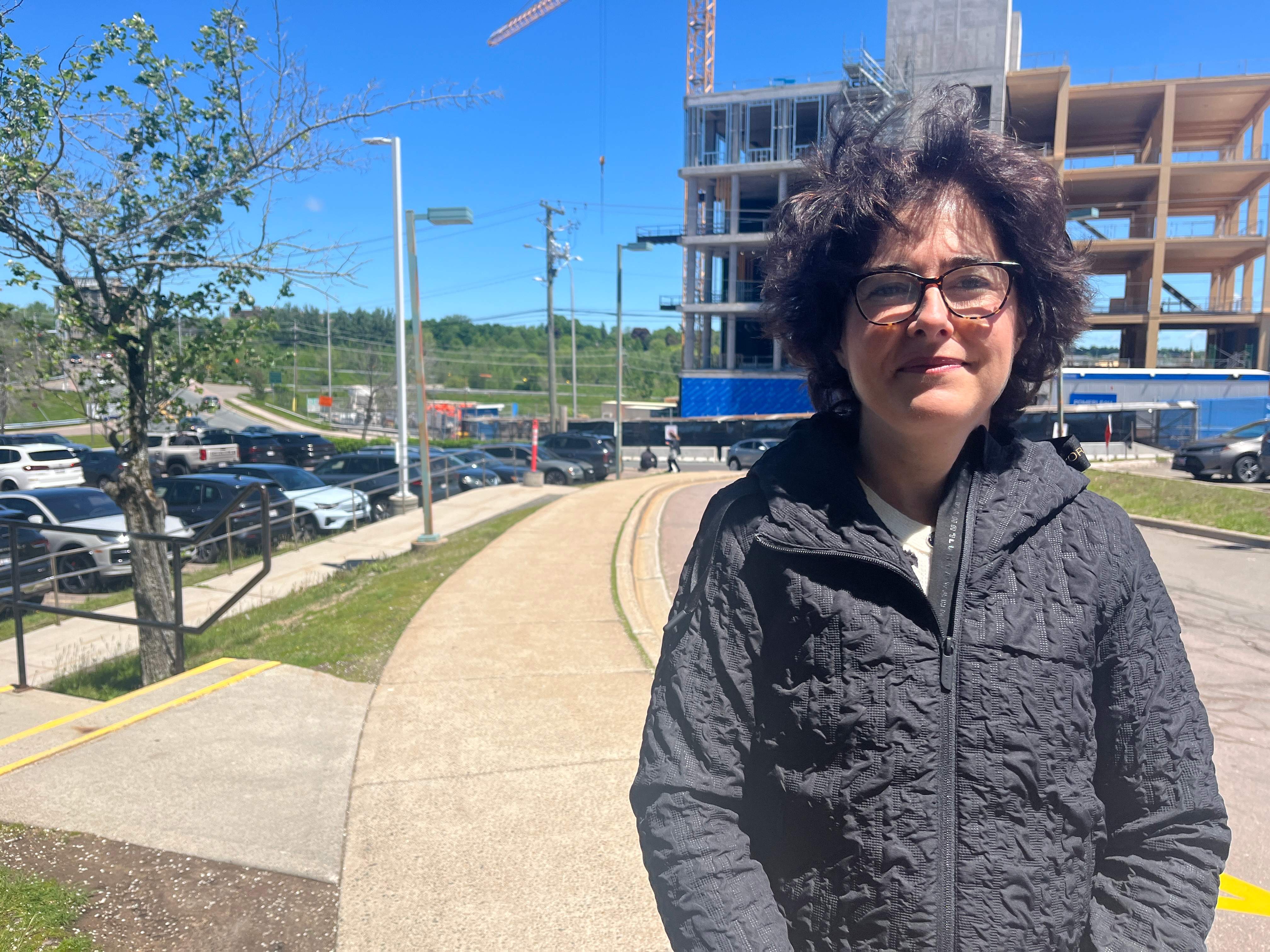
A growing coalition of New Brunswick physicians is demanding an independent, third-party health assessment for a proposed natural gas expansion project in the Tantramar region, warning that provincial regulatory oversight is failing to account for localized medical risks. Local doctors argue that the current environmental review process glosses over the long-term respiratory and cardiovascular impacts on nearby communities. While industrial proponents frame the project as a necessary transition toward cleaner energy, frontline healthcare providers maintain that operating a fossil fuel facility in close proximity to residential zones introduces unacceptable public health liabilities that the province is unequipped to monitor.
The friction in the Tantramar region is not an isolated NIMBY dispute. It is a microcosm of a broader, systemic failure in how provincial governments evaluate industrial infrastructure. When a corporation proposes a gas-fired plant, the bureaucratic machinery defaults to economic forecasting and baseline emission models.
What gets lost in the spreadsheets is clinical reality.
The Core Conflict Behind the Tantramar Expansion
The province's assessment framework relies heavily on self-reported industry data and broad regional averages. Physicians on the ground see a different picture. They treat the asthma exacerbations, the chronic obstructive pulmonary disease flares, and the cardiovascular strain that correlates with localized air pollution.
By demanding an independent medical review, the doctors are effectively declaring no confidence in the Department of Environment and Local Government’s standard vetting process. They argue that the standard Environmental Impact Assessment is a bureaucratic rubber-stamping mechanism rather than a rigorous public health evaluation.
Proponents of the gas project point to jobs, tax revenue, and energy security. They argue that natural gas burns cleaner than coal or heavy oil, positioning the facility as a pragmatic bridge toward New Brunswick’s net-zero targets. From a purely macroeconomic perspective, the logic holds up.
But public health does not operate on a curve. Substituting a highly polluting fuel for a moderately polluting fuel still introduces new emissions into a specific airshed. For the people living downwind, the relative cleanliness of gas compared to coal is cold comfort when their children are using rescue inhalers more frequently.
The Chemistry of Proximity
To understand why the medical community is alarmed, one must look at what happens when natural gas is combusted at an industrial scale. The process releases nitrogen oxides, volatile organic compounds, and fine particulate matter known as PM2.5.
These microscopic particles bypass the body's natural filtration systems. They lodge deep within the lungs and enter the bloodstream, triggering systemic inflammation.
Standard regulatory models often predict that these emissions will dissipate safely across the region. Clinical experience suggests otherwise. Microclimates, localized wind patterns, and existing baseline health vulnerabilities can create hot spots of exposure.
A geographic depression or a frequent temperature inversion can trap pollutants close to the ground, concentrating the dose delivered to the local population. The current provincial guidelines rarely account for these hyper-local variables, treating vast geographic zones as uniform spaces.
Furthermore, New Brunswick's population is older and suffers from higher baseline rates of respiratory illness than the Canadian average. Introducing a new point source of pollution into a demographic that is already vulnerable magnifies the risk.
Physicians are not looking at theoretical maximums on a corporate permit; they are calculating the cumulative toll on an already overburdened regional healthcare system.
The Flaw in Regulatory Capture
Provincial regulatory bodies face a structural conflict of interest. The mandate to attract investment and generate economic activity often clashes with the duty to protect public health. When a single agency handles both the promotion of industrial development and the enforcement of environmental safety, compromises are inevitable.
+-------------------------------------------------------------------------+
|                  THE STRUCTURAL CONFLICT OF INTEREST                    |
+-------------------------------------------------------------------------+
|                                                                         |
|  [ Provincial Government Mandate ]                                      |
|          |                                                              |
|          +---> Mandate A: Attract Industrial Investment & Jobs          |
|          |                                                              |
|          +---> Mandate B: Protect Public Health & Air Quality           |
|                                                                         |
|  [ The Resulting Reality ]                                              |
|  Regulatory frameworks default to "permissible exposure limits" rather  |
|  than absolute health preservation, creating a bias toward project      |
|  approval over clinical caution.                                        |
+-------------------------------------------------------------------------+
This structural bias manifests in the use of permissible exposure limits. These thresholds are often outdated, based on political compromises made decades ago rather than modern medical consensus.
They assume that there is a safe level of exposure to certain pollutants, an assumption that current epidemiological research consistently refutes. For fine particulate matter, clinical data shows that adverse health effects occur well below statutory limits.
An independent, third-party study removes this structural bias. It places the evaluation in the hands of epidemiologists and toxicologists who do not answer to the Department of Natural Resources or Treasury Board officials.
The goal is to establish a rigorous baseline of community health before any ground is broken, allowing for actual accountability if air quality degrades post-construction.
The Real Cost of Economic Expediency
The economic arguments for the Tantramar project rely on an incomplete ledger. Proponents quantify the construction wages, the procurement contracts, and the municipal tax base. They leave out the externalized costs that will be borne by taxpayers through the healthcare budget.
An increase in chronic illness strains hospitals, increases emergency room wait times, and drives up provincial drug plan expenditures. When an industrial project causes a spike in asthma admissions, the company does not pay the hospital bill. The public does.
By failing to integrate a comprehensive health economics assessment into the approval process, New Brunswick is effectively subsidizing private industrial development with public health dollars.
A third-party study would force these hidden costs into the light. It would calculate the projected economic burden of increased medical interventions, lost workdays, and long-term disability within the Tantramar region. Only then can decision-makers truly weigh whether the project offers a net benefit to the province.
A Growing Precedent Across Canada
The stand taken by New Brunswick doctors reflects a broader shift across the country. In British Columbia and Alberta, medical professionals have increasingly intervened in regulatory hearings for oil and gas projects, citing the exact same gaps in health data.
The traditional defense used by industry—that projects meet all existing government standards—is losing its efficacy as the gap widens between static regulations and dynamic medical science.
In jurisdictions where independent health assessments were secured, the findings often led to significant modifications in project design, enhanced monitoring protocols, or, in some cases, relocation away from vulnerable populations.
These outcomes demonstrate that independent oversight does not have to mean economic paralysis. Instead, it ensures that industrial development conforms to human limitations rather than forcing human populations to adapt to industrial output.
The Path to Clinical Accountability
If the province proceeds without an independent study, it chooses deliberate blindness. It signals to the medical community that its clinical insights are secondary to corporate timelines.
To resolve the impasse, the provincial government must cede review authority to an unaligned medical panel. This panel requires full access to the project's engineering specifications, projected emission profiles, and local meteorological data.
The panel's scope must include a comprehensive baseline health audit of the Tantramar population, a detailed dispersion model accounting for local topography, and a binding framework for continuous, transparent air quality monitoring.
If the project is as safe as its backers claim, they should welcome this level of scrutiny. Resistance to an independent review suggests a fear of what the data might reveal.
The government cannot continue to treat public health as a footnote in industrial policy. The physicians of Tantramar have drawn a clear line, grounding their opposition in patient care and empirical risk.
Forcing the gas project through without addressing these medical anxieties will permanently damage trust in provincial regulatory institutions, leaving local residents to breathe the consequences.



:max_bytes(150000):strip_icc():focal(665x0:667x2)/gettyimages-50733149-2000-8b129a2475974982a915418ce92a73d8.jpg)