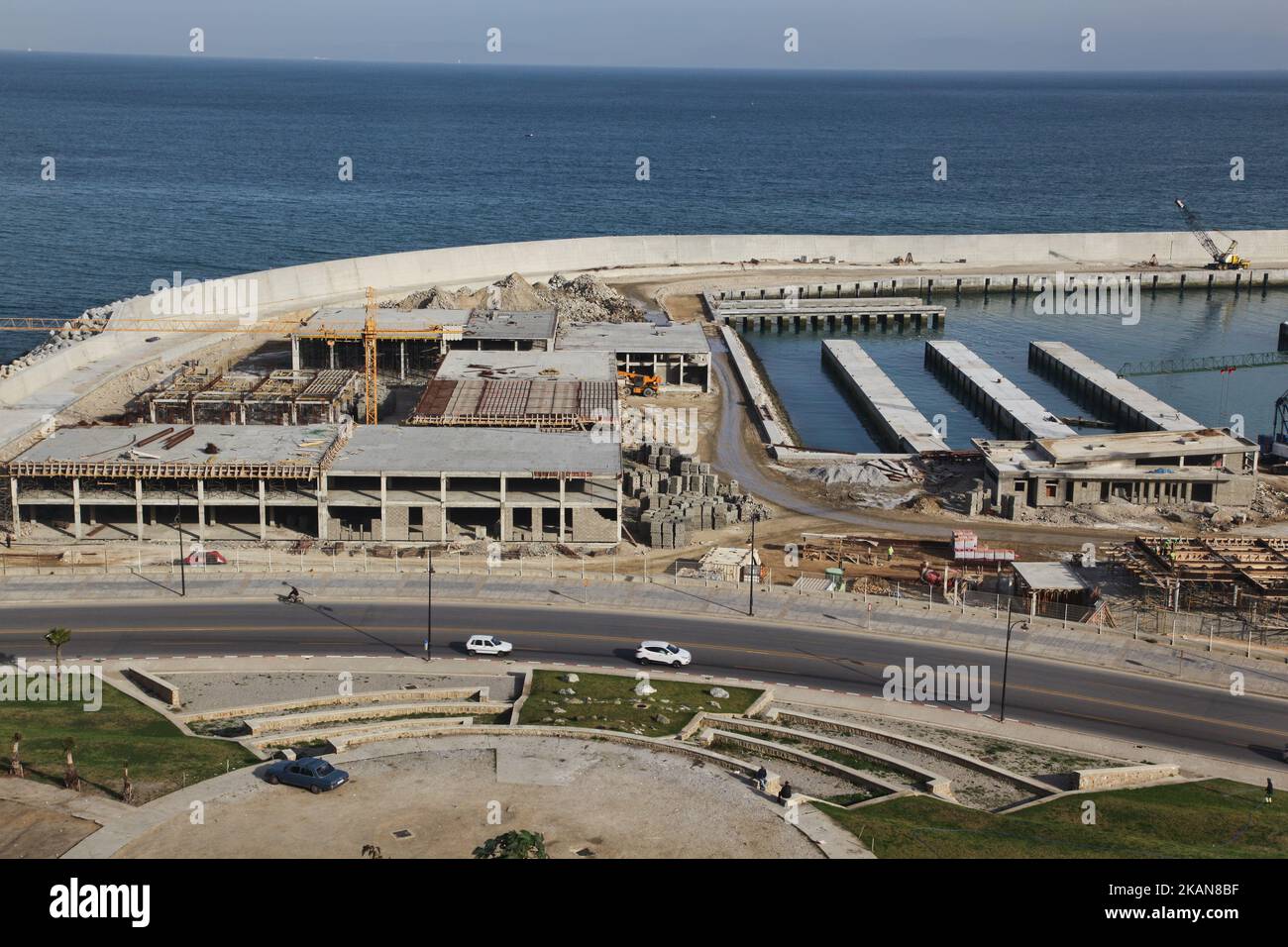
Moroccan authorities at the Tangier Med port complex recently intercepted a massive shipment of 140,000 ecstasy pills, a seizure that exposes the shifting frontline of the global synthetic drug trade. This wasn't a fluke discovery. It was the result of coordinated intelligence that targeted a commercial truck arriving from a European port. While the headlines focus on the sheer volume of tablets, the real story lies in the sophisticated logistics used to bridge the gap between European labs and African markets. Morocco is no longer just a transit point for resin moving north; it is now a primary destination for industrial-scale synthetic stimulants moving south.
The Industrialization of the Strait
The Tangier Med port is a marvel of modern engineering. It handles millions of containers a year, serving as the primary gateway between Africa and the world. But for a smuggler, this efficiency is a double-edged sword. To move 140,000 pills—a haul weighing dozens of kilograms—you cannot rely on small-time "mules." You need infrastructure.
In this specific operation, the pills were meticulously concealed within the chassis of a heavy goods vehicle. This suggests a level of mechanical preparation that happens long before the driver hits the gas. The drugs are often stashed in "cold" spots—areas of the vehicle that don't show heat signatures or are buried deep within legitimate cargo like industrial machinery or perishable goods.
Customs agents now face an impossible math problem. They must scan thousands of trucks daily without grinding global trade to a halt. The smugglers know this. They bet on the volume. They calculate that for every truck ripped apart by a canine unit or an X-ray scanner, five more will slide through in the chaos of peak shipping hours.
Europe as the Synthetic Kitchen
Where did 140,000 ecstasy pills come from? All signs point to the "Big Three" of synthetic production: the Netherlands, Belgium, and increasingly, Germany.
For years, European super-labs have refined the process of pressing MDMA. They have moved away from small, amateur setups to industrial-scale facilities capable of producing millions of units per week. The cost of production has plummeted. A single pill that might retail for 10 or 15 dollars on the street in Tangier or Casablanca costs only a few cents to manufacture at scale in a Dutch warehouse.
The Profit Margin Trap
The economics are brutal and simple.
- Production cost: $0.15 - $0.40 per pill.
- Wholesale export price: $1.00 - $2.00 per pill.
- North African street value: $8.00 - $12.00 per pill.
When you do the math on a 140,000-unit shipment, you are looking at a potential street turnover exceeding one million dollars. Even if the cartel loses two out of every three shipments to Moroccan customs, they are still operating with a profit margin that would make a Silicon Valley CEO weep with envy.
The Moroccan Pivot
Morocco has historically been viewed through the lens of the "Hashish Trail." For decades, the flow of illegal narcotics was one-way: Rif Mountains to the Spanish coast. That dynamic has flipped.
There is a growing, hungry market for synthetics within Morocco’s urban centers. Younger populations in cities like Casablanca, Rabat, and Marrakech are moving away from traditional substances toward "Karkoubi"—a local slang term for various psychotropic pills—and high-purity ecstasy. The demand is local, it is high, and it is fueling a violent competition among distribution networks.
The DGSN (Morocco’s National Police) and the Customs Administration have stepped up their game. The 140,000-pill seizure is part of a broader "pre-emptive" strategy. Instead of waiting for the drugs to hit the streets, they are squeezing the choke points. They are using human intelligence to identify specific shipping manifests and vehicle IDs before they even board the ferry in Algeciras or Marseille.
Technological Arms Race at the Border
Walk through the inspection zones at Tangier Med and you will see the hardware. High-energy X-ray portals can see through solid steel. Backscatter technology detects organic compounds hidden in metal voids.
But technology is only as good as the person reading the monitor. Corruption remains the silent partner in every major smuggling ring. A well-placed official who "misses" a specific license plate on a screen is worth more to a cartel than a fleet of fast boats. This is why the Moroccan authorities have focused on rotating staff and using centralized data centers to monitor scans in real-time from hundreds of miles away. By removing the local "human element" from the decision to flag a truck, they reduce the opportunity for bribery.
The Hidden Risks of Synthetic Purity
There is a darker side to this 140,000-pill haul. Modern ecstasy is not what it used to be. Lab testing on recent seizures in the region shows a massive spike in the concentration of MDMA per pill, sometimes reaching 200mg or 300mg. This is a "kill dose" for an unsuspecting user.
Furthermore, the "ecstasy" seized at the border is often a cocktail. Manufacturers are cutting MDMA with caffeine, methamphetamine, or even synthetic cathinones (bath salts) to stretch their supply. When a shipment this large gets intercepted, it doesn't just hurt the cartel's wallet; it likely prevents a localized spike in hospitalizations and overdose deaths.
Why the Port is the Weakest Link
Despite the success of this bust, Tangier Med remains a vulnerability. The port is expanding. As its capacity grows to 9 million containers, the "needle in a haystack" becomes even smaller.
The traffickers are also diversifying their routes. While this shipment came by truck, authorities are increasingly worried about "parasite" smuggling. This involves divers attaching waterproof canisters of drugs to the hulls of legitimate cargo ships. The ship’s crew may not even know they are carrying a hundred thousand pills. Once the ship docks or slows down near the coast, the canisters are retrieved by small fishing boats.
The Geopolitical Fallout
This isn't just a police matter. It’s a diplomatic one. Morocco has been vocal about its role as a "security bulwark" for Europe. By stopping these shipments, Rabat is signaling to its European partners—particularly Spain and France—that it is a serious player in the global war on drugs.
However, this cooperation is often transactional. Security intelligence is a currency. Morocco expects cooperation in return, specifically regarding border controls in the Enclaves of Ceuta and Melilla, and support for its regional territorial claims. The 140,000 pills are a bargaining chip in a much larger game of international relations.
The Supply Chain of Shadow
To understand how 140,000 pills end up in a truck, you have to look at the precursor chemicals. These chemicals usually originate in China or India, land in European ports like Rotterdam, and are trucked to labs in the Brabant region.
The sheer scale of the Tangier Med bust indicates that the labs in Europe are no longer worried about supply. They have an abundance of precursors and an abundance of finished product. When a manufacturer can afford to send 140,000 units in a single "vulnerable" truck, it means their warehouses are overflowing.
The Moroccan authorities are fighting a flood with a bucket.
Beyond the Seizure
The arrest of the 44-year-old driver in this case is the standard operating procedure. He is a "disposable" asset. The real victory would be tracing the GPS data from his cabin or the forensic trail on his encrypted burner phone.
International drug syndicates use layers of "cut-outs." The person who loaded the truck doesn't know the driver. The driver doesn't know the recipient. The recipient doesn't know the money launderer. Breaking this chain requires more than a lucky X-ray; it requires a level of deep-cover infiltration that most police forces struggle to maintain.
Morocco’s strategy is shifting toward financial forensics. They are following the dirhams. A million-dollar shipment leaves a paper trail, even if it’s buried in the "hawala" informal banking system or obscured by crypto-currency mixers. By seizing the assets of the local distributors who were waiting for those 140,000 pills, the state can do more damage than they ever could by just taking the drugs.
The Tangier Med port will continue to be a site of high-stakes theater. As long as the production costs in Europe remain low and the demand in North Africa remains high, the trucks will keep coming. The 140,000 pills seized this week are a victory, but in the time it took to count them, another shipment was likely already clearing the gates.
Stopping the flow requires looking past the chassis of a truck and toward the chemical factories of the East and the boardrooms of the North.