The Bureaucratic Ghost in the Machine
The headlines are predictably panicked. Bureaucrats in Taipei and Washington are trading boilerplate reassurances that a massive $14 billion backlog in weapons deliveries has not been officially paused. They treat the delay like a temporary supply chain glitch, a minor speed bump on the road to regional security.
They are looking at the wrong map.
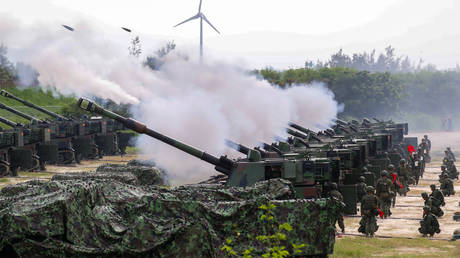
The comforting narrative spun by mainstream defense analysts is simple: Taiwan orders weapons, the United States builds them, and once they arrive, deterrence is achieved. This view is dangerously naive. The multi-year delay in shipping Harpoon missiles, F-16Vs, and High Mobility Artillery Rocket Systems (HIMARS) is not an administrative failure. It is the predictable outcome of an obsolete procurement model that prioritizes corporate defense profits over immediate strategic utility.
We are tracking a systemic dysfunction. The insistence that everything is on schedule ignores a fundamental truth of modern warfare: by the time these heavy, legacy platforms are bolted together and shipped across the Pacific, the tactical assumptions they were bought to address will be entirely obsolete.
The Asymmetry Trap
Mainstream defense reporting constantly asks when the $14 billion package will arrive. The real question is why anyone still thinks this specific hardware will save Taiwan.
For decades, the defense establishment has fallen in love with big-ticket, shiny objects. Traditional defense contractors love them because they guarantee long-term maintenance cycles and massive margins. Governments love them because an F-16 look impressive in a photo op.
But look at the math of modern attrition warfare.
+------------------------+------------------------+------------------------+
| Weapon System          | Legacy Approach        | Modern Asymmetric      |
|                        | (The $14B Backlog)     | Reality                |
+------------------------+------------------------+------------------------+
| Primary Strike         | F-16V Fighter Jets     | Massed Loitering       |
|                        |                        | Munitions              |
+------------------------+------------------------+------------------------+
| Cost Per Unit          | ~$80 Million           | ~$10,000 - $50,000     |
+------------------------+------------------------+------------------------+
| Production Timeline    | Years                  | Weeks                  |
+------------------------+------------------------+------------------------+
| Vulnerability          | High (Fixed Runways)   | Low (Distributed)      |
+------------------------+------------------------+------------------------+
I have spent years watching defense procurement teams burn through capital on systems that require immaculate logistics chains to operate. In a real conflict scenario, fixed runways disappear in the first six hours. A multi-million-dollar fighter jet without a pristine two-mile strip of concrete is just an expensive piece of static target practice.
The backlog is saving Taiwan from its own worst instincts. By delaying the delivery of these legacy systems, the universe has handed Taipei a forced pause to reconsider its entire doctrine.
Dismantling the Foreign Policy Consensus
Let's address the flawed premise that dominates the "People Also Ask" columns regarding cross-strait security.
Does a delay in US arms sales signal a lack of political commitment?
This is the standard, superficial interpretation. The assumption is that if Washington cared, the factories in Ohio and Texas would magically work faster.
The reality is colder. The delays are driven by a choked Western defense industrial base that is structurally incapable of rapid scaling. The United States defense sector consolidated from over fifty major prime contractors during the Cold War down to five giants today. This oligopoly operates on a just-in-time inventory model optimized for peacetime efficiency, not wartime production.
       [ 1980s: 50+ Prime Contractors ]
                     |
                     v (Consolidation)
       [ 2020s: 5 Major Defense Giants ]
                     |
                     v (Systemic Bottleneck)
[ Just-In-Time Supply Chains / Multi-Year Backlogs ]
When Taiwan places a $14 billion order, it is entering a queue behind global demand, supply chain shortages in rare earth elements, and a chronic lack of skilled manufacturing labor. The official statements claiming "no notice of a pause" are technically true but functionally irrelevant. The pause is baked into the structure of Western capitalism.
The Software-Defined Battlefield
The conflict in Ukraine shattered the illusion that heavy armor and manned aviation dominate the modern landscape of denial. The battlefield is now software-defined, autonomous, and brutally cheap.
While Taiwan waits for heavy iron to ship, the nature of deterrence has shifted to commercial off-the-shelf technology modified for defense applications.
- Distributed Sensor Networks: Cheap, ubiquitous cameras and acoustic sensors tracking movement in real-time.
- Sea Drones: Small, explosive-laden uncrewed surface vessels that turn contested waters into no-go zones for massive, expensive naval vessels.
- Automated Target Prioritization: Using basic algorithmic sorting to direct artillery, bypassing the traditional, slow command-and-control hierarchy.
Every dollar tied up in the $14 billion backlog is a dollar that cannot be spent on building thousands of domestic, low-cost drone platforms. It is capital locked in a bureaucratic vault while the actual tech revolution passes by.
The Cost of Admitting the Truth
The contrarian position has a distinct downside, and it is a bitter pill to swallow for leadership in both Washington and Taipei. Admitting that the $14 billion arms sale is a slow, outdated way to build deterrence means admitting that the entire foreign military sales process is fundamentally broken.
It requires telling powerful domestic defense lobbies that their flagship programs are too slow for the timelines dictated by modern geopolitical realities. It means acknowledging that bureaucratic momentum, not strategic clarity, is driving these multi-billion-dollar allocations.
If Taipei cancelled the delayed portions of these contracts today and redirected those funds into building an indigenous, swarm-based autonomous defense grid, the immediate political fallout would be fierce. Stock prices for defense primes would drop. Congressional representatives with factories in their districts would scream.
But wars are won with deployed capabilities, not signed contracts.
Shift Capital or Accept Defeat
Stop tracking the shipping containers. Stop parsing the diplomatic press releases for coded language about pauses or accelerations. The physical hardware at the center of this debate belongs to an era of warfare that has already been eclipsed.
The obsession with the $14 billion backlog is an intellectual security blanket. It allows leaders to pretend they are solving a complex, high-velocity technology problem with mid-20th-century industrial methods.
The backlog will not clear in time to matter. The factories will not suddenly double their output. The bureaucracy will not reform itself before the critical window closes.
Taipei needs to stop waiting for permission, stop waiting for shipments, and start building cheap, unglamorous, lethal autonomy at scale on its own soil. The legacy weapons aren't coming, and if they do, they won't save you. Build the swarm.