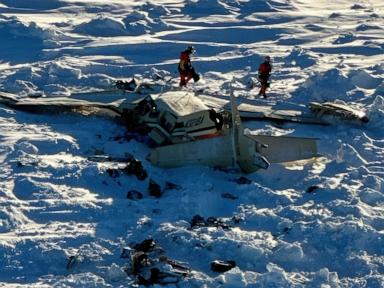
The wreckage had barely cooled before the excuses started pouring into the media channels. Official briefings from aviation authorities suggested an isolated mistake, a momentary lapse in calculation by personnel under pressure, or a tragic anomaly that defied standard operating procedures. Decades of covering safety investigations across the transportation sector tell a different story entirely. Tragedies of this magnitude rarely spring from a single bad decision made in a vacuum. They are almost always the predictable final link in a long chain of compromised protocols, lax oversight, and normalized deviations from safety thresholds.
When a commercial aircraft takes off significantly over its maximum allowable takeoff weight, physics does not negotiate. The margins for error built into modern aircraft design evaporate. Lift coefficients change. Stall speeds creep upward. Runway requirements expand exponentially, turning a standard departure into a high-stakes gamble against immovable terrain at the end of the pavement. Yet, investigators probing this deadly crash uncovered a deeply entrenched history of overweight flights operating unchecked across the carrier's network. This was not a sudden operational failure. It was an institutional practice that had been quietly tolerated until the mathematical laws of aviation finally caught up with corporate hubris.
The Anatomy of Weight Calculation Failures
To understand how an aircraft departs significantly heavier than its safe operating limits, you have to look past the cockpit window and examine the backroom logistics that dictate commercial aviation. Weight and balance calculations form the invisible foundation of every single flight. Every passenger, every piece of baggage, every gallon of jet fuel, and every pallet of cargo must be accounted for with absolute precision.
In practice, airlines frequently rely on standardized average weights for passengers and carry-on items rather than individual scales. While these statistical averages work well under normal conditions across large sample sizes, they mask individual variances. When an airline pushes turnaround times to maximize asset utilization, the margin for error shrinks to zero. Cargo gets estimated rather than weighed. Last-minute bag drops bypass the manifest system. Fuel loads are rounded based on pilot requests without a rigorous cross-check against actual payload distribution.
In the lead-up to the fatal crash, internal communications and flight records revealed a systemic breakdown in cargo manifest accuracy. Pallets were loaded based on destination estimates rather than certified scales. The load sheet handed to the flight crew contained figures that diverged substantially from the physical reality in the cargo hold. When the crew performed their pre-flight checks, they calculated their performance metrics based on falsified baselines. They believed they were flying a compliant aircraft. In reality, they were piloting an aerial chassis pressed far beyond its structural design envelope.
Regulatory Blind Spots and Complacent Oversight
A rogue operator can only push safety boundaries if the regulatory framework allows them room to maneuver. National aviation authorities are mandated to enforce safety standards, but chronic understaffing, resource constraints, and cozy relationships with legacy carriers often create an environment of passive oversight.
Audits of the carrier involved in this disaster revealed a pattern of surface-level inspections. Regulators would review paperwork rather than spot-checking physical operations on the ramp. When minor infractions regarding cargo documentation were flagged in previous years, they were met with administrative wrist-slaps or voluntary compliance requests rather than aggressive enforcement actions or grounding orders. This regulatory timidity sent a clear signal to airline management. Safety regulations were treated as guidelines rather than absolute mandates.
The oversight vacuum extended into internal corporate culture. Safety management systems are supposed to function as independent whistleblowers within an airline, giving frontline employees the power to report dangerous conditions without fear of retaliation. Instead, interviews with dispatchers and ramp agents exposed a culture of intimidation. Employees who raised concerns about overweight cargo or rushed turnaround times were marginalized, labeled as inefficient, or passed over for promotion. Operational efficiency reigned supreme. Every minute an aircraft sat idle on the tarmac represented lost revenue, creating intense institutional pressure to cut corners on safety checks.
The Physics of an Overloaded Departure
When an aircraft exceeds its maximum takeoff weight, the physical consequences unfold with brutal predictability during the takeoff roll.
Consider the mechanics of rotation. As the pilot pulls back on the yoke, the wings must generate sufficient lift to overcome the total downward gravitational force of the aircraft. With an excess payload, the required rotation speed increases. If the crew attempts to rotate at standard speeds calculated for a lighter load, the aircraft may struggle to lift off, or worse, experience a tailstrike as the tail scrapes the runway surface while the wings fail to achieve clean separation from the air.
Once airborne, the climb gradient flattens significantly. An overloaded plane climbs slower and labors harder against air resistance, putting maximum strain on engine components. Engine temperature limits are easily exceeded, increasing the risk of catastrophic mechanical failure during the most critical phase of flight. If an engine fails at V1 speed—the critical decision point where a pilot must commit to taking off or stopping—an overloaded aircraft lacks the surplus thrust required to climb safely on remaining engines, turning a manageable emergency into an unsurvivable catastrophe.
On the day of the fatal crash, weather conditions compounded the physical strain. Elevated ambient temperatures decreased air density, further degrading engine efficiency and wing lift. The combination of excess weight and density altitude created a performance deficit that the aircraft simply could not overcome. The plane became airborne momentarily, but without the energy reserves needed to clear obstacles along the departure path, it settled back toward the ground.
Dismantling the Culture of Normalized Deviations
In high-risk industries like aviation, maritime transit, and heavy chemical manufacturing, safety experts talk extensively about the normalization of deviance. This sociological phenomenon occurs when people within an organization routinely accept lower standards of safety because nothing bad has happened yet.
If a carrier operates an overweight flight once and lands safely, the crew and management unconsciously update their baseline for acceptable risk. If they do it a hundred times without incident, the dangerous practice becomes standard operating procedure. Rules that were written in blood after previous disasters are quietly bypassed in the name of operational agility.
Breaking this cycle requires a fundamental restructuring of accountability. Regulatory bodies must move away from box-ticking administrative audits and implement unannounced, intrusive operational inspections. Penalties for falsifying weight manifests or pressuring flight crews to accept overloaded aircraft must carry criminal weight, moving past the era of corporate fines that are simply written off as the cost of doing business. Furthermore, whistleblowers must be shielded by robust legal frameworks that make corporate retaliation a federal offense.
The wreckage of the crashed flight sits in a hangar, its twisted metal serving as an indictment of a system that valued the bottom line over human lives. The investigation will eventually conclude, filing cabinets will fill with recommendations, and new circulars will be drafted. Yet, unless the industry develops the institutional courage to confront the systemic greed and lax oversight that enabled this disaster, the underlying conditions remain entirely intact. The next catastrophe is already waiting on the tarmac, disguised as an efficiency metric.