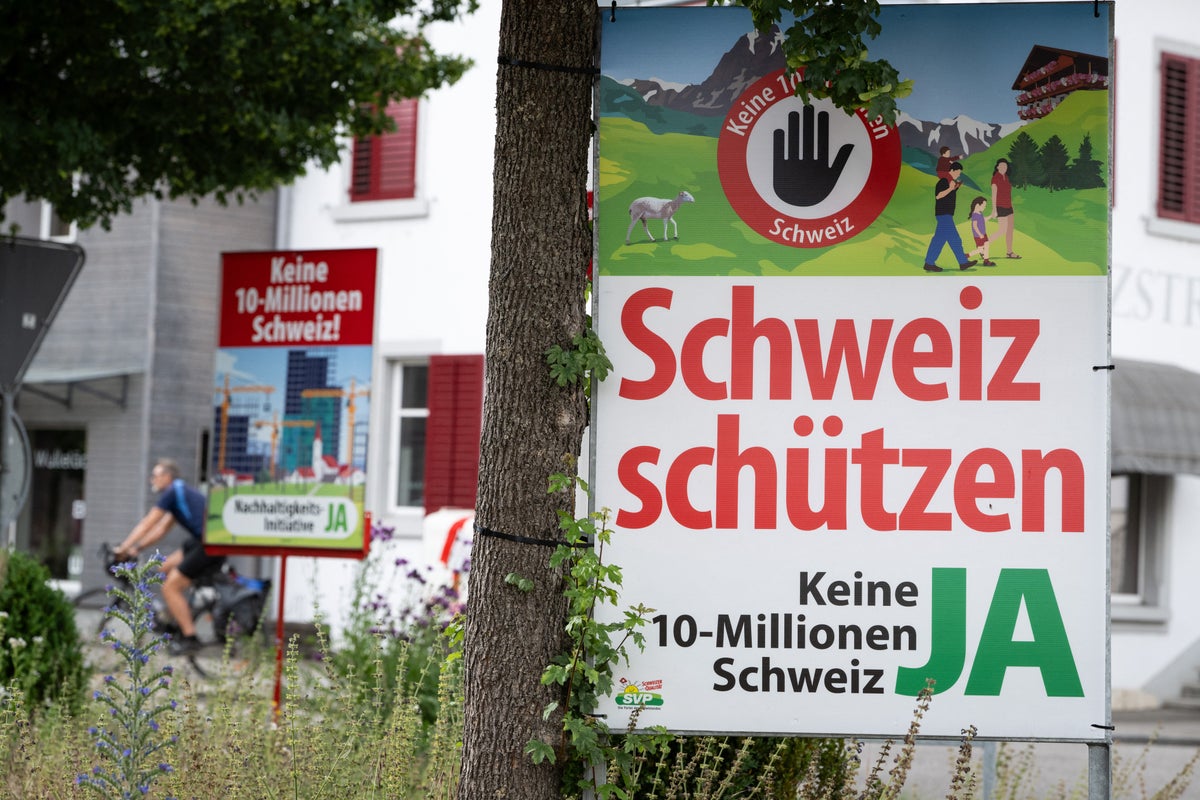
The media is swooning over Switzerland’s latest exercise in direct democracy. Commentators are treating the initiative to cap the Swiss population at 10 million by the year 2050 as a brave, eco-conscious stand against overcrowding. They call it a masterclass in preserving national identity and resource management.
They are completely wrong.
This initiative is not a forward-thinking blueprint for sustainability. It is a panic-driven, economically illiterate stunt that confuses physical space with economic capacity. Having spent nearly two decades analyzing European macroeconomic policy and watching central banks attempt to engineer growth out of thin air, I can tell you exactly what happens when a wealthy nation freezes its human capital: it rots from the inside out.
The lazy consensus says fewer people equals a higher quality of life. The reality? A hard ceiling on population is a guaranteed recipe for a stagnant, aging dystopia.
The Flawed Premise of the 10 Million Limit
The argument for the cap relies on a simple, comforting, and utterly incorrect assumption: that a nation's resources are a fixed pie, and more people means smaller slices for everyone. This Malthusian anxiety has been debunked for centuries, yet it still drives policy debates.
Proponents point to strained infrastructure, rising rents in Zurich, and crowded trains as proof that Switzerland is "full." But infrastructure pressure is a failure of zoning laws and public investment, not a symptom of demographic overload.
When you artificially choke off population growth in a nation with a fertility rate hovering around 1.4 births per woman, you are not stopping growth; you are accelerating demographic collapse. Switzerland relies on highly skilled immigration to fuel its pharmaceutical, financial, and tech sectors. Cutting off that pipeline does not save resources. It kills the tax base required to fund the very infrastructure people are complaining about.
The Dependency Ratio Trap
Let's look at the actual mechanics of a frozen population. Imagine a scenario where Switzerland successfully locks its borders and hits a hard stop at 9.9 million people. What does the workforce look like fifteen years later?
The Swiss federal statistical office already projects that the ratio of retirees to working-age individuals will skyrocket over the next two decades. By capping the population, you ensure that the numerator (retirees) grows while the denominator (taxpaying workers) shrinks or plateaus.
- The Current Reality: Right now, roughly four workers support every retiree in the Swiss social security system (AHV).
- The Cap Scenario: Under a strict 10 million limit, that ratio drops closer to two to one.
No amount of automation or productivity gains can magically bridge that fiscal gap without forcing catastrophic tax hikes or slashing benefits. I have watched corporate boards try to optimize output while headcount freezes are enforced from the top down; it invariably leads to burnout, talent flight, and capital reallocation to friendlier jurisdictions. On a national scale, the capital will simply migrate to London, Singapore, or New York.
Dismantling the "People Also Ask" Delusions
When people search for information on this initiative, they tend to ask questions rooted in nostalgia rather than numbers. Let's dismantle the two most common assumptions.
"Will a population cap lower housing prices?"
No. It might actually do the opposite. Housing prices in premium markets like Geneva or Basel are driven by purchasing power, low interest rates, and hyper-restrictive local building codes, not just raw headcounts. If you freeze the population, developers stop building new, high-density housing because the long-term risk profile becomes toxic. Meanwhile, the existing wealthy population grows older, stays in their large family homes longer, and chokes supply. You end up with a stagnant housing market where young citizens are priced out entirely by wealthy, aging incumbents.
"Can't Switzerland just rely on green growth and high productivity?"
This is a favorite talking point of the anti-immigration lobby. They argue that Switzerland should focus on quality, not quantity, by boosting GDP per capita through innovation.
This sounds elite, but it ignores how innovation actually happens. Innovation requires agglomeration economies—dense clusters of diverse talent working in close proximity. Silicon Valley, London, and Tokyo did not become tech powerhouses by telling global talent to stay home. If a Swiss startup cannot hire a top-tier machine learning engineer from Munich or Bangalore because the national "quota" for the year is full, that startup relocates. The productivity argument eats itself.
The Cost of the Contrarian Reality
To be entirely fair, an open-border policy without infrastructure planning has its own downsides. Unchecked growth does put immediate upward pressure on rents, and it does create cultural friction. Transitioning to a model that accommodates a growing population requires aggressive deregulation of the housing sector, massive state expenditure on transport, and a willingness to see classic landscapes evolve into urban centers. It is loud, messy, and politically difficult.
But the alternative—the clean, quiet, managed decline offered by the 10 million cap—is far worse. It is the peace of the graveyard.
The Real Crisis is Competitiveness
Switzerland’s historic competitive advantage was never its mountains; it was its predictability, its stable legal framework, and its ability to attract the absolute best minds in the world.
By debating a hard population cap, the country is signaling to multinational corporations and global investors that its future is closed for business. The mere existence of this vote damages the country's brand as a stable long-term bet.
If this proposal passes, the Swiss franc will not protect you from the reality of an economy that has chosen to turn itself into an open-air retirement community. You cannot build a powerhouse economy when your primary national objective is to ensure that nothing ever changes.
Stop looking at the map and counting heads. Start looking at the balance sheet. A country that fears growth is a country that has already given up on the future.


