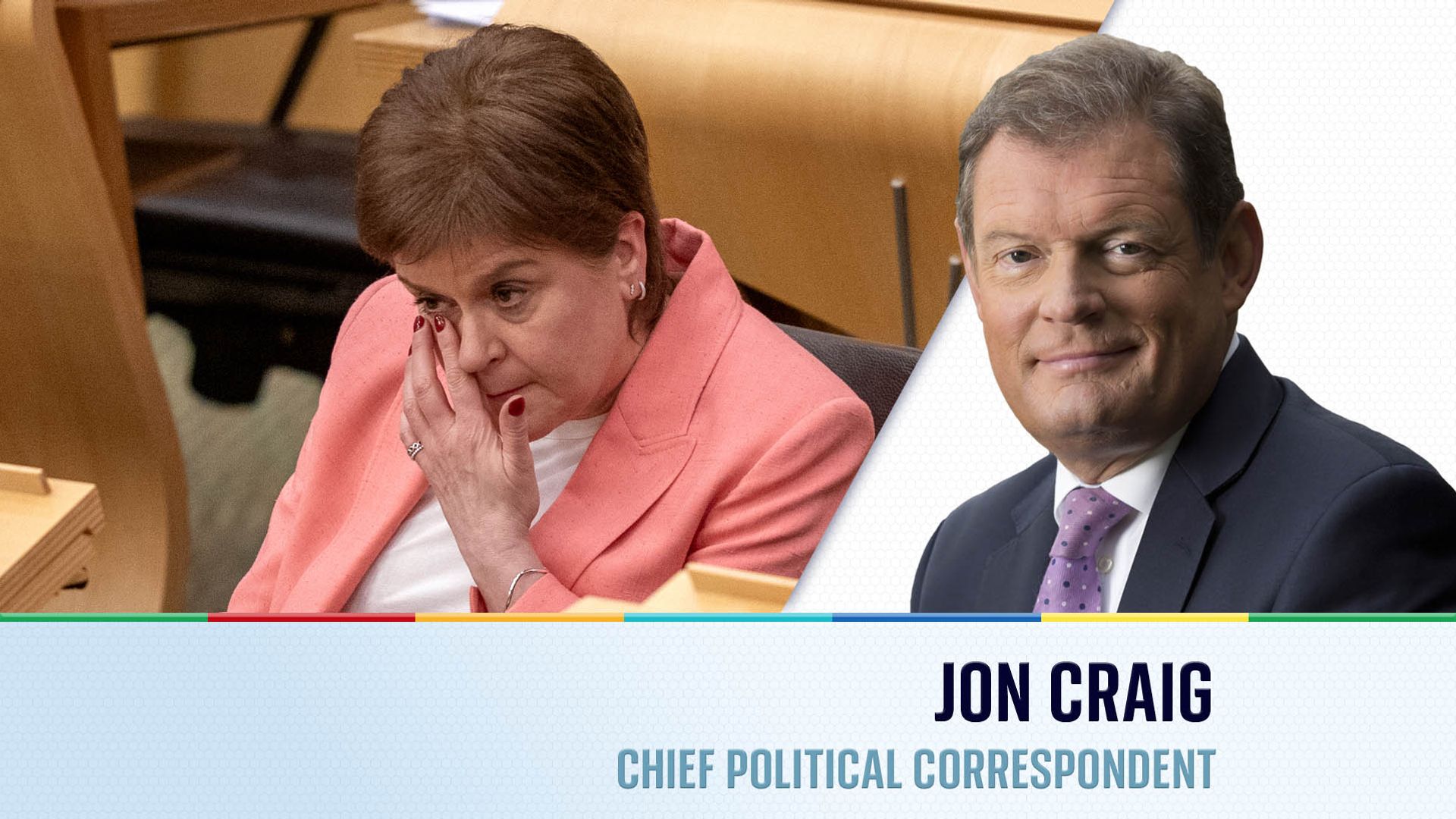
Nicola Sturgeon wants you to log off. In her "farewell advice" to the public, the former First Minister of Scotland leaned into the oldest, crustiest trope in the political playbook: the idea that social media is a toxic vacuum where real life goes to die. She warned us not to "live life on social media." It is a sentiment that feels wise, looks good on a needlepoint pillow, and is fundamentally, dangerously wrong for anyone trying to navigate the 21st century.
Telling people to avoid living on social media in 2026 is like telling a 19th-century merchant to avoid those "distracting" new-fangled telegraph lines. It isn't just luddite posturing; it is a failure to understand how power, reputation, and legacy are now manufactured.
The Myth of the "Real World"
The binary between "online" and "real life" is a ghost. It doesn't exist. When a politician tells you to step away from the screen, they are usually asking you to step away from the one place where their narrative can be challenged in real-time.
Sturgeon’s argument relies on the "lazy consensus" that digital interaction is a net negative for mental health and social cohesion. But here is the nuance she missed: Social media isn't a distraction from your life; it is the ledger of your life.
If you are a professional, an artist, or an activist, your digital footprint is your primary interface with the world. Opting out doesn't make you more "present" at the dinner table; it makes you invisible to the global economy. I’ve watched executives follow this "disconnect to reconnect" advice only to find their industry relevance evaporated within eighteen months. They traded their influence for a momentary sense of moral superiority.
The Reputation Arbitrage
The status quo says social media is where we go to argue. The contrarian truth is that social media is where we go to build Reputation Arbitrage.
In the physical world, your reputation is limited by geography and the number of hands you can shake. In the digital world, your reputation scales at zero marginal cost. Every post, every insight, and every shared resource acts as a 24/7 salesperson for your brand.
- The Sturgeon Fallacy: Social media is a drain on your time.
- The Reality: Social media is the only tool that allows you to be in ten thousand places at once.
When you "don't live on social media," you are effectively choosing to operate a business with the lights off. You are relying on a legacy system of word-of-mouth that moved at the speed of a horse and carriage. We are living in an era where a well-placed thread on a decentralized platform can raise more capital than a month of pitch meetings in Mayfair or Manhattan.
Dismantling the "People Also Ask" Delusions
If you search for advice on digital detoxing, you’ll find a graveyard of flawed premises. Let's gut them one by one.
"Does social media decrease productivity?"
Only if you are a passive consumer. If you are a creator, social media is the most productive engine ever built. The mistake is treating the feed as a TV screen rather than a printing press. If you are scrolling, you are the product. If you are posting, you are the architect.
"How do I balance real life and social media?"
You don't. You integrate. The idea of "balance" implies two forces pulling in opposite directions. In reality, your digital presence should be the exhaust of your physical actions. If you do something interesting, you document it. If you learn something, you share it. The friction only exists when you try to fabricate a digital life that doesn't mirror your physical one.
The High Cost of Digital Silence
Let’s talk about the "battle scars." I have seen brilliant minds—scientists, architects, and policy makers—get passed over for honors and opportunities because they "didn't believe" in social media. They thought their work would speak for itself.
It didn't.
In a world of infinite noise, the work does not speak for itself. It needs an amplifier. By following the "Sturgeon Strategy," you are handing the microphone to the loudest person in the room, who likely has half your talent but twice your digital literacy. Silence isn't dignified; in the modern era, silence is a form of professional suicide.
The Mechanics of the Digital Ghost
Imagine a scenario where two candidates apply for a high-level consultancy role.
- Candidate A has a pristine resume but zero digital footprint. They "lived life" offline.
- Candidate B has spent five years sharing their failures, their wins, and their process on LinkedIn and X.
Candidate B has a Digital Ghost. This ghost has been networking while Candidate B slept. It has already convinced the hiring manager of B's expertise before the first interview even starts. Candidate A is starting from zero. Candidate B is starting at the finish line.
The Toxicity Trap
Sturgeon correctly identifies that social media can be a "vile" place. She's right about the symptoms but wrong about the cure.
The toxicity of social media is a feature of its democratization. Yes, people are mean. Yes, there are bots. But to walk away because the neighborhood is rough is to cede the territory to the vandals.
The elite strategy isn't to "quit" social media; it is to curate it with ruthless efficiency.
- Mute keywords aggressively.
- Block without hesitation.
- Follow only those who challenge your thinking or provide high-signal data.
The "don't live on social media" crowd is essentially saying, "I don't know how to use the settings menu." They are victims of their own feeds because they refuse to take ownership of their digital environment.
The Strategy for the Assertive Insider
Stop looking for the "off" switch. Instead, look for the "broadcast" switch.
- Document, Don't Create: You don't need to spend hours "making content." Just record what you are already doing. The authenticity of a raw, behind-the-scenes insight beats a polished, fake "influencer" post every time.
- Own the Narrative: If you aren't telling your story online, someone else is. In the absence of your voice, the algorithm and your detractors will fill the void.
- Leverage the Asymmetry: One post can lead to a book deal, a job offer, or a global movement. The downside is a few mean comments from people you’ll never meet. The upside is infinite. The math isn't even close.
Nicola Sturgeon’s advice is a relic of a political generation that views the internet as a threat to be managed rather than an ecosystem to be inhabited. It is the advice of someone who is tired and wants to retreat.
But for those of us still in the arena, the screen is the floor of the stadium.
Stop trying to "unplug." The world is plugged in, and it’s moving faster than ever. If you aren't living where the world is watching, you aren't living at all—you’re just hiding.
Pick up your phone. Start the broadcast. Occupy the space before someone less qualified takes it from you.