The marginal increase in April consumer confidence defies the traditional correlation between geopolitical instability and household spending intent. While the headline index suggests a steady-state optimism, a granular deconstruction of the data reveals a widening "Sentiment Gap" between current conditions and short-term expectations. This divergence is driven by two competing forces: a hyper-tight labor market acting as a psychological floor, and the regressive tax of energy inflation acting as a ceiling. Understanding the durability of this confidence requires moving beyond top-line numbers to examine the mechanical relationship between disposable income, energy prices, and the "Lagged Geopolitical Effect."
The Labor Market Insulation Layer
The primary reason consumer confidence has not collapsed despite the escalation of conflict in the Middle East and rising pump prices is the structural health of the US labor market. To quantify this, we must look at the Real Wage Buffer. When unemployment remains below 4% for an extended duration, the perceived risk of job loss—the "Unemployment Fear Index"—drops significantly. This creates a psychological insulation layer that desensitizes households to external shocks.
- Job Security as a Liquidity Proxy: Consumers view a stable paycheck as a form of "perpetual credit." Even if gasoline prices rise by 15%, the high probability of continued employment encourages the maintenance of current consumption patterns.
- Wealth Effect vs. Income Effect: While the income effect of higher gas prices is immediate, the wealth effect—buoyed by home equity and equity markets—provides a counterbalance. In April, the stability of asset prices served as a shock absorber for the volatility in the energy sector.
The Gasoline Friction Coefficient
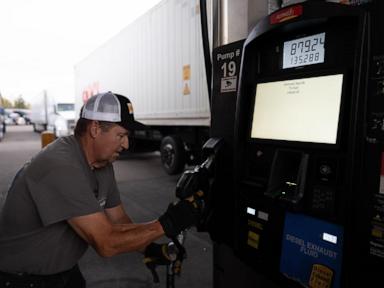
Gasoline prices function as a unique psychological variable because of their high visibility and frequency of purchase. Unlike rent or insurance premiums, which are largely "invisible" monthly deductions, gasoline prices are broadcast on every street corner. This creates a Salience Bias where the consumer overweights energy costs relative to their actual percentage of total household expenditure.
The current resistance in confidence levels suggests that the US economy has reached a higher "Pain Threshold" for energy costs. Historically, a rapid $0.50 per gallon increase would trigger a significant contraction in discretionary spending. However, the current cycle shows a Gasoline Friction Coefficient that is lower than in previous decades. This is attributable to the decreased energy intensity of the US GDP. We are seeing a structural shift where the average household spent roughly 5% of its income on energy in the early 1980s, whereas today that figure hovers closer to 2.5% to 3%. The "Tax on Mobility" is simply less lethal to the modern budget than it was during the stagflationary periods of the 20th century.
Geopolitical Noise vs. Economic Signal
The conflict in the Middle East introduces "Geopolitical Noise" into the data. While news cycles focus on the risk of a wider war involving Iran, the actual transmission mechanism to the US consumer is almost exclusively through the oil market.
- The Supply Chain Lag: Consumers generally do not react to the risk of supply chain disruptions; they react to the manifestation of those disruptions. Unless a conflict leads to an actual physical shortage of goods or a sustained surge in Brent crude above $100 per barrel, the average household treats the news as an abstraction.
- The Patriotism Feedback Loop: Periodically, international conflict can trigger a short-term "rally 'round the flag" effect, where domestic economic resolve is viewed as a form of resilience. This complicates the data, as it can temporarily mask underlying anxieties about the cost of living.
The Expectations Trap: The 80-Point Threshold
Economists frequently cite a "Expectations Index" score of 80 as a harbinger of recession. While the Present Situation Index remains elevated, the Expectations Index has consistently flirted with this 80-point danger zone. This creates a Sentiment Divergence that suggests consumers are living in a "Golden Hour"—they feel good about their lives today but are deeply skeptical of the next six months.
The mechanism at work here is Anticipatory Conservation. Consumers are not cutting back on spending yet, but they are beginning to reallocate their mental budgets. The divergence in the April data signals that we are in a transition phase. The "I'm okay, but the economy isn't" sentiment is a classic indicator of a late-cycle environment where the momentum of the labor market is fighting the gravity of inflation.
Quantifying the Inflationary Persistent Bias
The Federal Reserve's target of 2% inflation remains a distant goal in the minds of the public. The April data reflects a Sticky Inflation Expectation. Even as headline CPI may fluctuate, the consumer's "Inertial Inflation View" is anchored higher. This creates a feedback loop:
- Households expect prices to remain high.
- They demand higher wages to maintain purchasing power.
- Firms raise prices to cover the labor cost.
- The confidence index reflects this cycle as a permanent state of "expensive stability."
This cycle explains why confidence can "inch higher" even when the news is bad. If a consumer accepts that $4.00 gasoline is the new normal, the shock value disappears. We are seeing a normalization of volatility, where high prices no longer shock the system but are integrated into the baseline cost of living.
Strategic Allocation of Consumer Capital
For businesses and investors, the April confidence data suggests a bifurcated strategy is necessary. The Non-Discretionary Squeeze is real; as gasoline and insurance costs rise, the "free cash flow" of the lower-to-middle-income quintiles is under siege. However, the upper-middle-income bracket remains insulated by the wealth effect and low debt-service ratios (locked-in 3% mortgages).
- The Middle-Market Bottleneck: Companies positioned in the "affordable luxury" space will face the highest volatility. They are sensitive to the gasoline price spikes that erode the discretionary "fun money" of the middle class.
- Essential Services Resilience: Energy-related sectors and staple goods will continue to capture a larger share of the wallet, as the "Gasoline Friction" forces consumers to prioritize movement over experience-based spending.
The risk remains that a sustained Brent crude price above $95 per barrel will break the Labor Market Insulation Layer. If energy costs begin to force layoffs in transportation and manufacturing, the Present Situation Index will collapse to meet the Expectations Index. Until then, the US consumer is in a state of Defiant Equilibrium—working hard, spending what they earn, and ignoring the headlines until they hit the gas pump.
Monitor the spread between the Present Situation Index and the Expectations Index; a widening gap of more than 50 points historically precedes a sharp correction in household consumption within two quarters.