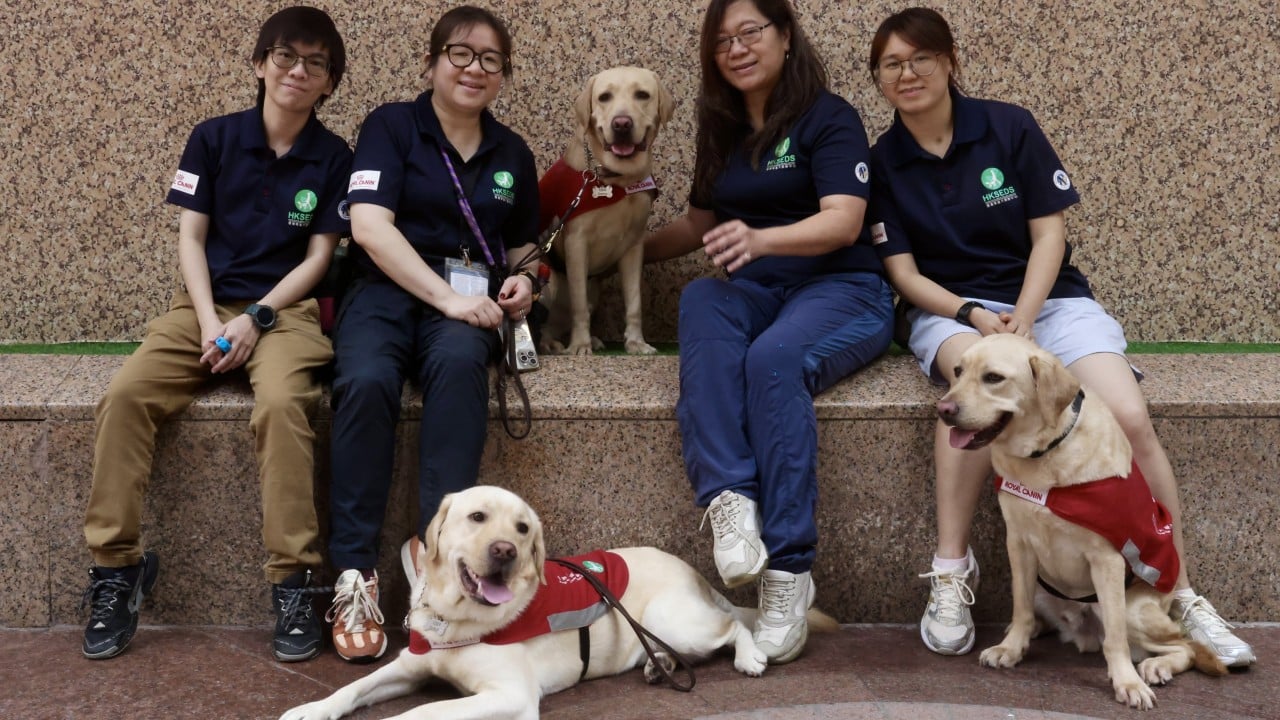
The chronic shortage of guide dogs in high-density urban environments like Hong Kong is not a failure of demand, but a failure of biological manufacturing yields. Current waiting lists for visually impaired citizens often exceed several years, a delay dictated by the high "washout rate" of candidates who fail to meet rigorous behavioral and physiological benchmarks. By shifting from purebred lineages to a deliberate F1 hybrid strategy—specifically the Labrador-Golden Retriever cross—charitable organizations are attempting to solve a multi-variable optimization problem: maximizing the "success yield" while minimizing the "cost per qualified unit."
The Biological Bottleneck in Guide Dog Production
The production of a functional guide dog is an investment in high-stakes biological assets. A typical training cycle requires two years of capital-intensive development, encompassing puppy walking, socialization, and specialized harness work. When a dog "washes out" due to health issues or temperament flaws, the organization incurs a 100% loss on the direct training costs and a significant opportunity cost regarding the trainer’s time.
The primary constraints on supply are:
- Genetic Homogeneity: Long-term purebred breeding often concentrates recessive traits that manifest as hip dysplasia, heart conditions, or skin allergies.
- Behavioral Variance: Purebred Labradors may exhibit excessive food drive or distractibility, while Golden Retrievers can occasionally display sensitivity to urban noise or environmental stressors.
- The Success Ceiling: Traditional breeding programs often hover at a 50% success rate, meaning half of all resources spent on the "puppy" phase result in zero utility for the primary mission.
The F1 Hybrid Framework: Heterosis as a Strategic Lever
The decision to breed Labrador Retrievers with Golden Retrievers is a tactical application of heterosis, commonly known as "hybrid vigor." This is not a random crossbreed but a specific genetic strategy intended to produce an F1 generation (the first filial generation) that outperforms both parent breeds in predictable ways.
The Behavioral Synthesis
By crossing these two specific breeds, organizations are aiming for a behavioral "sweet spot." The goal is to merge the Labrador’s renowned resilience and high work drive with the Golden Retriever’s desire to please and environmental stability.
- The Labrador Component: Provides a sturdy frame and a "work-first" mentality. Labradors are generally less sensitive to physical corrections and have a high recovery rate from frightening stimuli.
- The Golden Retriever Component: Softens the Labrador’s sometimes stubborn independence. It adds a layer of emotional intelligence and focus that helps the dog maintain a "connection" with the handler in complex, crowded environments.
The result is a dog that is physically robust enough for 10-hour workdays in a city like Hong Kong, yet mentally flexible enough to navigate the sensory overload of the MTR or busy districts like Mong Kok.
Quantifying the Yield Increase
In high-performance service dog breeding, the goal is to shift the success rate from the industry standard of 40-50% toward 70% or higher. Even a 10% increase in the graduation rate significantly reduces the "cost per successful placement."
The mathematics of this shift involve reducing specific failure points:
- Orthopedic Stability: Hybrid vigor reduces the statistical likelihood of early-onset joint issues. If a dog must be retired at age four instead of age eight due to arthritis, the lifetime value of that asset is halved.
- Mental Endurance: A "soft" dog that shuts down in traffic is a total loss. Hybrids often exhibit a higher threshold for stress, meaning they remain "online" and functional in situations where a purebred might trigger a flight response.
The second-order effect of this yield increase is a reduction in the waiting list without a linear increase in infrastructure. If the same number of kennels and trainers produce 20% more successful dogs, the charity has effectively scaled its impact without expanding its physical footprint—a necessity in the world’s most expensive real estate market.
Logistics of Urban Service Animal Integration
Hong Kong’s geography presents unique challenges that standard guide dog training manuals, often written for Western suburban contexts, fail to address. The "Goldador" hybrid is being optimized for a specific theater of operations defined by:
High-Density Navigation
A guide dog in Hong Kong must manage vertical movement (escalators, elevators) and extreme proximity to other pedestrians. The F1 hybrid’s size is critical here; it must be large enough to provide physical feedback through the harness but compact enough to fit under a seat on a crowded bus or ferry.
Thermal Regulation and Maintenance
The humidity and heat of Hong Kong are significant stressors. Purebred Golden Retrievers often struggle with coat maintenance and heat dissipation in subtropical climates. Labradors have a more efficient "wash-and-wear" coat. The F1 hybrid typically inherits a coat that is more manageable than a Golden's but offers better skin protection than a Labrador's, reducing the maintenance burden on a visually impaired owner.
The Limitations of the Hybrid Strategy
It is a mistake to view hybrid breeding as a universal solution. There are inherent risks and management requirements that must be acknowledged to maintain a professional breeding program.
- Phenotypic Unpredictability: While F1 hybrids are generally consistent, there is still more variance than in a closed purebred line. Some individuals may inherit the "worst" of both worlds—the Labrador’s high energy and the Golden Retriever’s sensitivity.
- Foundational Quality: Heterosis only works if the parent stock is elite. If the foundation Labradors or Golden Retrievers have poor temperaments or undiagnosed genetic markers, the hybrid offspring will still carry those flaws. The "hybrid vigor" effect does not magically erase poor-quality DNA.
- Public Perception and Policy: Hong Kong's strict regulations regarding animals in public spaces require a high degree of "breed recognition" for public acceptance. The F1 hybrid must still look and act like a recognizable service animal to avoid friction in shops, restaurants, and public transport.
Strategic Allocation of Breeding Resources
For the Hong Kong guide dog sector to reach sustainability, the transition to F1 hybrids must be paired with a data-centric tracking system. This involves:
- Biosensor Integration: Using wearable tech during the "puppy walking" phase to monitor heart rate variability (HRV) as a proxy for stress resilience.
- Quantitative Temperament Scoring: Moving away from subjective trainer notes toward a standardized metric that evaluates recovery time after a startle response.
- Genetic Mapping: Identifying specific markers in the parent stock that correlate with high-performance F1 offspring.
The shift toward Labrador-Golden Retriever hybrids is a recognition that the "purebred" model, while historically useful for aesthetic and specific hunting traits, is often suboptimal for the modern, high-intensity requirements of service work. By treating the breeding program as a supply-chain optimization problem rather than a traditional hobbyist endeavor, the charity can systematically increase the volume of life-changing assets available to the visually impaired population.
The final strategic play for any organization entering this space is the aggressive prioritization of the F1 generation over subsequent F2 (breeding two hybrids together) or backcross generations. The peak of heterosis and behavioral predictability occurs at the F1 stage. To maintain the highest yield, the organization must maintain two distinct, high-quality purebred lines and use them exclusively for the production of the working hybrid, rather than attempting to create a new "breed." This ensures that every puppy born has the maximum statistical probability of entering service, thereby minimizing wasted capital and maximizing social utility.