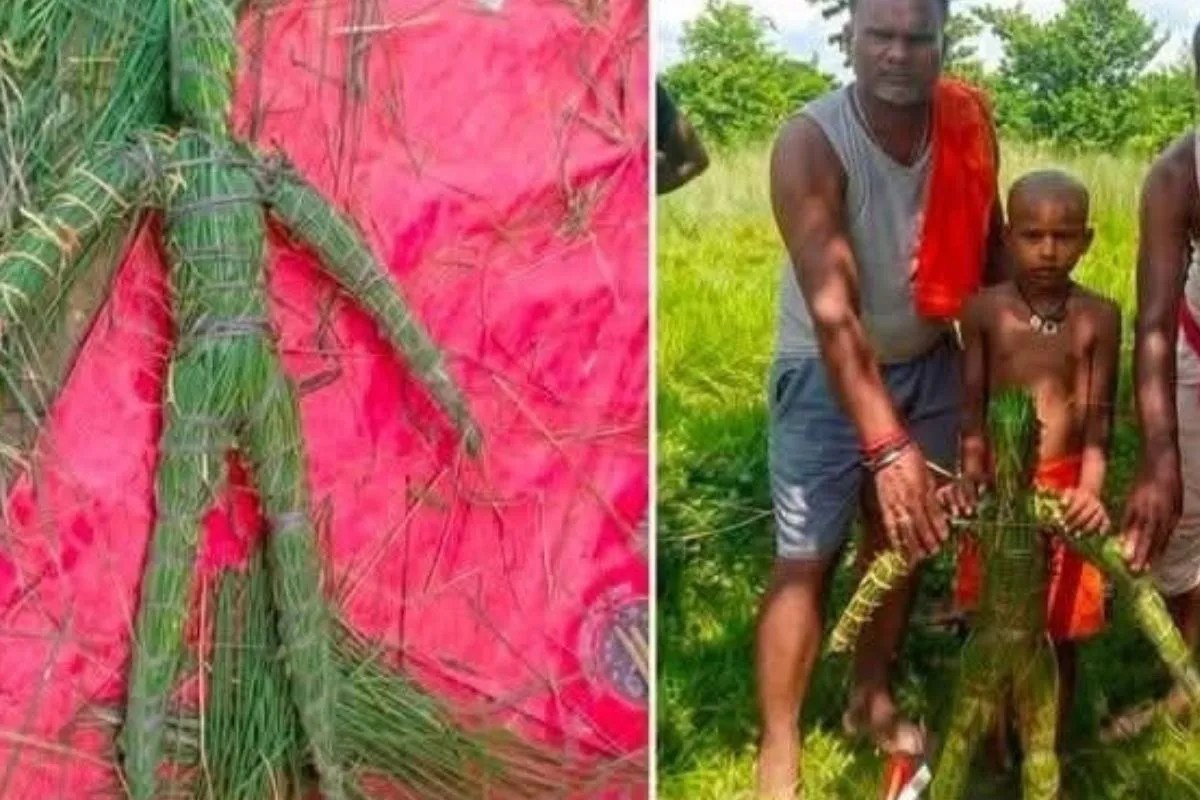
Natural catastrophes produce two distinct forms of destruction: physical devastation of infrastructure and systemic disruption of social closure. When flash floods or landslides obliterate a landscape, they frequently withhold the physical remains of victims, leaving families in a state of indefinite suspension. In Hindu legal and ritual frameworks, this absence creates an acute operational bottleneck. The absence of a physical body blocks the execution of mandatory post-mortem rites, leaving mourning cycles incomplete and legal-religious statuses frozen. To resolve this structural deadlock, ancient jurisprudence outlines a specific procedural override known as Putral Daha, or the cremation of an effigy constructed from Darbha grass.
The utility of this ritual lies in its capacity to substitute physical presence with a standardized proxy, enabling communities to transition from emergency survival to formal closure. Deconstructing this practice requires examining the ritual mechanics, the material properties of the substitution medium, and the downstream administrative implications for affected households.
The Jurisprudence of Absence in Textual Frameworks
Standard funerary operations depend on the immediate availability of a corpse to conduct cremation, collection of ashes, and subsequent ancestral rites. When mass displacement events occur—such as flash floods where bodies are swept downstream or buried under meters of silt—recovery timelines extend indefinitely or drop to zero.
The Preta Kalpa section of the Garuda Purana addresses this exact operational failure. It provides a contingency framework for individuals who perish in remote forests, wilderness, or deep waters where retrieval is impossible. The text dictates that upon receiving verifiable confirmation of death, families are legally and religiously authorized to construct a symbolic body.
This mechanism converts an ambiguous status into a definitive administrative closure. Without this scriptural override, households remain bound by transitional mourning restrictions without a clear terminal date. By establishing a fixed protocol for unrecoverable remains, the framework prevents generational psychological paralysis, substituting physical recovery with a precise symbolic equivalent.
Material Selection and the Mechanics of Substitution
The selection of the material used to construct the effigy is not arbitrary; it relies on specific botanical and symbolic properties attributed to Desmostachya bipinnata, commonly known as Kusha or Darbha grass.
In traditional taxonomy and ritual engineering, Kusha grass functions as an inert, high-purity conductor. Its application in sacrificial and funerary architecture stems from several structural characteristics:
- Structural Elasticity: The grass can be bundled, woven, and shaped into an anatomical proxy representing the torso, head, and limbs of the deceased.
- Resilience to Decay: Before ignition, the dried grass maintains its tensile strength, allowing it to hold a distinct form during ceremonial handling and Vedic recitation.
- Thermal Combustion Profile: The dry composition ensures rapid, complete combustion when introduced to the funeral pyre, mirroring the transformation phase of a standard physical cremation.
The construction protocol requires binding single-leafed Darbha blades into specific dimensions that simulate the human frame. This proxy—the puttala or trinapinda—acts as a legal and ritual vessel. It absorbs the ritual intent of the officiating priests and family members, transforming an assemblage of dry grass into a recognized surrogate for the lost individual.
Execution Workflow of the Symbolic Cremation
When a family initiates Putral Daha, the operational steps mirror a conventional funeral down to the final immersion phase. The procedure follows a strict chronological sequence designed to mirror standard mortuary administration:
- Verification and Timing: The process initiates only upon receiving reliable, corroborating confirmation of the individual's death within the disaster zone. The ritual must commence on the day the news is officially accepted.
- Effigy Construction: Priests and family members bind Kusha grass into an anatomical form, often shroud it in white cloth, and mark it according to traditional customs.
- Pyre Placement and Consecration: The grass effigy is placed upon the funeral pyre at designated cremation sites, such as riverbanks or municipal cremation grounds. Mantras from the Vedic corpus are chanted to consecrate the proxy.
- Ignition and Reduction: The chief mourner ignites the pyre. The complete reduction of the grass effigy to ash marks the official conclusion of the physical transformation phase.
- Ash Collection and Hydrological Immersion: The resulting residue is gathered from the pyre. This ash serves as the functional equivalent of bone fragments and is transported for immersion in a sacred river, such as the Ganges or local holy tributaries.
Downstream Operational Impact on Households
The completion of Putral Daha triggers immediate legal, social, and spiritual transitions for the surviving household members.
The primary consequence is the initiation of the Dashagatra, Pindadan, and the final Terahvi (thirteenth-day mourning conclusion rites). In traditional communities, the period of sutak (ritual impurity and social restriction) remains active until these final rites are executed. Families cannot host auspicious gatherings, enter certain sacred spaces, or clear administrative hurdles related to inheritance and succession while sutak persists.
By utilizing the Kusha grass proxy, the timeline for inheritance claims, property transfer, and household reorganization is unlocked. The calendar for annual ancestral commemorations (shraddha) is anchored directly to the date on which the symbolic cremation was performed. This synchronization provides an operational baseline for families navigating the aftermath of mass casualty events, transforming an open-ended tragedy into a closed, manageable legal and spiritual sequence.