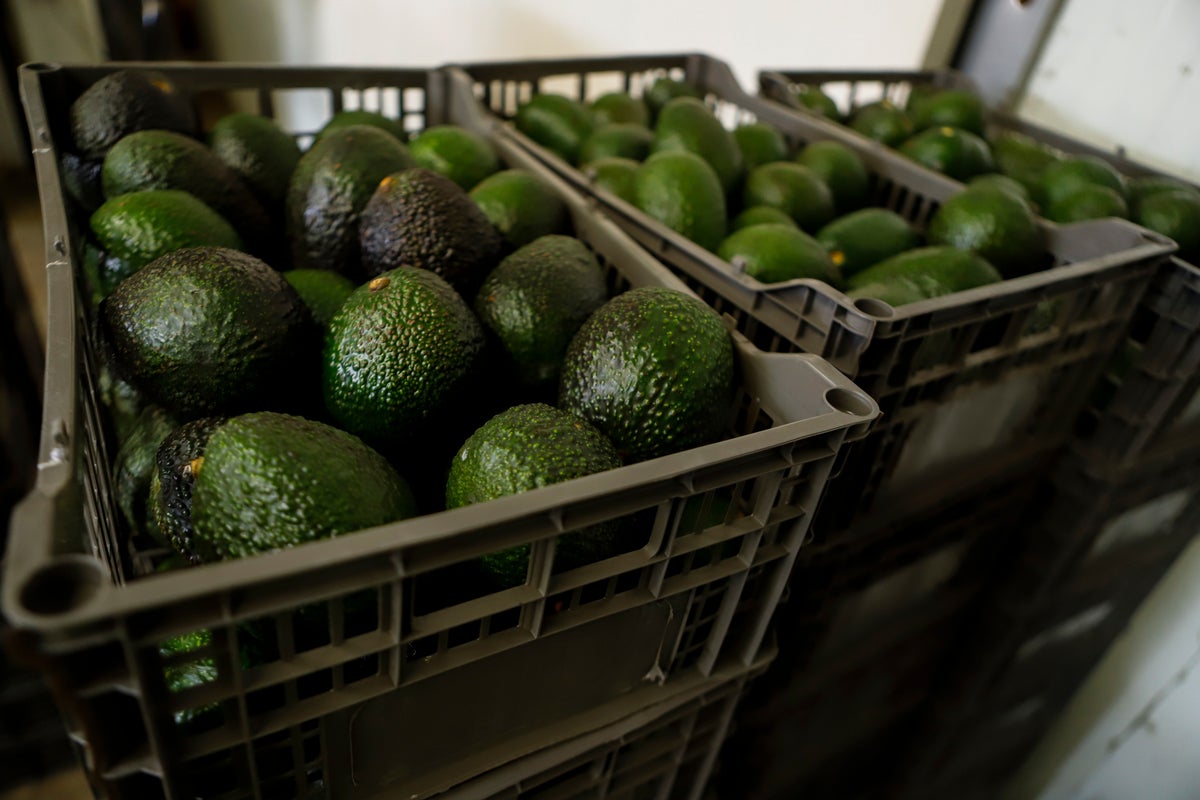
The United States imports more than eighty percent of its total avocado consumption from Mexico, with the vast majority originating in the state of Michoacán. This absolute geographic concentration turns a routine agricultural commodity into a tightly controlled geopolitical asset. When criminal syndicates operating in the region impose protection rackets, checkpoints, and production quotas on local growers and packing facilities, the impact bypasses localized security concerns and manifests immediately as supply chain contraction across American distribution networks.
Understanding this vulnerability requires abandoning simplistic narratives of localized law enforcement failures. Instead, the situation must be analyzed through the lens of industrial network economics, structural geographic monopolies, and the systemic cost functions of perishable food logistics.
The Economics of Single-Origin Dependency
Modern agricultural supply chains operate on tight just-in-time inventory models. Retailers demand consistent volume, predictable pricing, and standardized fruit ripeness. Meeting these specifications at scale requires massive consolidation at the origin. Michoacán achieved a near-monopoly on year-round export supply due to a rare convergence of volcanic soil, diverse microclimates that allow multiple annual harvests, and proximity to the United States border.
This hyper-concentration created a single point of failure. When an economic system relies on a single geographic node for the vast majority of an essential input, any disruption to that node alters the cost function for every downstream actor.
Geographic Monopoly (Michoacán)
  --> Single Point of Failure
    --> Extortion Overhead
      --> Margin Compression
        --> Downstream Price Volatility
Cartels operating within Michoacán realized long ago that an agricultural sector characterized by high global demand, high profit margins, and a hyper-perishable product provides an ideal vehicle for illicit taxation. Avocados cannot be warehoused indefinitely to wait out a blockade. A harvested crop has a strict decay window of roughly three to four weeks under cold-chain management. If packing houses are shuttered for even seventy-two hours due to cartel threats or safety suspensions, millions of pounds of fruit risk total spoilage.
This physical reality grants extortionists immense leverage. Growers and packers cannot afford prolonged standoffs. Consequently, protection payments, known locally as piso, are absorbed into the baseline operating cost of the supply chain. These costs compound at every stage of the network, from orchard maintenance and harvesting labor to secure transport and cross-border logistics.
The Mechanics of Market Transmission
When security incidents halt inspections by the United States Department of Agriculture Animal and Plant Health Inspection Service, the disruption does not merely delay shipments; it triggers a cascade of compounding financial inefficiencies.
Phytosanitary inspectors operate under strict security protocols. When cartel violence or threats breach the safety threshold required for government personnel to operate in packing zones, inspections cease instantly. The resulting bottlenecks alter market pricing within hours.
The transmission mechanism follows a precise economic sequence:
- Supply Restriction: Border-crossing volumes drop by a quantifiable percentage corresponding to the duration of the inspection suspension.
- Spot Market Spikes: Wholesalers holding current inventory immediately reprice remaining stock to capture scarcity rents.
- Inventory Depletion: Cold-storage buffers across Texas distribution hubs empty rapidly to satisfy standing retail contracts.
- Upstream Stagnation: Fruit ripens unpicked on trees in Michoacán, creating artificial gluts followed by localized rotting, which damages orchard cash flow for subsequent cycles.
This sequence reveals why diversification efforts have repeatedly stalled. While alternative growing regions exist in countries like Colombia, Peru, and domestic markets such as California, none possess the current production capacity, infrastructure maturity, or year-round harvesting profile required to replace Michoacán volume on short notice. California produces significant volume, but its harvest window is restricted primarily to spring and summer months, leaving autumn and winter entirely exposed to foreign supply dynamics. Peru and Colombia scale up during specific windows, yet their transit times to North American ports are significantly longer, introducing maritime transit risks and higher baseline refrigeration costs.
Risk Mitigation Limits and Structural Realities
Supply chain managers attempting to hedge against cartel-induced volatility face a rigid set of operational trade-offs. No risk management framework can eliminate the baseline exposure of relying on a region controlled by violent non-state actors.
Diversification of sourcing regions requires multi-year capital investments. Establishing new orchards, securing water rights, building certified packing infrastructure, and gaining regulatory approvals from agricultural authorities takes between three to seven years depending on the geography. Procurement teams cannot simply pivot purchasing orders to a new country overnight without facing severe quality deficits or prohibitive unit costs.
Hedging via futures contracts or forward-pricing agreements offers little protection against physical supply blackouts. Financial instruments mitigate price variance, but they cannot manufacture physical fruit. When total available market volume drops due to localized extortion blockades or security suspensions, financial hedges only redistribute the financial pain among market participants rather than solving the physical deficit.
Inventory buffering is similarly constrained by the biological lifespan of the product. Unlike dry goods or non-perishable minerals, avocados degrade rapidly. Excessive stockpiling increases shrinkage rates, driving up overhead costs that must ultimately be passed on to the consumer or absorbed by distributor margins already compressed by cartel overhead.
The long-term trajectory of the American avocado supply depends entirely on the pace at which alternative production nodes can mature. Until secondary and tertiary growing regions achieve the scale, infrastructure, and year-round yield necessary to contest Michoacán's dominance, the North American market will remain structurally tethered to the economic demands and security instabilities of a single cartel-controlled stronghold.