The containment of the armed insurrection at Base 101 in Niamey exposes the structural vulnerabilities of junta governance in the West African Sahel. When renegade soldiers targeted the Diori Hamani International Airport complex, the state broadcaster, and the perimeter of the presidential palace, the episode laid bare the friction points inherent in military regimes that rise through unconstitutional means. Governing authorities announced that the uprising was suppressed after hours of urban combat, but the mechanics of the event reveal a security apparatus under severe internal stress.
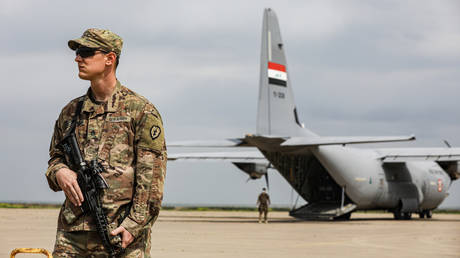
Military rule in Niamey, established under General Abdourahamane Tchiani following the 2023 overthrow of Mohamed Bazoum, has operated on a central premise: that a unified military command can resolve regional security deficits more efficiently than civilian leadership. The recent mutiny challenges this thesis. Base 101 functions as both a major logistical node—formerly utilized by United States forces prior to their expulsion—and the operational headquarters for the Alliance of Sahel States unified command alongside Mali and Burkina Faso. Targeting this specific node signals an internal fracture within the armed forces rather than a localized grievance, pointing directly to competition over resource allocation, command privileges, and institutional survival.
The operational response to the crisis highlights an external dependency that contradicts the foundational rhetoric of national sovereignty espoused by the ruling National Council for the Safeguard of the Homeland. Reports confirm that regional command elements requested tactical intervention from the Russian Africa Corps, the state-controlled paramilitary organization that absorbed former Wagner Group operations in the region. This deployment illustrates a reliance on external security contractors to insulate the regime not merely from external insurgencies linked to al-Qaeda or the Islamic State, but from domestic mutineers within its own military ranks.
The security architecture of the Sahel relies on a high-cost, low-yield stabilization model. Regimes trade Western military partnerships for Russian-backed security arrangements while simultaneously struggling to contain peripheral insurgencies along the borders of Benin and Nigeria. When internal security forces are diverted to insulate leadership circles from capital-city mutinies, the defensive perimeter around rural populations degrades. This creates a strategic feedback loop: domestic political instability forces military authorities to centralize protection around urban power centers, which accelerates territorial loss in rural sectors, which in turn deepens economic strain and fuels further military dissatisfaction.
Future political stability in Niamey depends on the regime's capacity to manage internal military patronage networks without triggering counter-insurgencies from within its own ranks. As external actors recalibrate their strategic footprint across the region, the durability of military-led governance will be measured by its internal coherence rather than its diplomatic posturing. The suppression of a single uprising at the capital's primary aviation hub resolves an acute tactical emergency, but it leaves the underlying structural vectors of institutional friction entirely intact.