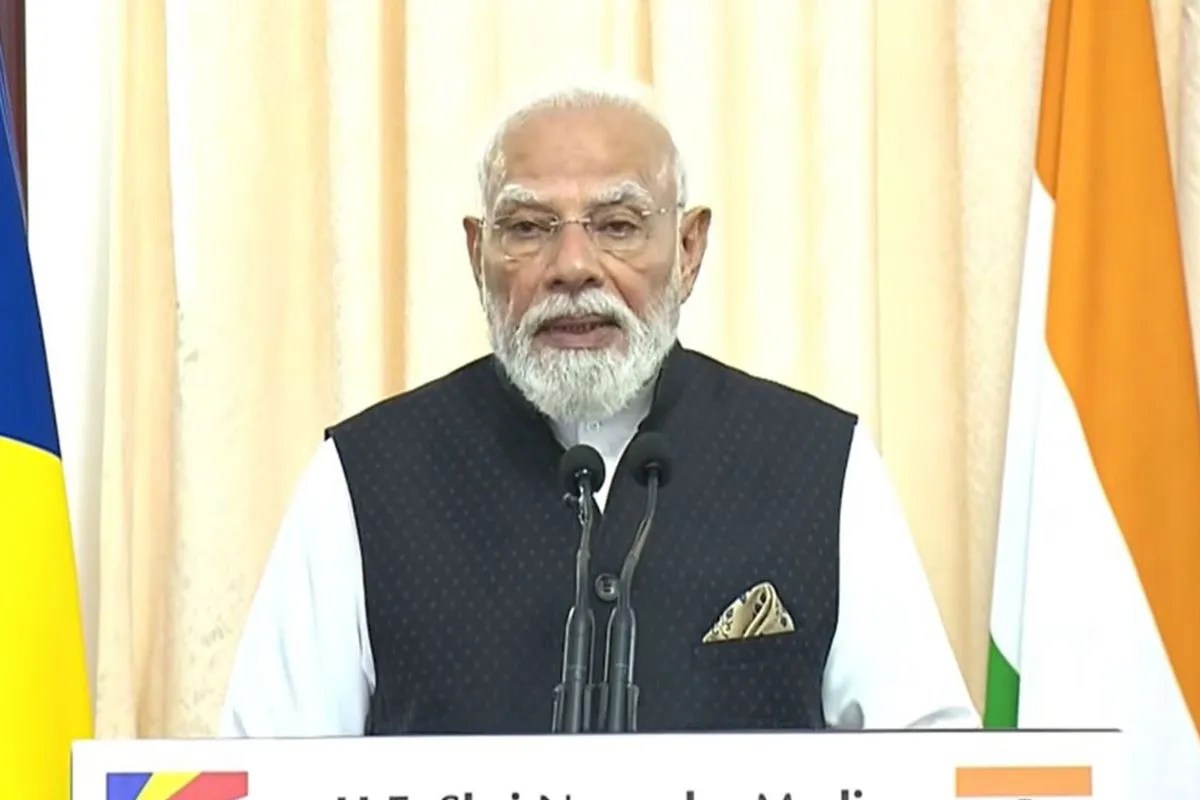
Seychelles recently conferred its high civilian honor, the Order of the Blue Horizon, upon Indian Prime Minister Narendra Modi, a move that signals much more than standard diplomatic courtesy. While official channels frame the award as a celebration of bilateral friendship, the underlying reality is rooted in intense maritime geometry. India is securing its western flank in the Indian Ocean, and Seychelles sits directly at the crossroads of global trade routes and competing naval ambitions. By honoring Modi, the island nation is positioning itself within a critical security umbrella while leveraging its strategic real estate for economic survival.
Beyond the Diplomatic Handshakes
Awards of this nature rarely happen in a vacuum. To understand why an archipelago of roughly one hundred thousand people is handing out top-tier honors to the leader of the world's most populous nation, you have to look at the water. The Indian Ocean handles the vast majority of global energy shipments. It is a crowded, anxious corridor.
For decades, India viewed this space as its natural backyard. That status is no longer uncontested. The scramble for naval logistics hubs has turned small island states into crucial geopolitical actors. Seychelles knows this. By anchoring its security architecture to New Delhi, the country gains access to maritime surveillance, coastal radar networks, and direct financial assistance without sacrificing its sovereignty to more predatory lenders.
The Realities of Assumption Island
The relationship has not always been smooth sailing. A closer look at the timeline reveals significant friction points, most notably the stalled project on Assumption Island.
Years ago, New Delhi and Victoria signed an agreement to develop a joint military facility on the remote Seychellois island. The goal was simple: give the Indian Navy a vantage point to monitor the Mozambique Channel. Then came the domestic backlash. Local political factions in Seychelles raised alarms over sovereignty, environmental damage, and the fear of getting caught in a conflict between Asian superpowers. The deal was shelved, rewritten, and debated for years.
This friction illustrates the delicate balancing act small nations must perform. They need the security infrastructure that a major power can provide, but they cannot afford the political cost of looking like a client state. The current honor bestowed upon Modi suggests that a working compromise has been reached, one where infrastructure development happens under the guise of capacity building rather than outright military presence.
Security in Exchange for Dollars
India's strategy here relies heavily on what it calls Line of Credit diplomacy. This is not charity. It is a structured method of tying regional development to Indian enterprise and strategic goals.
New Delhi has quietly funded multiple projects across the archipelago. These include:
- The new Magistrates’ Court building in Victoria.
- A state-of-the-art Coastal Surveillance Radar System.
- Fast patrol vessels gifted directly to the Seychelles Coast Guard.
By supplying the hardware and the training to run it, India ensures that the Seychellois security apparatus remains interoperable with its own. When a maritime emergency occurs, or when piracy flares up near the Horn of Africa, the response system defaults to Indian standards.
The Shadow of the Competition
No analysis of Indian Ocean diplomacy is complete without addressing the other major power in the region. Beijing has been aggressively expanding its footprint through port investments and infrastructure loans across East Africa and South Asia.
Seychelles has watched other island nations struggle under the weight of unsustainable debt. The lesson was learned early. By deepening ties with India, Victoria creates a necessary counterweight. It allows the country to say no to high-interest infrastructure loans from elsewhere because it has a reliable partner willing to provide grants and low-interest credits for essential services.
This is a game of maritime chess. India cannot match the sheer financial volume of its rival, so it plays the geography and security card instead. It positions itself as a benign neighbor, a first responder in times of natural disasters, and a protector of the shared ocean commons.
The True Cost of the Blue Economy
The term "Blue Horizon" points directly to the economic future of these nations. Tourism and fishing drive the Seychellois economy. Both are incredibly fragile. Illegal, unreported, and unregulated fishing drains millions from local revenues every year, while maritime piracy remains a constant, lurking threat to shipping lanes.
Seychelles simply does not have the naval hull count to patrol its vast Exclusive Economic Zone. India does. The honors given to leadership are a down payment on continued aerial reconnaissance flights by Indian maritime patrol aircraft and regular port visits by naval vessels that deter illicit activities.
This arrangement comes with expectations. New Delhi expects Seychelles to remain transparent about foreign naval vessels docking in its ports. It expects a level of information sharing that keeps the Indian Navy informed of anomalies in the western Indian Ocean. It is a transactional arrangement wrapped in the language of shared democratic values and historic ties.
The award given to Narendra Modi is not a mere symbolic gesture or a routine bureaucratic event. It is a public declaration of alignment in an ocean that is rapidly becoming the primary arena for superpower competition.