The proposed mediation by Vladimir Putin regarding Iran’s nuclear enrichment program represents a shift from traditional multilateralism toward a trilateral transactional framework. This maneuver seeks to resolve the Iranian nuclear impasse by decoupling technical enrichment limits from broader regional security issues, utilizing Russia as a custodial intermediary. The core thesis of this strategy relies on the assumption that Iranian enrichment capacity can be capped through externalized security guarantees rather than the internal inspections regime mandated by the Joint Comprehensive Plan of Action (JCPOA).
The Geopolitical Physics of Nuclear Intermediation
To evaluate the feasibility of a Russia-led settlement, one must first identify the three structural tensions that define the Iranian nuclear file:
- The Sovereignty Sunk Cost: Iran has invested decades of capital and scientific resources into indigenous enrichment. Any proposal requiring the total cessation of enrichment faces a high probability of failure due to the domestic political cost within Tehran.
- The Verification Gap: Western intelligence agencies operate on the principle that inspection protocols must be intrusive to be effective. A Russian-mediated deal suggests a shift toward a "monitored equilibrium" where Russia acts as the primary auditor of Iranian stockpiles.
- The Breakout Calculus: The fundamental metric of any nuclear agreement is the "breakout time"—the duration required to produce enough weapons-grade uranium ($U^{235}$ enriched to 90% or higher) for a single device.
The logic of Putin’s offer hinges on moving the "red line" of enrichment. Under typical non-proliferation standards, enrichment to 3.67% is the civilian benchmark. Iran’s current enrichment to 60% brings it within weeks of weapons-grade material. The Russian proposal attempts to mitigate this by offering a secure supply of fuel for civilian reactors in exchange for the removal of high-enriched uranium (HEU) from Iranian soil. This creates a supply-chain dependency where Iran maintains its right to nuclear energy but loses its immediate path to a warhead.
The Tri-Node Power Dynamic
A trilateral negotiation between the United States, Russia, and Iran bypasses the "P5+1" format, which includes the European Union, China, France, and the United Kingdom. This consolidation reduces the number of veto players but introduces new variables regarding the reliability of the intermediary.
The Russian Incentive Structure
Russia’s motivation is not purely philanthropic or aimed at global stability. Intermediating the Iran deal provides Moscow with a "gatekeeper" status. By controlling the flow of Iranian enriched material or providing the technical oversight, Russia gains a permanent seat at the table of Middle Eastern security. This creates a secondary market for Russian influence, where they can trade concessions on the Iranian nuclear file for American flexibility on European security issues or sanctions relief.
The American Strategic Pivot
From a U.S. perspective, particularly under a transactional foreign policy framework, the Russian offer solves the "enforcement exhaustion" problem. The U.S. has struggled to maintain a cohesive sanctions coalition against Iran as global markets seek to reintegrate Iranian energy. Delegating the technical management of the nuclear program to a rival power like Russia is a high-risk, high-reward gambit. It offloads the cost of monitoring but creates a single point of failure: if Russia decides to stop cooperating, the U.S. loses its eyes on the ground.
The Iranian Defensive Realism
Tehran views nuclear enrichment as a hedge against regime change. Their participation in a Putin-brokered deal would likely be contingent on "irreversibility" clauses. Iran requires a guarantee that if the U.S. pulls out of the agreement again—as occurred in 2018—Iran can immediately reclaim its stockpiles or restart high-level enrichment without facing a pre-emptive strike.
The Technical Bottlenecks of Enrichment Management
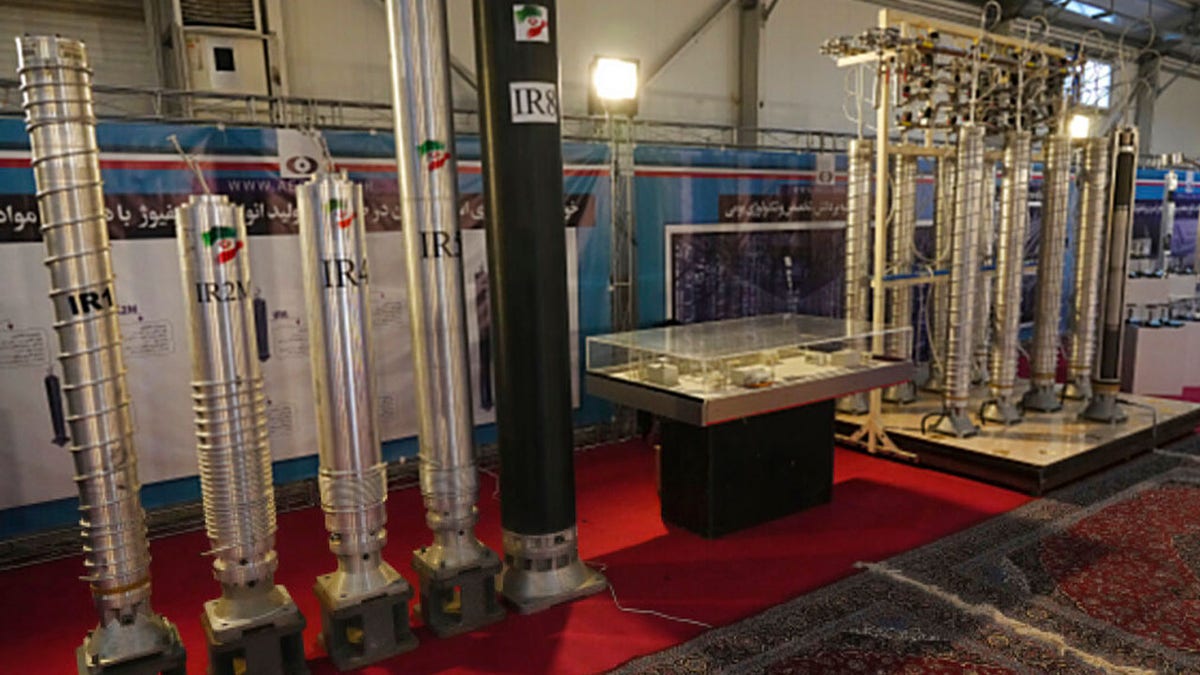
Any successful settlement must address the physical reality of centrifuge technology. Enrichment is a function of "Separative Work Units" (SWU). The Iranian program utilizes IR-1, IR-2m, and IR-6 centrifuges, with the latter being significantly more efficient.
- The Stockpile Threshold: To make the Putin proposal work, the mass of 60% enriched uranium must be reduced below the "Significant Quantity" (SQ) defined by the IAEA.
- The Conversion Lag: Converting uranium hexafluoride ($UF_6$) back into solid form or shipping it out of the country involves significant logistical risks. Russia’s role would involve physically transporting these materials to Russian facilities, effectively turning Russia into Iran’s nuclear bank.
The failure of previous attempts at this "swap" model occurred because of a lack of trust in the custodial agent. For this to succeed now, the "custody protocol" needs to be automated or monitored by a neutral third party, such as the IAEA, even if Russia is the physical host of the material.
The Economic Implications of a Settlement
The removal of the nuclear impasse would trigger a massive shift in global energy markets. Iran holds the world’s second-largest natural gas reserves and fourth-largest oil reserves.
Market Re-entry and Price Volatility
The "Sanctions Premium" currently applied to Iranian crude would vanish. A flood of Iranian supply—estimated at 1.5 to 2 million barrels per day (bpd) within twelve months of a deal—would create downward pressure on Brent crude prices. This presents a conflict of interest for Russia, which relies on high oil prices to fund its domestic economy. The analyst must ask: Why would Russia facilitate a deal that lowers the price of its primary export?
The answer lies in "Sectoral Divergence." Russia may be willing to accept lower oil prices in exchange for:
- Joint venture investments in Iranian gas infrastructure.
- Arms sales that are currently restricted by international pressure.
- A North-South Transport Corridor that links Russia to the Indian Ocean via Iran.
Financial Integration
A settlement would likely involve the reconnection of Iranian banks to the SWIFT system. This would allow for the repatriation of frozen assets, which Iran could then use to purchase Russian technology and military hardware. The deal is less about nuclear physics and more about the realignment of the Eurasian economic bloc.
Structural Risks and The Fragility of Trilateralism
The primary risk to this proposal is the "Agency Problem." The U.S. is essentially hiring Russia to manage Iran. This creates an incentive for Russia to keep the problem "simmering" rather than "solved." A completely resolved Iranian nuclear issue eliminates Russia’s leverage over the United States.
Furthermore, regional stakeholders—specifically Israel and Saudi Arabia—view a Russia-Iran-U.S. trilateral deal with extreme skepticism. Israel’s security doctrine does not allow for any level of Iranian enrichment, regardless of who is monitoring it. If Israel perceives the Russian oversight as a "smoke screen" for continued Iranian R&D, the risk of kinetic intervention remains high, potentially nullifying the diplomatic efforts.
The "Three Pillar" failure points for this strategy are:
- Verification Saliency: The inability of Russian monitors to detect clandestine sites like Fordow or Parchin.
- Political Volatility: The risk of a change in leadership in Washington or Tehran that renders the deal null.
- The "Breakout" Ambiguity: The technical difficulty in defining exactly when a "civilian" program becomes a "military" one in a high-centrifuge environment.
The Strategy of Managed Nuclear Hedging
The most probable outcome of a Putin-brokered initiative is not a "Grand Bargain" that ends all hostilities, but a "Strategic Freeze." This freeze serves the immediate interests of all three primary actors. The U.S. avoids another Middle Eastern war, Russia secures its southern flank and gains diplomatic leverage, and Iran gains economic breathing room while retaining its technical "know-how."
The operational success of this framework depends on the transition from "Trust but Verify" to "Contain and Transact." The U.S. must be prepared to treat the Iranian nuclear program as a permanent feature of the landscape, managed through Russian mediation, rather than a problem that can be legislated out of existence.
To move forward, the focus should shift from the percentage of enrichment to the volume of the stockpile. A cap on the total kilograms of $UF_6$ allowed on Iranian soil, with a mandatory "auto-export" trigger once the limit is reached, provides a measurable and enforceable metric. This removes the subjective interpretation of "intent" and replaces it with a hard physical constraint. The strategic move for Western planners is to define the exact "buffer stock" required for Iran’s Bushehr nuclear plant and treat any gram above that as a violation that triggers immediate, pre-agreed penalties, bypass-ing the slow deliberations of the UN Security Council.