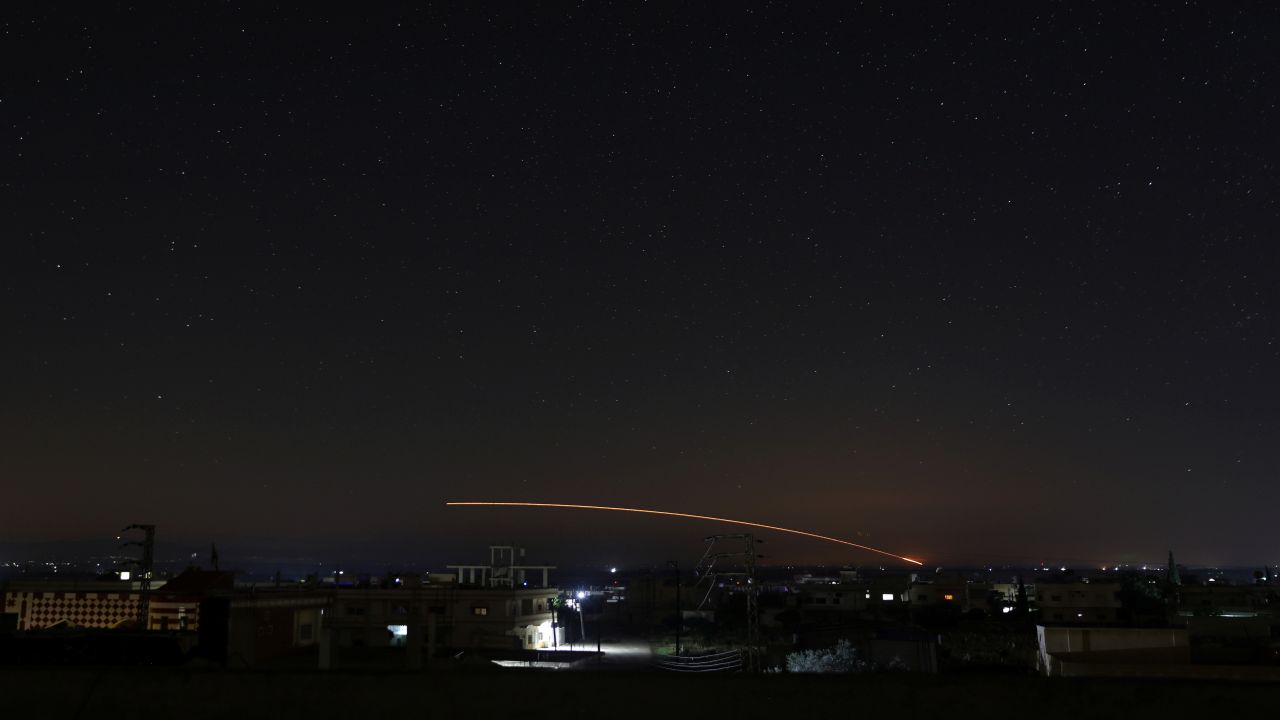
India’s escalation of its long-range ballistic missile capabilities transcends regional deterrence and functions as a structural bid for global strategic autonomy. While traditional defense analysis interprets the expansion of the Agni missile series—particularly the Agni-V and the development of Multiple Independently Targetable Re-entry Vehicles (MIRV)—through the narrow lens of a bilateral regional standoff, the engineering telemetry and payload capacities indicate a broader geopolitical blueprint. Evaluating this trajectory requires shifting away from political rhetoric and analyzing the structural pillars of India’s missile program: technological scalability, regional containment dynamics, and the institutional pursuit of a multipolar global order.
The Tri-Centric Deterrence Framework
The evolution of India's missile architecture operates under a strict cost-to-utility function dictated by its "No First Use" (NFU) nuclear doctrine. Because an NFU policy mandates surviving a first strike with sufficient retaliatory force to inflict unacceptable damage, the design parameters of the delivery systems must prioritize survivability, range flexibility, and penetration capability. This has forced Indian defense planning into a tri-centric framework.
                  ┌─────────────────────────────────────────┐
                  │      TRI-CENTRIC DETERRENCE MODEL       │
                  └────────────────────┬────────────────────┘
                                       │
         ┌─────────────────────────────┼─────────────────────────────┐
         ▼                             ▼                             ▼
┌─────────────────┐           ┌─────────────────┐           ┌─────────────────┐
│ RESTRUCTURING   │           │   TECHNOLOGICAL │           │ INSTITUTIONAL   │
│ GEOGRAPHIC RISK │           │   SCALABILITY   │           │ SIGNALING       │
└─────────────────┘           └─────────────────┘           └─────────────────┘
Restructuring Geographic Risk
Historically, Indian procurement focused on immediate border containment. The development of solid-fueled, road-and-rail-mobile systems like the Agni-V shifts the strategic calculus by allowing deployment from deep within the Indian peninsula. Moving launch coordinates southward maximizes the sanctuary depth of the transporter-erector-launchers (TELs) while maintaining total coverage of the Eurasian landmass. This geographic elasticity nullifies the effectiveness of a preemptive counter-force strike by an adversary.
Technological Scalability as a Power Multiplier
The transition from liquid-fueled systems (Prithvi) to multi-stage, solid-propellant composites represents a massive reduction in launch-reaction times. Liquid fuels require fueling immediately prior to launch, creating a high-visibility window vulnerable to satellite detection and preemptive interdiction. Solid-fueled, canisterized missiles seal the propellant inside the casing, allowing for years of storage and deployment within minutes.
Institutional Signaling
The pursuit of intercontinental ballistic missile (ICBM) ranges—generally defined as exceeding 5,500 kilometers—serves as a mandatory technical entry ticket to the United Nations Security Council permanent-member tier. By validating technologies such as carbon-carbon composite heat shields capable of withstanding re-entry temperatures exceeding 3,000°C, the Indian defense establishment signals structural parity with global powers rather than regional actors.
The MIRV Bottleneck and Strategic Stability
The integration of MIRV technology on the Agni-V platform represents a fundamental pivot from minimum credible deterrence to a sophisticated counter-measure framework. The engineering mechanics of a MIRV payload change the mathematical equation of missile defense.
In a standard single-warhead engagement, an adversarial ballistic missile defense (BMD) system faces a 1:1 intercept ratio. When a single booster carries a Post-Boost Vehicle (PBV) or "bus" that dispenses multiple, independently targeted warheads alongside decoys and chaff, the intercept equation breaks down.
$$Intercept\ Probability = 1 - (1 - P_k)^n$$
Where $P_k$ is the single-shot kill probability of the interceptor and $n$ is the number of interceptors allocated per incoming target. If the number of incoming re-entry vehicles scales exponentially through MIRV deployment, the cost-exchange ratio shifts drastically against the defender. The defender must expend multiple high-cost interceptors for every low-cost decoy or warhead, quickly depleting their interceptor inventory.
This introduces a critical instability risk into the regional security matrix:
- The First-Strike Incentive: MIRVs create an asymmetric advantage for the attacker. A small number of MIRV-equipped missiles can theoretically destroy an opponent’s entire land-based arsenal in its silos. This creates a "use them or lose them" dilemma during a crisis, compressed into a reaction window of less than fifteen minutes.
- The Surveillance Imperative: To counter this compressed timeline, regional powers are forced to invest heavily in space-based early warning infrared sensors to detect the initial thermal signature of a launch. Reliance on automated response systems elevates the risk of accidental escalation driven by sensor malfunction or data misinterpretation.
- Naval Diversification Costs: Because land-based systems become high-value targets under a MIRV regime, India is structurally incentivized to accelerate the naval leg of its nuclear triad. The Arihant-class nuclear ballistic missile submarines (SSBNs) represent the ultimate survivable asset, transferring the deterrence burden from the geographic vulnerabilities of the subcontinent to the blue-water depths of the Indian Ocean.
Space-Defense Convergence: Dual-Use Infrastructure
The acceleration of India's long-range missile capabilities cannot be separated from its civilian space program managed by the Indian Space Research Organisation (ISRO). The technological overlap between civilian Satellite Launch Vehicles (SLVs) and military ballistic missiles is direct and structural.
The solid-propellant boosters utilized in the Polar Satellite Launch Vehicle (PSLV) share core chemical engineering and manufacturing baselines with the large-diameter stages of the Agni series. Hydroxyl-terminated polybutadiene (HTPB) serves as the binder and fuel matrix across both domains. Consequently, advancements in civilian heavy-lift capability inherently validate the manufacturing precision required for larger military payloads.
Furthermore, India’s validation of an Anti-Satellite (ASAT) capability in 2019 demonstrated the precision of its kinetic kill vehicles and real-time radar tracking networks. The interception of a target in Low Earth Orbit (LEO) demands guidance, navigation, and control accuracy identical to that needed for mid-course ballistic missile interception. This dual-use infrastructure provides a massive economic advantage, allowing civilian budgetary allocations to subsidize foundational research and development in guidance systems, telemetry, and material sciences that directly feed into the defense framework.
Geopolitical Realignment and the Indo-Pacific Pivot
The strategic expansion of India's missile envelope redefines its diplomatic leverage within western security alignments, particularly the Quadrilateral Security Dialogue (Quad). Western partners traditionally viewed India as a localized counterweight to regional expansion. However, as India develops true trans-continental reach, its structural dependency on external security umbrellas diminishes.
This shifts India’s status from a regional security consumer to a net security provider in the Indian Ocean Region (IOR). The capability to hold distant logistically vital choke points at risk changes how maritime security is negotiated. Western nations are forced to engage with New Delhi not as a subordinate partner requiring capacity building, but as a sovereign pole in a multipolar architecture.
The primary limitation of this posture is the diplomatic friction it generates with neighboring states. As Indian missile ranges extend to encompass capitals across Europe and Asia, the argument that the program is purely defensive loses its structural weight. This creates a security dilemma where defensive steps taken by New Delhi are interpreted as offensive capabilities by its periphery, triggering a cyclical arms race across the broader Asian theater.
The Structural Path Forward
To maintain strategic stability while expanding its global power projection, Indian defense policy must prioritize three operational adjustments:
- Accelerate the Solid-Fuel Transition for the Naval Leg: The current lag between land-based Agni-V deployment and the deployment of comparable ranges on the K-series submarine-launched ballistic missiles (SLBMs) creates a vulnerability window. Prioritizing the K-5 and K-6 SLBM development is essential to move the core deterrent away from land-based strike zones.
- Formalize Space-Based Command and Control: With the introduction of MIRVs and compressed decision cycles, reliance on ground-based radar is obsolete. India must build out a continuous-coverage constellation of low-orbit infrared tracking satellites to ensure flawless verification of potential threats, preventing catastrophic errors in judgment.
- Establish Bilateral De-escalation Protocol Regimes: To prevent the misinterpretation of missile tests as live counter-force strikes, India must establish binding, automated pre-notification cruise and ballistic missile testing treaties with all contiguous neighbors, decoupling routine technological validation from active geopolitical signaling.


