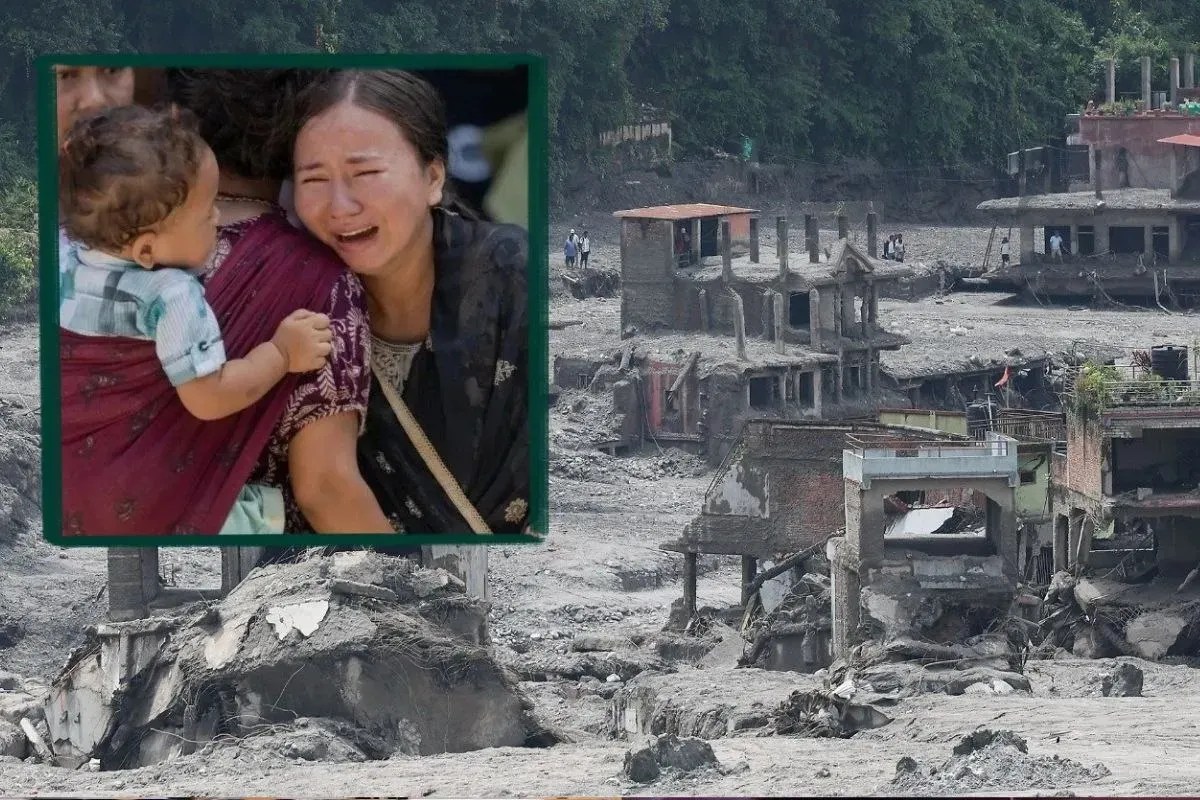
When a wall of water, ice, and debris tears down a Himalayan river corridor, public grief instantly curdles into a predictable demand for blood. Distraught families scream at government offices. Headlines demand to know the financial value of a human life.
It is a visceral, gut-wrenching reaction to catastrophe. It is also fundamentally useless when trying to understand why hundreds of workers remain sealed inside mud-choked hydropower tunnels in Nepal. Don't miss our recent post on this related article.
The lazy consensus dominating media coverage treats every natural disaster as a failure of bureaucratic willpower. The narrative is comforting in its simplicity: corrupt officials, greedy contractors, and a sluggish state apparatus are personally responsible for the wrath of a glacial collapse.
Scratch beneath the surface of populist outrage, however, and a much harsher mechanical reality emerges. To read more about the background here, The Washington Post provides an excellent summary.
The Physics Of Mountain Disasters Beat Political Rhetoric Every Time
Let us look at the structural mechanics. When an ice and rock avalanche hits a narrow mountain gorge with the force of a minor earthquake, it does not check party affiliations before sealing a tunnel mouth. It moves millions of cubic meters of slurry at highway speeds.
To suggest that a government agency can maintain an instantaneous, infinitely mobile rescue force capable of punching through fifty feet of compacted mountain silt within hours ignores basic logistics. When forty bridges are wiped out and entire regional grids vanish under a sea of debris, you are dealing with an engineering nightmare that defies standard military or civil response times.
Blaming politicians for failing to predict the exact minute a glacier fails above the Tibet border is like suing the weather service for getting wet in a hurricane.
The Real Crime Is Economic Fatalism In High Risk Corridors
The conversation should not be about why rescue crews take six days to cut through solid rock and mud. The real scandal is why we continue to build sprawling underground labor colonies in active geological shooting galleries without fail-safe evacuation architecture.
I have seen corporate project managers cut corners on early-warning sensor arrays to save a fraction of a development budget. Hydropower projects across the Himalayas generate massive capital returns for international conglomerates, yet the baseline safety margins for underground workers remain terrifyingly primitive.
When flash floods hit, workers are often left relying on crude sirens or word-of-mouth warnings from supervisors who are just as blind to incoming torrents.
Asking "what is our life worth?" to a bewildered bureaucrat misses the target entirely. The question should be directed at the project developers who treat worker safety as an afterthought until the mountain collapses.
How To Stop Dying For Power
If we want to prevent future tragedies in the Trishuli and Rasuwa river corridors, we have to abandon the emotional catharsis of blaming political leaders after the fact.
- Mandate Redundant Escape Shafts: Underground tunneling projects in unstable zones must legally require secondary vertical egress shafts that do not rely on horizontal portals vulnerable to mudslides.
- Decouple Early Warning From Human Error: Automated, satellite-linked glacial lake outburst sensors must trigger automatic shut-offs and evacuation alarms independently of on-site management.
- Redefine Corporate Accountability: Project licenses must carry strict, enforceable liability clauses that hold parent corporations financially responsible for disaster preparedness, shifting the burden away from state rescue budgets.
Stop waiting for a miracle response from a government forced to dig through miles of solid rock with bare hands and heavy tractors. Fix the blueprint before the next mountain gives way.


