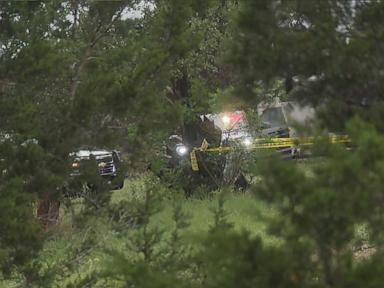
The headlines are predictable. They are cookie-cutter. "5 killed in Texas plane crash, officials say." The media machine grinds into gear, pumping out somber tones and grainy photos of charred wreckage in a field. We are conditioned to gasp, to mourn, and to subconsciously add another tally to our irrational fear of the sky.
It is a lie. You might also find this similar story interesting: How Short Term Rentals are Killing the Los Angeles Housing Market.
The obsession with reporting every single General Aviation (GA) incident as a breaking news event is a disservice to public intelligence. It treats a statistical inevitability like a systemic failure. When five people die in a pile-up on I-10—which happens with soul-crushing frequency—it barely makes the local blotter. But put those same five people in a Beechcraft or a Cessna, and suddenly we have a "disaster" worthy of a push notification.
If you want to understand why planes fall out of the sky, stop looking at the wreckage. Start looking at the mirror. As extensively documented in recent coverage by The Guardian, the results are significant.
The Myth of the Mechanical Failure
The "lazy consensus" among the general public is that these small planes are rickety death traps held together by spit and prayer. People assume the engine quit or a wing fell off. They want to blame the machine because blaming the machine implies we can fix it with better tech or more regulation.
The reality is colder.
In General Aviation, mechanical failure is rarely the protagonist. According to the NTSB’s own data—the gold standard that journalists love to skim but rarely study—pilot-related factors account for roughly 70% to 80% of all accidents. We aren't dealing with a technology problem. We are dealing with a "superiority complex" problem.
I have sat in hangars from Addison to El Paso listening to pilots brag about "pushing through" a weather front. They call it "get-there-itis." It is a psychological pathology where the pilot’s ego overrides the altimeter. When a plane goes down in Texas, it isn’t usually because the Lycoming engine gave up the ghost; it’s because a human being with a private license thought they were better than a thunderstorm.
The Private Pilot Pedestal
We need to stop equating a Private Pilot Certificate with professional mastery.
Commercial airline pilots are athletes of the air. They train until their reactions are autonomic. They operate under Part 121 regulations that are written in the blood of the past. They have redundant systems, redundant crew, and mandatory rest.
The weekend warrior in a light twin? They are operating under Part 91. It is the Wild West.
Many of these pilots fly 50 hours a year. To put that in perspective, you probably spend more time brushing your teeth than some of these "commanders" spend in the cockpit. Yet, when a crash occurs, the media treats it with the same gravity as a Boeing 737 incident. It creates a false equivalence that scares people away from the safest form of mass transit—commercial flight—while ignoring the blatant risk-management failures of the wealthy hobbyist.
The Weather Trap is a Choice
"Officials say weather may have been a factor."
This is the most useless sentence in modern journalism. Weather is never a "factor" in the sense of an unavoidable act of God. It is a known variable.
We live in an era of ADS-B, real-time Nexrad overlays on iPads, and synthetic vision. A pilot today has more information on their kneeboard than a NASA engineer had during the Apollo missions. If a plane flies into Instrument Meteorological Conditions (IMC) without an IFR-rated pilot or a capable aircraft, that isn't an accident. It's a choice.
The Texas landscape is flat, unforgiving, and prone to rapid convective activity. If you fly there, you know this. If you ignore it, you aren't a victim of a crash; you are a participant in a predictable physics experiment.
The Economic Cost of False Fear
Every time a small-scale tragedy is blown out of proportion, it triggers a ripple effect that hurts the wrong people.
- Insurance Premiums Skyrocket: Not just for the reckless, but for the flight schools training the next generation of safe, professional pilots.
- Innovation Stifles: Regulators, spooked by the optics of "rising crashes," pile on paperwork that makes it harder to certify new, safer safety tech (like airframe parachutes) because the certification process becomes a bureaucratic gauntlet.
- Public Perception Shifts: People opt to drive 800 miles instead of taking a regional flight. Statistically, that choice is a death sentence. Your risk of dying increases exponentially the moment you turn the key in your SUV compared to sitting in a pressurized cabin.
The NTSB is Not Your Friend
The National Transportation Safety Board is an incredible organization, but their preliminary reports are clinical for a reason. They don't deal in "tragedy." They deal in "probability."
When you read that "officials are investigating," understand what that actually means. It means they are looking for the point where the pilot stopped flying the airplane and started riding it. They are looking for the "Error Chain."
An error chain is a sequence of small, manageable mistakes that, when linked, lead to a fatality.
- Mistake 1: Not checking the late-afternoon TAF (Terminal Aerodrome Forecast).
- Mistake 2: Taking off with a known minor oil leak.
- Mistake 3: Deciding to "drop down" below the cloud ceiling to maintain visual contact with the ground.
Break any one of those links, and everyone goes home for dinner. The tragedy isn't that the plane crashed. The tragedy is that the pilot had three or four distinct opportunities to survive and ignored all of them.
Stop Asking "What Happened" and Start Asking "Who Was Allowed"
We don't need more "thoughts and prayers" for GA crashes. We need a brutal reassessment of the barrier to entry for high-performance aircraft.
Just because you can afford a $700,000 Cirrus doesn't mean you have the mental fortitude to fly it through a Texas line squall. We have created a culture where money buys access to airspace, but it doesn't buy competence.
If we want to see fewer "5 killed" headlines, we have to stop being polite about pilot error. We have to stop calling them "accidents." We have to call them what they are: failures of discipline.
The Uncomfortable Truth About Safety
You want to be safe? Stop reading the news.
The news focuses on the anomaly. It ignores the 30,000 flights that landed yesterday without a scratch. But if you are a pilot, or someone considering it, realize that safety isn't a "landscape" or a "tapestry." It is a series of "No" votes.
- No, I won't fly with that crosswind.
- No, I won't skip the pre-flight.
- No, I won't try to beat the sunset.
The competitor’s article wants you to feel sad. I want you to feel annoyed. I want you to be annoyed that a few people’s inability to respect the laws of physics and the limits of their own training is being used to manufacture fear in a public that already struggles to understand risk.
The sky is not falling. A few people just forgot how to stay in it.
The investigation will take twelve months. The probable cause will be "Pilot failed to maintain situational awareness." We don't need to wait for the report to know that. We just need to stop pretending that every time a small plane hits the dirt, it's a mystery.
It’s never a mystery. It’s always the same story. Different tail number, same ego.
Stop mourning the machine and start demanding a higher standard from the person in the left seat.
Ground the ego or the ground will do it for you.