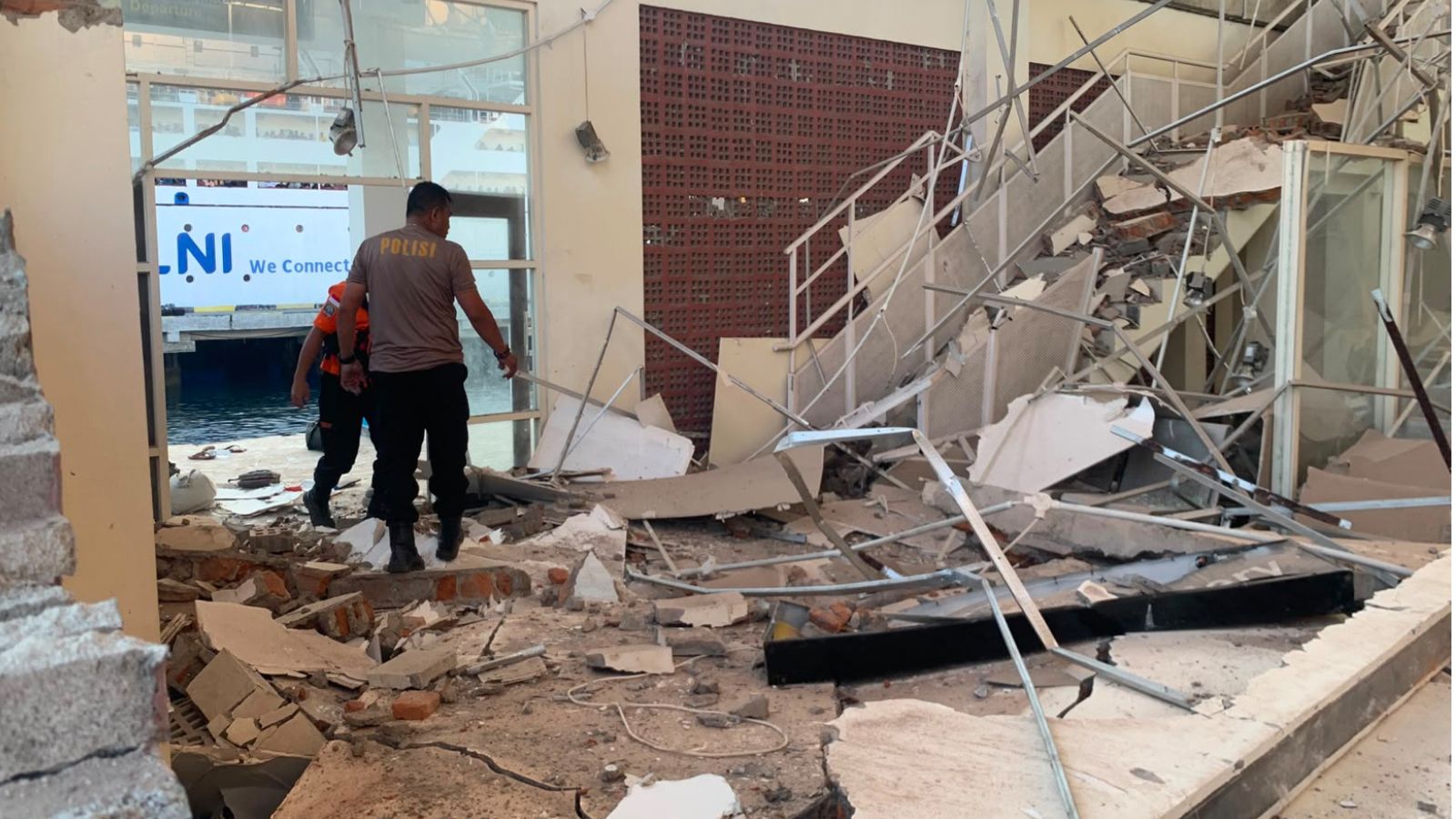
The media wants you to believe that every seismic disaster is an isolated tragedy solved by throwing shipping containers of bottled water and canned beans at the perimeter. They flash the death tolls, run the heart-wrenching footage of collapsed masonry in Flores, and cue the telethons. It makes you feel good to donate. It makes the headlines look active. It is also an absolute logistical failure that perpetuates the cycle of destruction.
When a 5.9 magnitude tremor hits an island like Flores, the conventional playbook kicks in immediately. Governments panic, international NGOs mobilize, and well-meaning citizens pack clothes they no longer wear into cardboard boxes. I have watched millions of dollars in disaster response funding evaporate into the ether because the entire humanitarian apparatus treats acute natural phenomena as supply chain problems rather than structural engineering failures.
Stop treating earthquakes like acts of God that demand charity. Treat them like engineering audits that we are consistently failing.
The Lazy Consensus of Emergency Relief
The core narrative surrounding events like the Flores tremor goes like this: nature strikes, vulnerable populations suffer, outside saviors arrive with tents, and rebuilding begins exactly as before. This lazy consensus ignores the most glaring variable in the equation. Earthquakes do not kill people. Poorly poured concrete kills people.
Every time we frame a seismic event as an unmitigated surprise, we absolve local planning commissions, corrupt contractors, and outdated building codes of direct accountability. Indonesia sits squarely on the Pacific Ring of Fire. Seismicity in Flores is not a statistical anomaly; it is a permanent operating condition. Expecting stability while building rigid, unreinforced masonry structures on active fault lines is not bad luck. It is bad math.
When headlines fixate on rising death tolls and immediate relief supplies, they obscure the uncomfortable truth. Tossing aid bags from helicopters does nothing to address why the primary school roof pancaked while the commercial bank next door remained standing. The bank used reinforced concrete and proper rebar spacing. The school relied on cheap mortar and wishful thinking.
The Economics of Disaster Capitalism
Emergency response has turned into a self-perpetuating global industry. Billions flow into post-disaster rehabilitation while pre-disaster mitigation remains chronically underfunded. Why? Because you cannot film a ribbon-cutting ceremony for a building that did not fall down. Prevention is invisible. Rubble is photogenic.
I have spoken with structural engineers who spent decades trying to secure municipal retrofitting grants in high-risk seismic zones across Southeast Asia, only to be told there is no budget. Yet, the moment a 5.9 quake flattens a district, emergency coffers magically unlock tens of millions of dollars within forty-eight hours. We have built an economic incentive structure that rewards failure over fortification.
If you want to save lives in Flores or anywhere else along the tectonic margins, stop subsidizing the aftermath. Tie every dollar of international aid directly to strict, enforceable zoning laws and mandatory seismic retrofitting protocols. If a local government refuses to adopt modern building standards, withhold non-medical humanitarian assistance until they comply. It sounds harsh. It is actually compassionate. Charity that perpetuates the underlying vulnerability is not help; it is an addiction.
Dismantling the Myths of Rural Vulnerability
A common narrative insists that remote islands like Flores suffer disproportionately because they are isolated from modern resources. This is a cop-out. The knowledge required to construct earthquake-resistant masonry using confined masonry techniques—interlocking brickwork with vertical and horizontal reinforced concrete tie-columns—is neither expensive nor classified.
Traditional vernacular architecture in many seismic regions historically utilized flexible timber frames designed to sway and absorb ground shock. The deadliest destruction usually occurs not in truly remote, traditional communities, but in semi-urban transition zones where populations adopt modern materials like concrete blocks without understanding the physics required to hold them together. They copy the look of city buildings without mastering the structural integrity.
When an earthquake hits, the immediate reflex is to blame the magnitude. A 5.9 quake is moderate on the Richter scale. It releases energy, sure, but structures built with proper ductility should absorb it without catastrophic collapse. If a moderate tremor turns a village into dust, the problem is not the earth moving beneath your feet. The problem is what you put on top of it.
The Real Fix
We need to completely flip our resource allocation model. Shift ninety percent of disaster budgets away from reactive emergency relief and into proactive structural hardening. Mandate that every public building in a high-risk zone undergoes immediate seismic evaluation. Train local laborers in seismic-resistant construction methods before the ground shakes, not after.
Until we stop rewarding structural negligence with emergency sympathy, the death toll will continue to rise with every tremor, and we will keep reading the exact same headlines year after year.