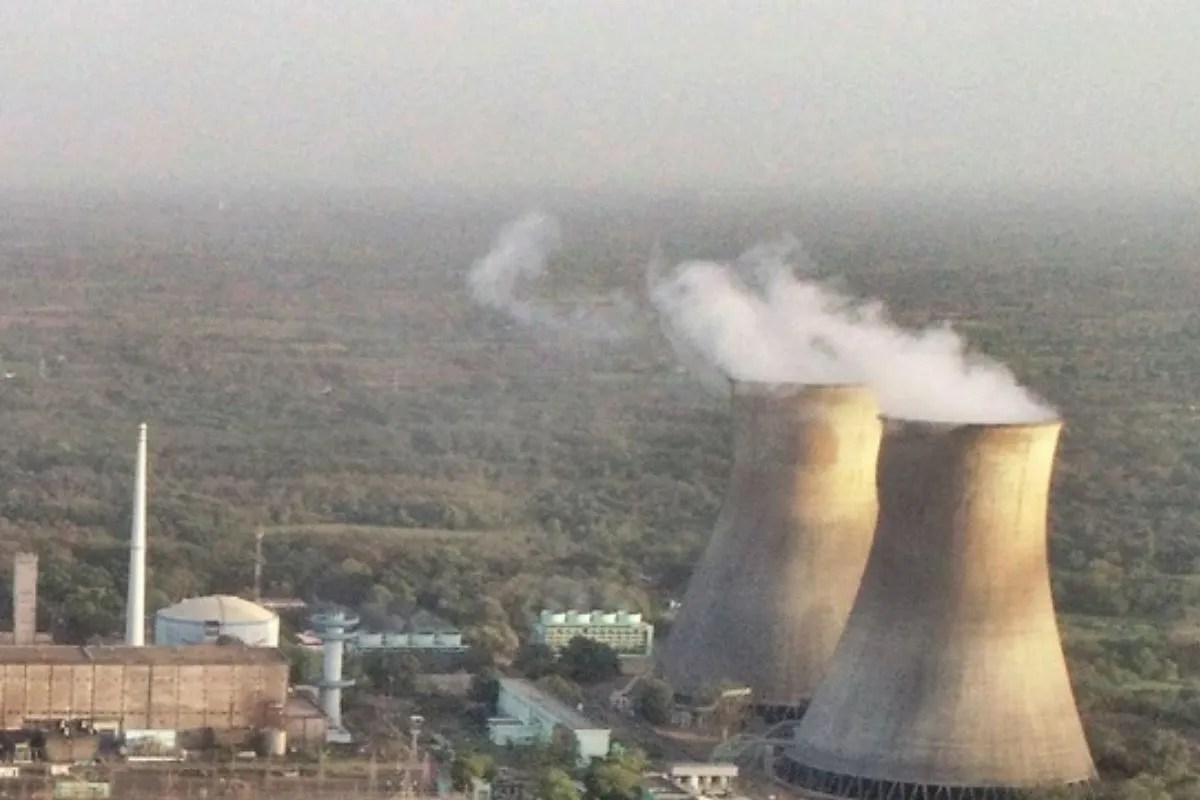
Every time regional tensions spike, Tehran trots out the exact same predictable script. State media runs breathless bulletins claiming their nuclear facilities are untouched, buried deep under impenetrable mountain granite, completely immune to modern munitions. Analysts on cable news nod along, repeating the official line that underground enrichment means an invincible program.
It is a comforting narrative for Iranian leadership and a lazy narrative for foreign policy pundits. And it is entirely disconnected from modern military reality.
I have spent two decades analyzing the intersection of subterranean engineering and precision strike capabilities. I have watched defense contractors blow billions on multi-layered geotechnics, only to see physics rewrite the rules of structural survival. The lazy consensus assumes that depth equals immunity. That is not just wrong; it is a dangerous misunderstanding of how kinetic energy works at subterranean scales.
The Geography Myth of Deep Underground Enrichment
Let us dismantle the core premise. The standard claim is simple: build a centrifuge hall three hundred feet beneath solid rock, wrap it in reinforced concrete, and you render air-delivered ordnance obsolete.
Nature does not care about your concrete specifications.
When you look at facilities like Natanz or Fordow, analysts fixate on the overburden—the sheer volume of earth and rock sitting above the centrifuges. The assumption is that a bomb must vaporize through hundreds of feet of granite to do any damage. That is nineteenth-century siege thinking applied to twenty-first-century geomechanics.
Modern conventional and specialized ordnance does not try to tunnel straight down through a mountain like a drill bit. That would be inefficient. Instead, modern earth-penetrating munitions rely on sequential acceleration and massive kinetic energy transfer. But even more critically, deep-earth infrastructure has a fatal structural vulnerability: access points.
A nuclear enrichment facility is not a sealed vault floating in a void. It requires power grids, ventilation shafts, cooling water lines, command cabling, and vehicle transit tunnels. You can bury the centrifuges as deep as you want, but the moment you punch a five-meter-wide ventilation shaft through the rock to keep the equipment from overheating, you have created an acoustic and kinetic highway straight to the core.
"Depth is a metric of comfort, not a guarantee of survival. A bunker is only as strong as its lifeline to the surface."
The Shockwave Physics Nobody Wants to Discuss
When a heavy penetrator bomb hits a mountain slope above a hardened target, it does not need to reach the centrifuge hall to ruin the program. The sheer kinetic impact generates a massive seismic shockwave that propagates through the surrounding rock strata.
Centrifuges are marvels of high-precision engineering. They spin at supersonic speeds, balanced to tolerances measured in microns. They are profoundly delicate instruments.
Imagine a scenario where a multi-ton penetrator impacts a half-mile away from the actual underground hall, detonating deep within the mountain. The resulting ground acceleration will shatter the magnetic bearings of every working centrifuge in the facility. The machines fly apart from their own rotational energy. The cascading mechanical failure destroys the cascade arrays instantly, even if not a single ounce of radioactive material is directly exposed to the open air.
Tehran claims its program is safe because the concrete walls did not crack. They are measuring success by structural containment while ignoring functional obliteration. You do not need to turn a mountain into dust to stop uranium enrichment. You just need to shake the rock hard enough to turn precision machinery into expensive scrap metal.
The Intelligence Blind Spot
Why do defense ministries and state broadcasters keep pushing the narrative of total subterranean invulnerability? Because it serves both sides of the geopolitical ledger.
For Tehran, projecting an image of an unassailable atomic fortress deters impulsive escalation and shores up domestic confidence. It projects strength where conventional military hardware falls short.
For foreign defense establishments, exaggerating the difficulty of striking deep targets justifies massive budget allocations for next-generation ordnance and electronic warfare suites.
Meanwhile, the actual ground truth remains far more fragile than either side admits.
I have reviewed structural stress models from aerospace testing facilities that map subterranean shock propagation. When an underground cavity is subjected to modern high-yield penetrator impacts, the spalling effect—where the inner face of the rock or concrete wall violently shears off due to shockwave reflection—turns the interior of the bunker into a high-speed shrapnel storm. No centrifuge survives an internal concrete rainstorm moving at Mach speeds.
The Real Vulnerability is Not Kinetic
If you want to understand why the current panic over physical strikes misses the bigger picture, look past the bombs entirely.
Nuclear enrichment is not just a collection of spinning tubes sitting in a cave. It is an intensely data-driven, software-dependent, power-hungry industrial ecosystem. It relies on synchronized frequency changers, complex distributed control systems, and continuous telemetry feedback loops.
You do not need a bunker-buster bomb to disrupt a cascade when a well-tailored cyber payload can silently command the centrifuges to over-speed themselves into self-destruction. We saw this play out years ago with Stuxnet, yet military analysts still default to treating modern nuclear programs like World War II munitions factories that can be protected simply by piling enough dirt on top of them.
The physical facility is the easiest part to defend on paper and the hardest part to keep operational in a contested environment. When power grids are manipulated, when internal cooling systems are subtly thrown out of calibration, and when the supply chain for replacement carbon-fiber rotors is choked off by secondary sanctions and interdiction, the mountain sanctuary becomes an expensive tomb.
Dismantling the Illusion of Nuclear Deterrence via Geography
The claim that a nuclear program is safe simply because the buildings are underground relies on a static view of warfare. It assumes a binary outcome: either the mountain is completely vaporized, or the program is completely safe.
Warfare is rarely binary. It operates on degrees of degradation.
Even if every single centrifuge housing remains structurally intact beneath the bedrock, the secondary effects of sustained regional conflict—interrupted supply chains, poisoned technical workforces, compromised power grids, and cascading mechanical shock—accumulate into a functional defeat.
Stop looking at the depth of the excavation. Start looking at the fragility of the systems required to keep the lights on and the rotors spinning. The mountain is just a rock. The vulnerability is the complexity.