The Disaster Started Decades Before the Ground Moved
Mainstream coverage of the June 24 twin earthquakes in Venezuela follows a predictable script: picture the tragic rubble, decry the sudden collapse of basic services, and call for open-ended international charity.
That analysis is lazy, superficial, and entirely misses the point.
The 7.2 and 7.5 magnitude quakes that struck northern Venezuela didn't create a humanitarian catastrophe out of thin air. They merely exposed the structural decay of a state-run housing experiment that transformed residential blocks into vertical cemeteries.
When the coastal corridor of La Guaira crumpled, taking thousands of lives with it, the fault lines were not just seismic. They were political, financial, and architectural.
If you want to understand why a month after the tremors thousands remain trapped in makeshift street camps with zero water or power, stop looking at the fault lines below ground. Look at the central planning above it.
State Housing Built as Disposable Death Traps
For fifteen years, international observers praised massive socialized housing programs like Gran Misión Vivienda as models of urban welfare. The reality on the ground was always a ticking time bomb.
I have spent years analyzing municipal infrastructure across failing economies. The pattern is always identical: high-density concrete structures erected at breakneck speed to satisfy political quotas, built completely without enforcement of seismic building codes, using cheap aggregate and substandard steel.
When the ground shook in June, private residential structures built in the mid-20th century suffered damage, but state-built housing towers literally pancake-folded directly onto their inhabitants.
- Substandard Materials: Concrete poured during rush construction lacked proper reinforcing rebar tie-ins.
- Uncontrolled Densification: Authorities slapped additional floors onto existing foundations to boost capacity without structural engineering reviews.
- Zero Inspections: Local municipal inspection boards were bypassed to meet political delivery deadlines.
The collapse of the OPP housing towers in Caraballeda was not an act of God. It was an act of engineering negligence. Calling this a "natural disaster" absolves the architects of this catastrophe.
Why Modern Humanitarian Aid Models Always Fail in Collapsed States
The immediate impulse of international NGOs is to flood the zone with tents, water purification tablets, and press releases. A month later, those same NGOs sit in Caracas boardrooms wringing their hands over broken supply chains and missing logistics routes.
The conventional aid blueprint operates under a flawed assumption: that a functioning local administration exists to distribute aid, maintain public safety, and manage civilian transitions.
In a state suffering long-term institutional collapse, sending traditional aid shipments is like pouring high-octane fuel into a car without an engine.
Conventional Aid Assumption:
[International Donors] ──> [Central Government] ──> [Local Logistics] ──> [Needy Citizens]
Result: Massive bottlenecks, corruption, and stranded supplies in warehouses.

The Reality on the Ground:
[International Donors] ──> [Black Market Funnel] ──> [Informal Local Coalitions] ──> [Direct Survival]
Result: Citizens bypass the state entirely because central authorities hinder recovery.
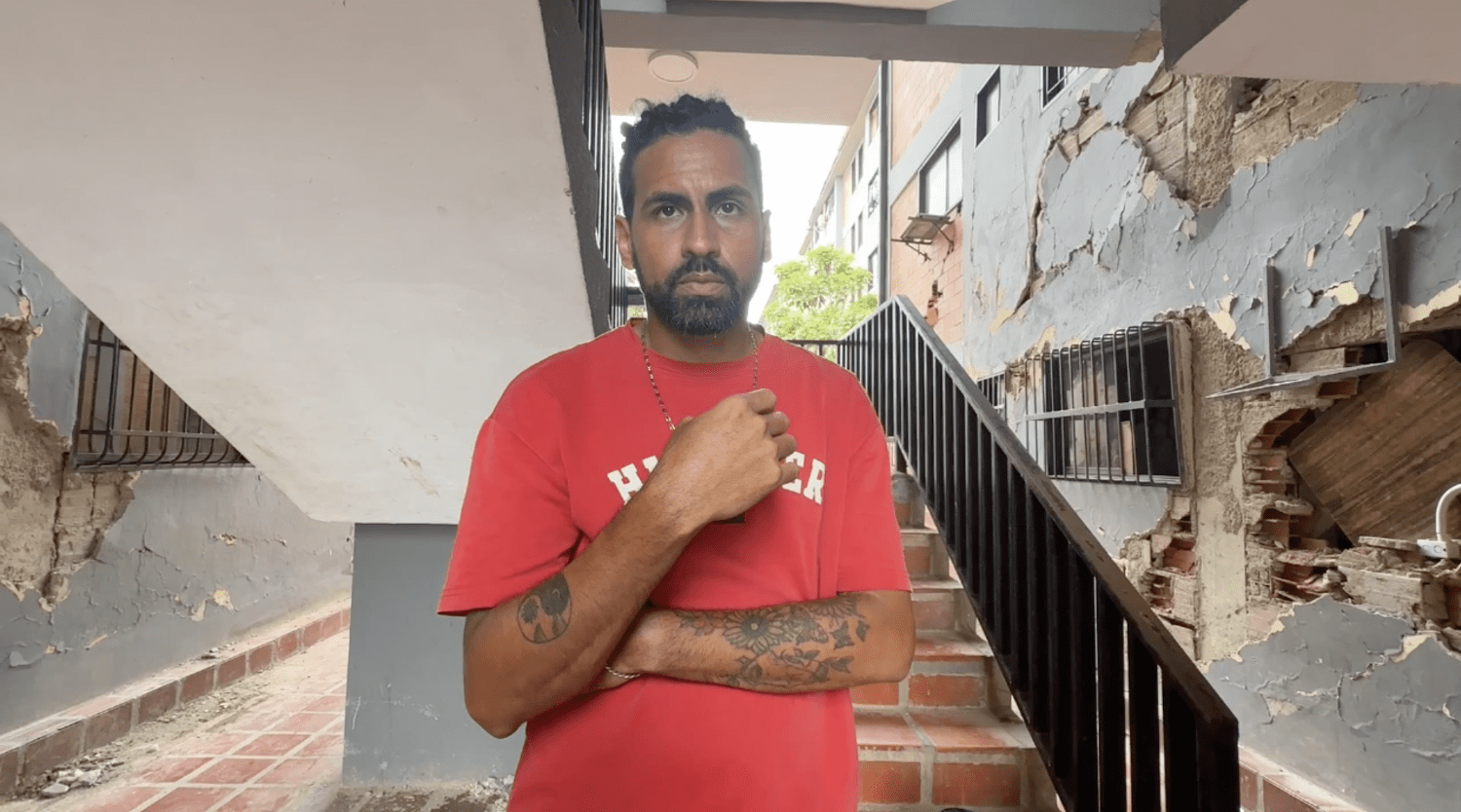
When civil defense agencies send heavy excavators to clear debris before families can recover lost relatives, citizens literally put up "Do Not Demolish" signs and dig through concrete with hand tools. The populace already knows what aid agencies refuse to admit: central authority is not coming to save them.
The $20 Billion Illusion of Reconstruction
Estimates put the structural damage across northern Venezuela between $19.6 billion and $37 billion. International agencies line up to request massive multilateral funding packages.
Here is the uncomfortable truth: money will not rebuild La Guaira or Caracas.
Reconstruction requires institutional capital, skilled labor, and property rights—three things completely depleted over the last decade. With over eight million skilled workers and engineers having fled the country prior to the quakes, who exactly is going to execute seismic retrofitting on 38,000 damaged structures?
Imagine a scenario where an international consortium grants $10 billion in reconstruction loans tomorrow. Without clear land titles, transparent procurement, and an independent judicial system to enforce contracts, that money vanishes into line-item corruption long before a single cement truck rolls into Catia La Mar.
Writing massive checks to a broken state apparatus does not reconstruct cities. It merely funds the next round of structural failures.
How to Actually Fix Post-Seismic Recovery
If international institutions genuinely care about saving lives in post-disaster zones where state capacity is zero, they must abandon the outdated aid playbook immediately.
- Bypass Centralized Logistics: Stop delivering shipments to state-managed distribution hubs. Directly fund and supply neighborhood-level mutual aid networks, church organizations, and independent merchant guilds already operating on the ground.
- Import Direct Heavy Equipment, Not Paperwork: Stop issuing diplomatic warnings about infectious diseases while survivors clear thousand-ton slabs of concrete with shovels. Deploy micro-grants for local contractors to buy diesel and run local backhoes.
- Privatize Reconstruction Standards: Require all future residential building projects funded by international aid to undergo third-party, non-governmental engineering certification before a single dollar is disbursed.
Stop treating Venezuela's situation as a standard natural disaster requiring standard foreign aid. The earthquakes did not ruin Venezuela; they simply accelerated the collapse of a system that was already hollowed out from the inside. Until aid organizations accept that reality, every dollar sent will be wasted, and every rebuilt tower will remain a future grave.