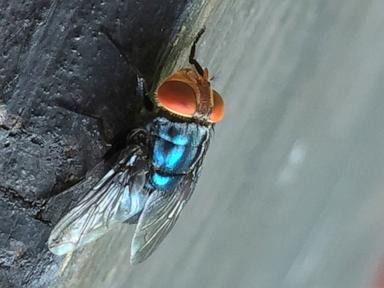
The media is treating the recent detection of the New World screwworm fly like a sudden, apocalyptic breach of our biosecurity walls. Alarmist headlines warn livestock producers that a flesh-eating menace has returned from the dead to decimate American ranching. Mainstream coverage channels a predictable playbook: stoke panic, praise the historical triumphs of the USDA, and demand an immediate, massive expansion of the Sterile Insect Technique (SIT).
They are fighting the last war. For a deeper dive into similar topics, we recommend: this related article.
The lazy consensus dominating agribusiness reporting presumes that because a strategy worked in the 1960s, it remains an impenetrable shield today. It isn't. The obsession with treating the New World screwworm (Cochliomyia hominivorax) as an isolated, eradicable anomaly ignores the systemic vulnerabilities of modern global supply chains and the biological realities of pest adaptation. We are pouring millions into maintaining a literal "buffer zone" in the Darién Gap while ignoring the structural rot inside our own agricultural borders.
If you are a livestock producer waiting for a fleet of government planes to drop billions of irradiated flies and save your herd, you are gambling your livelihood on an outdated paradigm. For further information on this topic, detailed coverage can be read on TIME.
The Flawed Romance of the Sterile Insect Technique
Every standard article on this topic recites the same history lesson like gospel. They talk about Edward F. Knipling and Raymond C. Bushland, the pioneers who realized that if you mass-breed male screwworm flies, blast them with gamma radiation to render them sterile, and release them into the wild, the wild females will mate with them and lay eggs that never hatch.
Yes, it was a triumph of mid-century entomology. Yes, it officially eradicated the pest from the United States by 1966 and pushed it all the way down to a biological barrier in Panama.
But historical success breeds institutional complacency.
The current narrative treats SIT as a permanent cure rather than a continuous, fragile state of artificial life support. The biological reality of Cochliomyia hominivorax is that it is a highly mobile, incredibly aggressive parasite. A single female can lay up to 400 eggs in the slightest scratch of an animal's skin. Within hours, those eggs hatch into larvae that literally eat the host alive.
Here is what the textbook summaries omit: mass-rearing millions of insects in a factory environment over decades introduces intense artificial selection pressures. The flies bred in the joint US-Panama commission (COPEG) facilities are not identical to wild strains. They are optimized for factory cages. Over time, wild populations can develop behavioral resistance, learning to reject or outmaneuver the laboratory-bred sterile males. If a wild female rejects a sterile male just 5% more often, the mathematical model sustaining the entire barrier collapses.
Relying solely on a single, centralized biosecurity factory in Panama to safeguard the entire North American continent is not robust infrastructure. It is a single point of failure.
The Importation Illusion: Where the Real Breach Lives
When a screwworm outbreak occurs—like the devastating 2016 infestation in the Florida Keys or more recent detections in transit corridors—the immediate reflex is to blame a breakdown in the southern buffer zone.
This diagnosis is completely wrong.
The threat does not just fly across the border on its own wings. It rides in the air-conditioned comfort of international shipping containers, pet carriers, and unregulated livestock transport. The Florida Keys outbreak did not come from a swarm of flies crossing the Gulf of Mexico; it likely arrived via an undocumented infested animal or cargo vessel.
Look at the data from the World Organisation for Animal Health (WOAH). The movement of live animals across global trade networks has increased exponentially since the screwworm eradication protocols were first designed. We are trying to police a 21st-century global trade network with a mid-20th-century border mentality.
Imagine a scenario where a single imported rescue dog from an endemic region lands at a major hub like Miami International Airport with an unnoticed, minor wound. Within days, that animal enters a suburban neighborhood. The larvae drop into the soil, pupate, and emerge as adult flies ready to infest local wildlife and livestock. By the time a local veterinarian correctly identifies the infestation, the parasite has already established a multi-generation foothold.
Our biosecurity apparatus is hyper-focused on commercial cattle herds while completely blind to the pet importation boom and domestic wildlife reservoirs. The common white-tailed deer (Odocoileus virginianus) acts as a massive, unmonitored incubator for this parasite. You cannot distribute sterile flies effectively across every acre of dense suburban and wild woodland where deer thrive.
The Misdiagnosis Crisis in Modern Veterinary Medicine
Ask an average veterinarian under the age of forty how many live cases of New World screwworm they have diagnosed in their career. The answer is almost certainly zero.
Because the US has been technically "free" of the pest for decades, an entire generation of cattlemen, ranchers, and veterinarians have lost the clinical muscle memory required to spot it early. This is the deadliest blind spot in our current agricultural landscape.
When a rancher sees fly struck livestock, they assume it is the common blowfly (Lucilia sericata) or a typical secondary maggot infestation. They apply a topical larvicide and move on.
But there is a fundamental, terrifying difference between the common blowfly and the New World screwworm:
- Common Blowflies: Feed almost exclusively on dead, decaying tissue. They are unpleasant, but they are nature's clean-up crew.
- New World Screwworms: Feed strictly on living tissue and blood. They do not wait for the tissue to die; they kill it themselves, tunneling deep into the musculature of the host, creating massive cavities that invite fatal secondary bacterial infections.
By the time a producer notices that an animal is losing weight, exhibiting extreme lethargy, or separating itself from the herd, the infestation is already advanced. If you are waiting for a government agency to confirm a sample in a lab, you have already allowed the local population to multiply exponentially.
The Decentralized Defense: Stop Waiting for the Bureaucracy
The conventional advice from agricultural extension offices is passive: monitor your herds, report suspicious cases to state veterinarians, and wait for official intervention.
This advice is an active liability.
If the screwworm establishes a permanent population in the American South again, the economic toll will not be measured in thousands of dollars; it will be measured in billions. The livestock industry cannot afford to outsource its defense to a cash-strapped federal agency juggling multiple avian influenza outbreaks and swine fever threats.
True biosecurity requires shifting from a centralized eradication mindset to an aggressive, localized management strategy.
1. Weaponize Local Larvicide Protocols
Do not wait for a confirmed report in your county to alter your herd management. Every single routine surgical procedure—branding, dehorning, castration—must be accompanied by strict, long-lasting prophylactic treatments. Coumaphos and ivermectin are not just tools for internal parasite control; they are your frontline defense against wound infestation. If an animal is bleeding, it must be treated as a high-risk target.
2. Radical Visual Audits
The standard practice of checking cattle from the cab of a pickup truck or an ATV is useless against this pest. Screwworm infestations often start in microscopic tick bites, navels of newborn calves, or the vulva of calving cows. It requires close-quarters, physical inspection. If you are not looking at the underbelly and the hidden folds of your livestock, you are not inspecting them at all.
3. Aggressive Wildlife Monitoring
Ranchers must build active relationships with local hunters and wildlife management officials. The health of the local feral hog and deer populations is a direct mirror of your herd's risk profile. If hunters report unusual wounds or high mortality rates in wild game, your ranch should immediately go on high alert, regardless of what the official USDA status maps say.
The Cost of the Counter-Strategy
Let's be completely transparent about the downsides of this approach. Shifting to an aggressive, decentralized defense model is expensive. It demands significant labor costs in an industry already squeezed by tight margins. It requires handling cattle more frequently, which increases animal stress and shrinkage. It demands constant investment in specialized antiparasitic treatments.
But the alternative is catastrophic. Relying on the status quo means assuming that a thin line of sterile flies in Panama will forever protect a globalized agricultural economy. It assumes that nature will not adapt, that bureaucrats will never experience supply chain disruptions, and that international trade routes will perfectly police themselves.
The New World screwworm never truly left; the global environment simply changed around us while our defensive strategy remained frozen in time. Stop looking at the skies for government planes to drop sterile insects. Look at your own fences, your own ports of entry, and the wounds on your own stock. The battle is already inside the perimeter.



:max_bytes(150000):strip_icc()/how-many-types-of-dwarfism-are-there-2860725-v1-8dae2c531b4b47d9ae36ae404d3308a0.png)