The smell hits you two streets away. It is a thick, polarizing wave of custard, almonds, onions, and gasoline. To some, it is the scent of pure luxury. To others, it is a biological weapon.
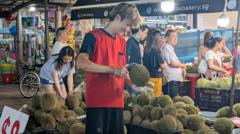
Step inside a boutique fruit stall in Chinatown or a high-end grocer in East London, and you will see them. The "king of fruits." Durians. They look like medieval maces, heavy and covered in sharp, formidable spikes. Just a few weeks ago, a single imported fruit would easily set you back £15 or more. They were treated like rare vintage wines, whispered about by connoisseurs willing to pay a premium for a taste of home or a daring culinary adventure.
Today, those same £15 spiky titans are marked down by 50 percent. Some are piled in boxes on the pavement with handwritten cardboard signs offering them entirely for free.
This is not a generous act of community charity. It is a desperate race against time, biology, and a brutal supply chain reality.
The Ticking Odor Bomb
Consider a hypothetical shopkeeper named Sam. Sam runs a small, independent Asian grocery store. He is proud of his stock, especially the premium Musang King durians he managed to source. When they arrived, fresh off a temperature-controlled flight, they represented a high-margin dream. If he sold them all at £15 a head, he would cover his rent for the week.
But durian is not like an apple. It does not sit quietly in a display case for a fortnight, slowly losing its shine.
The moment a durian is harvested, an invisible, relentless countdown begins. Within days, the starches inside the custardy pods rapidly convert into sugars, and then, just as quickly, into alcohol and sulfurous compounds. The fruit literally begins to ferment inside its own armored shell.
By day four on the shelf, Sam’s high-stakes gamble is no longer a premium luxury. It is a liability. The shell splits. The smell, once a rich and complex aroma, sharpens into something genuinely alarming. Neighbors complain. Other customers avoid the aisle entirely.
Sam faces a stark, binary choice: slash the price to £7 to recover at least some of his wholesale cost, or hand them out to the neighborhood aunties for free before he has to pay a commercial waste fee to throw them in the skip.
The Global Glut That Broke the Market
The drama on the local high street is merely the final ripple of a massive, geopolitical tidal wave happening thousands of miles away in Southeast Asia.
For the past decade, durian farming was the ultimate gold rush. Farmers in Malaysia, Thailand, and Vietnam cleared acres of rubber trees and palm oil plantations to plant durian orchards. The catalyst was an insatiable, soaring demand from China's expanding middle class. Prices skyrocketed. Farms became high-tech fortresses with security cameras to prevent fruit theft.
Then came the perfect storm of agricultural reality.
This season, ideal weather conditions across Southeast Asia caused a simultaneous, unprecedented bumper crop. Millions of trees, planted during the initial rush years ago, reached full maturity at the exact same time. The market was suddenly flooded with millions of tons of fruit.
When a global supply chain is overwhelmed by a perishable product, the physics of economics take over. The wholesale price collapses at the source. Shipping containers filled with frozen and fresh durians began arriving at European ports at a fraction of last year's cost.
Importers, suddenly holding massive volumes of stock that they purchased cheaply but must move immediately, pass the pressure down to the retailers. The market is saturated. The mystery is gone. When luxury becomes ordinary, the price tag collapses.
The True Cost of Cheap Luxury
The half-price sticker on a luxury fruit feels like a victory for the consumer. It offers a low-barrier entry point for the curious foodie who could never justify spending £15 on a fruit they might hate.
But walk past Sam's shop at closing time. Watch him move the unsold, splitting fruit into the giveaway box.
For small independent retailers, this volatility is terrifying. They lack the diversified safety nets of major supermarket chains. A single bad batch of imported fruit, or a sudden drop in market value, can wipe out an entire month's profit margin. The free durian on the pavement isn't a gift. It is a symptom of a fragile system where independent businesses bear the brunt of global market whiplash.
The spikes on the outside of the fruit are nothing compared to the sharp realities of the global food trade. The bargain hunters leave happy, clutching their heavy, pungent prizes. Meanwhile, the shopkeeper sweeps up the fallen thorns, calculating how much he lost on the king of fruits, wondering if he will dare to stock it again next week.