The tech bureaucracy is celebrating a phantom victory.
Hong Kong authorities recently announced they slashed the activation time for the government's emergency mobile alert system from 60 minutes down to 15. The consensus from the tech press and public safety "experts" was immediate, lazy praise. They framed it as a massive upgrade in civic resilience. They told you that faster is always better, and that shaving 45 minutes off a bureaucratic pipeline is an unalloyed win for public safety. For an alternative perspective, check out: this related article.
They are completely wrong.
This isn't an upgrade. It is a textbook manifestation of the "move fast and break things" ethos applied to critical infrastructure where breaking things means triggering mass public panic. By compressing the verification window to a mere quarter-of-an-hour, the government hasn't made citizens safer. It has drastically increased the probability of false positives, compromised the integrity of its data, and set the stage for the systematic desensitization of millions of people. Similar reporting regarding this has been shared by MIT Technology Review.
The Illusion of Efficiency: Why 15 Minutes is a Danger Zone
Public safety broadcasting is not a breaking news Twitter account. It does not get points for being first if it is wrong.
When you look at the mechanics of Cell Broadcast Service (CBS) technology—which Hong Kong uses to push these aggressive, vibrating, screen-overriding alerts—the technical transmission takes less than 10 seconds once triggered. The remaining 14 minutes and 50 seconds of the new window are dedicated to human decision-making.
I have spent nearly two decades auditing high-consequence communication architectures. I can tell you exactly what happens when you force a bureaucratic chain of command to vet, draft, approve, and translate a massive public directive in 15 minutes.
You do not get efficiency. You get panic-induced cutting of corners.
To understand why this is a disaster, we have to look at the three distinct layers required for a legitimate emergency broadcast:
- Verification: Confirming the threat is real, localized, and accurately measured.
- Coordination: Ensuring emergency services (police, fire, medical) are already deployed or briefed so they aren't blindsided by the public reaction.
- Localization and Translation: Formatting the message in both Traditional Chinese and English, ensuring the syntax cannot be misconstrued.
Try running that playbook in 15 minutes during a flash flood, a hazardous chemical spill, or a structural collapse. It is impossible.
What happens instead? The decision-makers will rely on incomplete data. They will push the button based on a hunch because the clock is ticking and the political pressure to hit the 15-minute target will outweigh the technical requirement for accuracy.
The Hawaii Syndrome: The True Cost of False Positives
We do not need to guess what happens when emergency systems prioritize speed over absolute certainty. We have seen the blueprint play out globally, and the results are ugly.
In 2018, the Hawaii Emergency Management Agency mistakenly sent an incoming ballistic missile alert to millions of smartphones. The text was terrifyingly stark: "BALLISTIC MISSILE THREAT INBOUND TO HAWAII. SEEK IMMEDIATE SHELTER. THIS IS NOT A DRILL."
It took 38 minutes for the agency to issue a correction. For 38 minutes, tourists hid in storm drains and parents put their children down manholes.
The subsequent investigation revealed that the error occurred during a shift change drill, compounded by a poorly designed user interface. But the real failure was the lack of a cooling-off period. The system was optimized for rapid deployment, bypassing the friction points that prevent catastrophe.
By dropping the threshold to 15 minutes, Hong Kong is building the exact same fragile environment. Imagine a scenario where a localized gas leak near a major MTR station is misreported as a coordinated chemical incident. Under the old 1-hour rule, cooler heads, secondary site reports, and transit authority data would kill the panic before it started. Under the 15-minute mandate, the alert goes out to millions of devices across the territory, causing a stampede in the tunnels.
The downside of my contrarian stance is obvious: yes, in a highly specific, rapidly unfolding scenario—like an active shooter—every minute counts. But CBS is a blunt instrument designed for macro-level threats, not micro-second tactical responses. Using a sledgehammer to swat a fly will only destroy the wall.
Cry Wolf: The Cryogenic Death of Public Trust
The most dangerous consequence of this policy shift is not a single false alarm. It is the psychological phenomenon known as alarm fatigue.
The human brain is highly adaptive. When a stimulus occurs frequently without an associated consequence, the brain categorizes that stimulus as background noise. Software developers see this daily; if an application throws 50 trivial warnings a afternoon, developers ignore the logs, eventually missing the critical error that crashes the database.
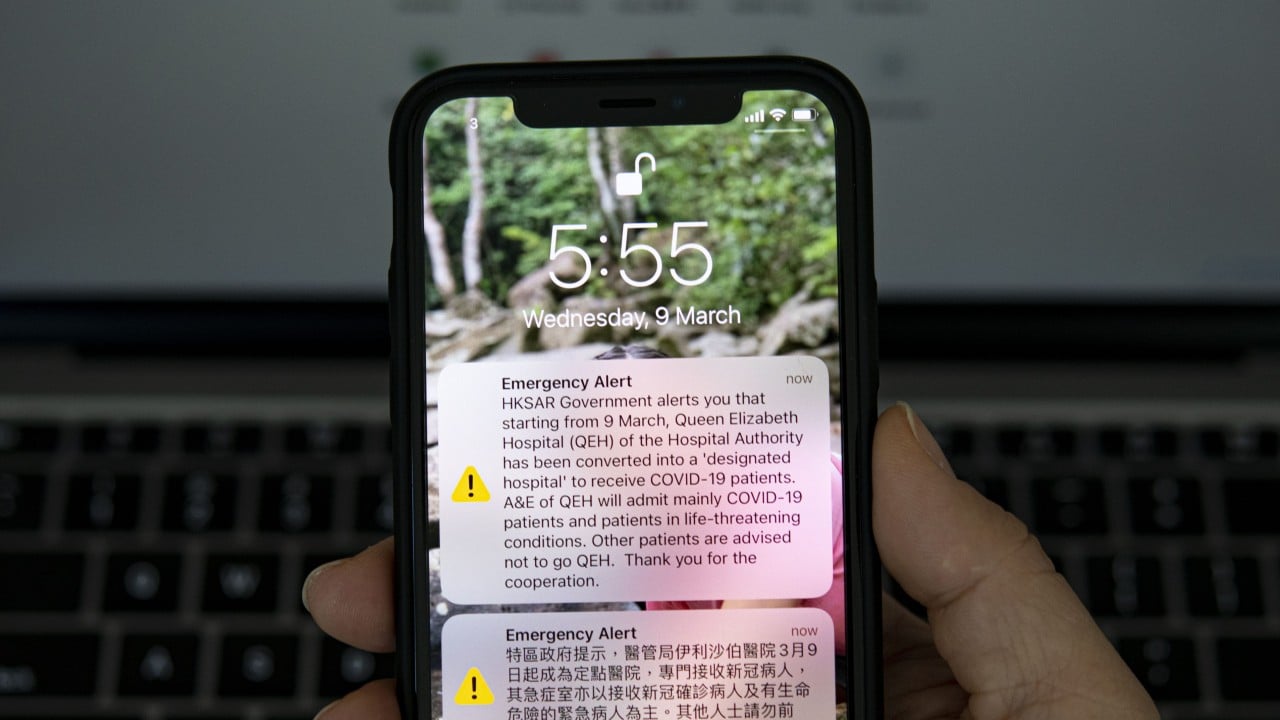
When Hong Kong used the system during the pandemic to announce hospital arrangements, the backlash was intense because people felt a loud, terrifying emergency alarm was inappropriate for an administrative update.
If the government starts using the 15-minute window regularly, two things will happen:
- Instant Dismissal: Users will swipe the alert away within one second, failing to read the instructions.
- System-Level Disabling: Citizens will actively search for workarounds to disable emergency alerts in their iOS or Android settings, completely severing the communication line between the state and the public.
[Emergency Alert Fired]
       │
       ▼
[Is it accurate?] ──► No ──► Mass Panic / Loss of Institutional Trust
       │
       ▼ Yes
[Is it frequent?] ──► Yes ──► Alarm Fatigue ──► Alerts get ignored completely
When you compromise accuracy for speed, you destroy the only currency that matters in a crisis: institutional trust. Once the public decides your alerts are unreliable or overly frantic, your expensive emergency infrastructure becomes completely useless.
Fix the Protocol, Not the Stopwatches
The obsession with reducing activation time misses the entire point of crisis communication. The goal should not be to send messages faster; the goal must be to make the message completely actionable.
A 60-minute window that delivers precise coordinates, clear evacuation routes, and verified safety zones is infinitely superior to a 15-minute window that sends a vague, terrifying message telling people to "take shelter immediately" without specifying where or why.
If you want to optimize public safety, stop looking at the stopwatch. Focus on the data pipeline. Automate the translation matrices. Integrate real-time sensor telemetry directly into the dispatch desks so human validation isn't a game of telephone across three different government bureaus.
Speed is a vanity metric used by politicians to prove they are doing something. Accuracy is what keeps people alive.
The next time your phone screams with a government alert 15 minutes after an incident, don't marvel at the efficiency of the state. Look for the exit, check your secondary sources, and pray they didn't rush the broadcast just to hit a KPI.