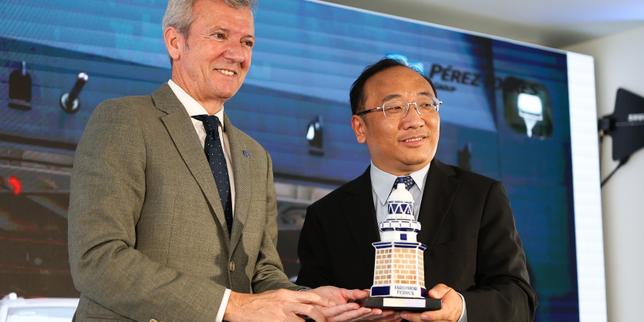
The press corps loves a clean narrative. Hand them a press release about SAIC setting up shop in Galicia, and they immediately spin a grand historical parallel. Spain is the new fortress. Southern Europe is becoming the primary beachhead for Chinese automotive dominance. The factories will hum, the local supply chains will graft onto Asian giants, and Brussels will watch helplessly as Iberian ports flood the continent with cheap batteries and chassis.
It is a fairy tale for people who have never run a payroll in a European Union manufacturing plant.
I have spent the last two decades watching politicians pop champagne over anchor investments that evaporate the moment labor costs tick upward or energy subsidies hit a bureaucratic wall. The lazy consensus says that SAIC choosing Spain validates the country's ambition to anchor the electric vehicle transition.
The truth is much darker and far more transactional. Spain is not winning an industrial revolution. It is being used as a regulatory customs dodge, a low-margin assembly sandbox, and a geopolitical insurance policy.
The Tariff Evasion Playbook
Let us look at the mechanics of what is actually happening in Galicia. SAIC and its peers are not moving to Spain because of some mystical alignment of Spanish engineering talent or unbeatable national competitiveness. They are moving there because the European Union slapped punitive tariffs on battery electric vehicles imported directly from China.
When you face anti-subsidy duties that can wipe out your operating margin, you stop shipping finished cars and start shipping knockdown kits.
This is not a grand strategic partnership. It is a tariff evasion strategy wrapped in a flag-waving ribbon for local politicians desperate for ribbon-cutting ceremonies. SAIC gets a manufacturing footprint inside the tariff wall. Spain gets job retention metrics that look good on quarterly economic reports.
"Tariffs do not stop globalization; they merely force multinational corporations to rewrite their logistics maps at the expense of local efficiency."
If you think this means long-term prosperity for the local supply chain, look at the historical data on foreign direct investment assembly hubs in Southern Europe. They extract concessions, they utilize local infrastructure, and the moment a cheaper alternative opens up in Eastern Europe or North Africa, the footprint shrinks.
The Structural Illusion of the Spanish Auto Sector
People point to Spain's historic manufacturing output as proof that it can absorb this new wave. Spain is the second-largest car producer in Europe, true. But volume is not margin, and assembly is not ownership.
Spanish plants have historically survived on lower wages relative to Germany or France, combined with rigid, legacy-bound labor agreements that make restructuring a nightmare. When traditional original equipment manufacturers built cars there, they integrated into a well-understood ecosystem of internal combustion engine components.
Electric vehicles require an entirely different upstream supply chain. Batteries represent roughly forty percent of the value of an electric vehicle. Are those gigafactories anchoring themselves next to SAIC in Galicia? No. They are staying clustered in East Asia or centralizing around specific German and Hungarian hubs backed by massive state-directed capital.
What Galicia is getting is the final three percent of the process. The bolting together of imported parts.
Imagine a scenario where a global logistics bottleneck chokepoints battery cell transport from Shanghai. Your brilliant Spanish assembly line sits idle for weeks, burning cash while overhead eats your balance sheet, because you control zero percentage of the core chemical processing. That is not an industrial powerhouse. That is a assembly motel.
Why the Local Supply Chain Will Get Squeezed
Local component suppliers in Spain are popping open the cava, thinking the Chinese invasion is their ticket to a second wind. They assume SAIC will walk through the door, look at local tier-two auto parts makers, and hand out lucrative long-contracts based on geographic proximity.
They are dangerously mistaken.
Chinese manufacturing dominance is not built on luck; it is built on hyper-integrated, hyper-optimized vertical supply chains that operate at a speed and cost structure European firms simply cannot match. When SAIC brings its ecosystem to Europe, it brings its preferred suppliers with it.
I have seen companies blow millions retooling their lines to meet the vague promises of incoming foreign giants, only to watch the contracts go to imported tier-two suppliers who operate inside the same Chinese financial and operational loop. The local supplier ends up picking up the scraps, servicing low-volume components that are too expensive to ship from Ningbo.
Spain's cost structure is caught in an impossible squeeze. You cannot compete with Asian labor costs and process efficiencies, and you cannot match the high-end proprietary engineering coming out of Munich or Stuttgart. You are stuck in the middle, functioning as a low-cost escape hatch for foreign conglomerates navigating trade wars.
The Brussels Factor
There is another variable the optimists conveniently ignore: regulatory weaponization.
The European Commission is not blind. They see what is happening. As soon as assembly plants like the one in Galicia begin operating as backdoors to bypass anti-subsidy duties, the rules of origin and local content requirements will tighten.
Brussels will not sit back and watch billions in tariff revenue evaporate because a few regional politicians wanted a headline about industrial renaissance. They will rewrite the definitions of European content. They will audit the supply chains. They will demand proof that value is being added locally, not just layered on.
When those regulatory hammers drop, the very economics that brought SAIC to Spain will shift overnight. And when the math stops working, corporate headquarters in Shanghai will not hesitate to pivot.
The Real Play
Stop looking at this through the lens of national pride or industrial destiny. Capital goes where it is treated best, and right now, Chinese automakers are treating Spain as a temporary toll booth.
If Spain wants to be a true base for the future of mobility rather than a glorified parking lot for foreign assembly lines, it needs to stop celebrating incoming assembly jobs and start demanding IP, R&D centers, and localized battery chemistry ecosystems.
Until then, applaud the press releases if you must. Just keep your eyes on the exit doors. They were built wide for a reason.